By David Amos
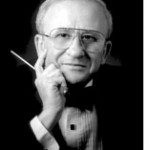 SAN DIEGO –Quite frequently this subject comes up. We read it in the news from here and from Israel. As musicians, decisions sometimes have to be made. Should Jewish people and all of Israel be involved in concerts and operas of the music of Richard Wagner?
In the mid 1980’s, during the times I was involved in recording projects in Tel-Aviv, Zubin Mehta and the Israel Philharmonic introduced an encore a piece by Wagner, giving the audience fair warning if some opted to exit Mann Auditorium. Some left, and some stayed, but drowned out the music with their vociferous protests.
About ten years ago, conductor Daniel Barenboim in a concert with the Berlin Staatskapelle in Jerusalem at the Israel Festival concluded with a selection by Wagner. As you would have expected it, many people in the audience enthusiastically approved, and a few, loud protestors were the leaders of the opposition.
In my lectures, I am frequently confronted with this matter.
But, let us look at the situation with a bit of perspective, using the facts and a sense of balance.
Yes, Wagner was an anti-Semite, and wrote extensively of his hate for Jews. He even published a book in 1850, Music and the Jews, where he criticized the mingling of the “inferior” Jewish music with that of the superior Germanic culture. In many of his operas, the ridiculous, antiquated, and even grotesque characters mimicked Jewish stereotypes of the times. This is a fascinating study by itself that requires more words and examples than the length of this column allows.
But, on occasion, for musical gatherings at his home, Jews were known to have been invited, including the famous Vienna music critic, Eduard Hanslick (Sadly, he made a caricature of Hanslick in his opera Die Meistersinger). The conductor Wagner most frequently wanted for the performances of his operas was Jewish!
But Wagner’s failures as a human being were hardly limited to his anti-Semitism. The American composer-critic Deems Taylor wrote a book in 1937 (Of Men and Music, publ. by Simon and Schuster), where the first chapter is titled “The Monster”, and is a graphic description of Wagner’s despicable behavior in many other aspects of life, without even mentioning the Jews. It makes for very entertaining reading.
And remember, he was an anti-Semite, but not a Nazi. Later in life, Wagner backed off in some of his virulent attacks, but, too little, too late. He lived fifty years before Hitler was in power, and the latter chose Wagner’s music as a symbol of German supremacy and racial purity. Wagner would have made a wonderful Nazi, but many other card-carrying composers and performing artists we hear today and for all the years after World War II, don’t seem to concern us too much.
But in the years of the 18th and 19th Centuries, almost everyone was taking verbal potshots at Jews. Yes, Wagner was the most vicious, but if we eliminate all the composers who made nasty remarks about Jews, we might as well close our concert halls!
The music of Wagner was innovative for its time, and has withstood the test for many years. It is of high quality, and I enjoy listening to a lot of it.
But, it has also become the symbol of the most evil regime (we can safely say) that ever existed, and there are many, many people alive today who were the victims of the Third Reich. So many Jews worldwide had members of their families perish in the concentration camps, and there isn’t one of us who does not personally know survivors and their relatives.
When music of such a strong and painful symbol is forced on sensitive people, it is hardly a time for an enlightened, artistic experience. Instead, the sadness, pain and horror surfaces, no matter how good the music may be. The memories are simply too vivid and strong. Some of us can transcend these bad feelings, listen to the music and enjoy the experience, but in the back of our minds, there is always this soft undercurrent of discomfort.
So, why do it? Wagner and his music will survive and outlive the present generations. He will continue to be one of the greatest composers and music dramatists in history, regardless of his personal life and behavior. Besides, there is such a treasury of good music by other composers to play to our Jewish and Israeli audiences, that a choice of what to program is hardly a problem.
To my opinion, it is not necessary to ban Wagner’s music from Jewish and Israeli audiences forever (even the thought of that is frightening), but to wait for time to pass; new generations will not forget the horrors of the Holocaust, but will put matters such as Wagner in a different historical light, possibly in the opposite way to the passionate and non-objective manner in which we treat the subject these days.
If someone in Israel or anywhere else needs a Wagner fix, there are plenty of places where the music is readily and freely available, live, on line, or on recordings. Why force it down people’s throats in a concert, at the wrong place, at the wrong time? No need.
If someone asks me to conduct Wagner in a venue where I am sure it will not offend, I may do it. If a soloist requests to sing excerpts from Wagner operas, as I have experienced in the past, I will agree under the same conditions.
But as a general rule, I am not motivated to program Wagner’s music. I respect, admire, and even enjoy it, but to me, it has the undertones of hate and Aryan supremacy, which influences my emotions and choices of what to program.
As long as I know that there may be one person in the audience (or someone who opted not to attend the concert) that will be offended by the music and what it may imply, I am not comfortable.
*
Amos is conductor of the Tifereth Israel Community Orchestra and has guest conducted professional orchestras around the world. He may be contacted at david.amos@sdjewishworld.com