By David Amos
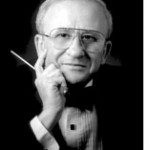 SAN DIEGO–I am frequently asked about the different elements that come into play in the education and formation of a serious orchestral conductor. It is indeed a fascinating subject, many factors come into play and as in so many subjects about the arts, and there are wide differences of opinion. For sure, the two elements that are indisputable are talent and an uncompromising love for music.
Let’s not start dealing here with “what a conductor does,” since I have covered it in other articles and repeated lectures. Instead, I will share with you a few other insights into the different elements that come together to form an effective conductor, concepts which are shared by the many professionals I have studied with, spoken to, and heard their comments on the subject.
Many experts insist that a conductor has to be a pianist. Take the case of some great ones, Leonard Bernstein, Daniel Barenboim, Andre Previn, Christoph Eschenbach, and many others. The criteria being that to learn an orchestral score properly, one must be able to play all the parts first, and the piano is the most practical and direct way to do this. A conducting teacher with whomI studied at Indiana University insisted on this approach; he even went further, to suggest that if a conductor simply lacks the ability to realize the full score at the keyboard, he should hire a pianist, who would privately hammer away at the music being studied until it is properly absorbed. A bit drastic, but realistic.
In the old days, conductors learned their craft by being opera singers’ coaches, and rehearsal pianists for opera companies. There is a lot of logic to this, but the pressures of today’s world may make this approach less practical than in the past. Life in all its aspects, is on the fast-track nowadays.
I have seen and admired the phenomenal skill of a few musicians I have known, who can put a full orchestral score on the piano rack, with its twenty-plus lines simultaneously taking place, and sight-read (play by looking at it for the first time) all the parts of all the instruments, and even transposing many of them.
And on the other side, there are conductors who were not pianists. Arturo Toscanini was a cellist, Gerard Schwarz was an outstanding trumpet player, and so on. Another requirement that is frequently mentioned is that conductors should be string players, or at least, very familiar with the complexities and challenges of the strings, in order to best achieve a homogeneous sound and create the necessary sense of unity.
But, without exception, teachers and musicians who know, discourage any conductor from learning an unfamiliar piece of music by listening to the recordings of others. This is a clear no-no. But what do you do when the music at hand is a new work, and all the knowledge has to extracted directly from the orchestral score? Ah, there’s the rub.
Simply put, a conductor has to have a thorough, comprehensive knowledge of the music at hand before ever facing the orchestra. We were given a simple ratio of ten hours of individual preparation for every hour on the podium.
Does a world class soloist or singer by definition become an effective conductor? Not at all. I have seen operatic giants, and pianistic stars, names that are vary familiar to all of us, who become pitifully ineffective when facing an orchestra, in live concerts and in films of the legendary artists.
To be good at the podium, there has to be a special mix of great musical gifts, have the charisma and power to communicate to both musicians and audiences, raw musicianship, clear, and assertive baton technique. People skills help, but are not always present. There are many other elements that contribute to the making of a superstar; cynics and realists will give you various combinations of luck, persistence, money, and a good agent.
I have heard it from the mouths of active, highly successful musicians who play in the great orchestras that they have faced legendary maestros of the old guard who could hardly learn a new work, and could not keep the more complex beat of a 5/4 or 7/8 measure, which so much of new music demands. Anything beyond the traditional 4/4, 2/4, or ¾ was something they could not do.
Then, there are those composers who want to conduct their own music, but can’t meet the technical intricacies that are needed. Salient exceptions include Mahler, Bernstein, Richard Strauss, Copland, and many others, including film composers who record their own soundtracks.
I have talked to London orchestral musicians who in confidence told me how much they despised their famous resident conductors. Some recording engineers and produces tell horror stories on how unprepared and incapable some conductors were during recording sessions. The latter ones should thank their lucky stars for today’s miracles in digital editing.
There is more podium charlatanism and fakery than in any other part of the music-making process.
Yet, on the other side of the coin, there are lesser known names who are masters at the podium, doing their sincere and diligent work away from the high profile critics and jet setter audiences and colleagues. I have seen their work in many other parts of the world.
And, many of the world-class conductors you know and admire are intense and dedicated artists, who are worth all the praise and credit given to them.
*
Amos is conductor of the Tifereth Israel Community Orchestra in San Diego, and has guest conducted professional orchestras around the world. He may be contacted at david.amos@sdjewishworld.com