By David Amos
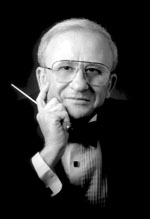
SAN DIEGO–If you are interested in the inner workings of the classical music industry, this book is certainly worth your attention. It is called Musical Chairs, (published by G.P. Putnam’s Sons, New York), and it comprises the memoirs of a gentleman who during his career of administrator in the performing arts, was involved with the professional lives of some of the greatest musical luminaries of the Twentieth Century.
His name was Schuyler Chapin. He lived from 1923 to 2009. A couple of paragraphs from the book’s inside flaps best explain some of his notable accomplishments:
“When Schuyler Chapin left in July 1975 from his position at the pinnacle of the musical world–General Manager of the Metropolitan Opera—he received over two thousand letters of personal commiseration. It was an astonishing, but on reflection not surprising demonstration of affection and esteem. For Chapin has worked in intimate association with more artists of the musical and performing arts than perhaps any other contemporary musical entrepreneur; he was also an endearing man, as popular as he was respected. His memoir, Musical Chairs, vividly expresses this.
“Mr. Chapin relates his experiences with a veritable Who’s Who of the musical world, a treasury of anecdotes of the musical life and personalities of the modern era. But it is, as well, a moving story of a tumultuously busy and fruitful career. We learn in intimate detail about the sensational turnover at the Metropolitan’s top command, when Mr. Chapin suddenly becomes the Met’s General Manager upon the tragic death of Gorean Gentele in a car accident inSardinia, and when Mr. Chapin was forced out at a critical juncture in the Met’s affairs.
“From the book’s outset, his head-over-heels love of music and drama is evident, with his delightful reminiscences of an old-fashioned upper-class New Yorkchildhood, his remarkable musical education with Nadia Boulanger, then his plunge into the entrepreneurial end of music. It became apparent that his destiny would be to bring music to people as an impresario rather than as a performer, and Musical Chairs tells how he did this in association with the world’s musical greats, from Jascha Heifetz to Beverly Sills.”
This very week I was giving a lecture on music and musicians, and I was asked a key question as to how a person in charge has to deal with last-minute cancellations by renowned artists and soloists. It happens at one time or another to all performing groups. This is a true-to-life situation which requires very quick action, bountiful imagination, and experienced, persuasive skills. Chapin’s stories of astonishing emergency situations at the Met illustrate these challenges most vividly.
The variety of his various occupations also mind-boggling: NBC Radio announcer, pilot for the U.S. Air Force in World War II, personal manager for two years for Columbia Artists Management, where he and Jascha Heifetz traveled from city to city, supervisor of the historic Masterworks Series of Columbia Records, Vice-president in charge of Creative services at Columbia Records, his association with the formation of Lincoln Center in the early 1960’s, co-founder of the Film Society of Lincoln Center, where he was later named vice-president, head of Leonard Bernstein’s company, Amberson Productions, his years at the Met, Dean of Columbia University’s Graduate School of the Arts, and Commissioner of Cultural Affairs for New York City during the administration of Mayor Rudy Giuliani.
Here are enough accomplishments to cover three lifetimes!
There are so many elements to Chapin’s book that kept my undivided attention. His list of productive association with household names is never-ending: Van Cliburn, Herbert Von-Karajan, Stravinsky, Bruno Walter, George Szell, Stokowski, Ormandy, Bernstein, (with whom he traveled several times toIsrael). Horowitz, Menuhin, Sutherland, Glen Gould, Richard Rodgers, Danny Kaye, Rafael Kubelik, Pavarotti, (accepting to perform on a one-day notice), Balanchine, Richard Tucker, Milton Cross, Kiri Te-Kanawa, and many others.
All these name-droppings is not a list of people with whom he met once and politely greeted, but it portrays serious artistic projects, business associations, a few failed ventures, and many successes. Chapin attempted to create an artistic link between the Met and the legendary Maria Callas, but that project fizzled.
I have already reviewed in this column one of Chapin’s other books, Leonard Bernstein, Notes from a Friend.
Two aspects of Musical Chairs remain strongly in my memory. The first are the whims and cancellations of the big stars, some of which had to be handled as a child. The details are fascinating.
But one concept in the entire book kept coming back, over and over. It can be summarized in one simple phrase: “We shook hands and we had a deal”. Yes, contracts were signed, detailing the entire dreadful minutia that these documents imply. But this was a time, maybe the end of an era, where a person’s word was honor, an unbreakable commitment which was never in doubt.
I found myself far more interested in the personalities and quirks of our musical icons than the contractual details and intricate negotiations, but if these subjects are of interest to you, for this reason as well this is highly recommended reading.
*
Amos is conductor of the Tifereth Israel Community Orchestra (TICO) as well as a guest conductor of professional orchestras around the world. He may be contacted at david.amos@sdjewishworld.com