By Rabbi Dow Marmur
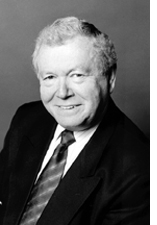
JERUSALEM –This time I travelled to Israel in the company of Daniel Kahneman, the 2002 Nobel Prize winner in economics. Not in the flesh, of course, but with his bestseller, Thinking, Fast and Slow. The book has much to teach on many subjects. Inter alia Kahneman seems to be implicitly supporting my pessimism about why the so-called Israeli-Palestinian peace process isn’t going anywhere. I write this with apologies.
The italicized passages below are direct quotes from the book.
1. Israelis and Palestinians don’t seem to hear each other because when people believe a conclusion is true, they are also very likely to believe arguments that appear to support it, even when these arguments are unsound (45). The negotiators on both sides and their supporters are committed to certain, seemingly mutually exclusive, “truths.” These have conditioned them to stick to their side of the story come what may.
2. A reliable way to make people believe in falsehoods is frequent repetition, because familiarity is not easily distinguished from truth (62). The rhetoric has been going on for so long that all alternatives seem to have been erased from each script, perhaps even from memory. Ideological fiction has replaced hard facts.
Thus when negotiators say that their public wouldn’t accept compromises, they’re often sadly right. Having formulated for themselves and communicated to the world their version of the story for so long, even the leaders assume them to be true irrespective of the facts. The power of PR lies in repetition, not in truth.
3. To change the stance now would make each side appear to be the loser. Because they’re afraid of being so labeled, they aren’t prepared to concede anything. Loss aversion creates an asymmetry that makes agreement difficult to reach. The concessions you make to me are my gains, but they are your losses: they cause you much more pain than they give me pleasure (304). Therefore, “loss aversion is a powerful conservative force that favors minimal changes from the status quo (305).
4. A stalemate is thus inevitable: We refuse to cut losses when doing so would admit failure, we are biased against actions that lead to regret, and we draw an illusory but sharp distinction between omissions and commissions, not doing and doing, because the sense of responsibility is greater for the one than for the other (342).
Being more afraid to yield and thus risk losses than to make gains in exchange, each side will hold on to its own and blame the other for having refused to move.
It’s tempting to speculate about the circumstances that could compel the two sides to make peace. In theory there’re always win-win situations, but in view of the above, even if such situations arose, the negotiators aren’t likely to recognize them.
Therefore, only extreme pressure from outside (USA & Co?) or implosion from within (“revolt of the masses”?) could force the negotiators to overcome their fears and each side construct a narrative to show supporters that it is, in fact, the real winner.
But as things are at present, the status quo is sufficiently tolerable for both sides to leave things alone: despite the Iranian threat, Hamas rockets, Palestinian acts of terror, the very problematic Arab Spring, Israeli occupation, Jewish settlement expansion and settler violence, and countless other potential and real danger points.
Thus at this season: Goodwill, of course, always. Peace here, alas not yet.
*
Rabbi Marmur is spiritual leader emeritus of Holy Blossom Temple in Toronto. He now divides his time between Canada and Israel. He may be contacted at dow.marmur@sdjewishworld.com