By David Amos
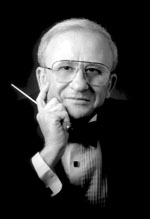
SAN DIEGO — As an active member of the Jewish community, I am exposed, as many of you are, to programs, films, television specials, lectures, and books on the Holocaust. Most of us know and have spoken to Holocaust survivors, and have heard directly from them the horrific times they suffered in the hands of the Nazis in the 1930’s and 40’s, as well as the lingering aftereffects, some which still remain as indescribably painful.
My wife and I were in Los Angelesfor various appointments last week, and had a three hour block of time available to us. We decided to spend this time at theMuseumof Tolerance on Pico Boulevard. Although this first-time visit did not reveal any new information of what was already familiar to us, it did awaken in me several thoughts on the subject.
Although my family did not directly lose anyone to the death camps, (my wife’s family did), so many experiences in our lives bring us to the Holocaust. So many music books about composers and performers of the Twentieth Century are inevitably connected to being, or not being in Nazi Germany, attitudes, relationships, and even single encounters that go along with it. It would be safe to say that all aspects of our existence can not escape the multitude of influences on this subject that make us what we are.
Even the casual reading of an obituary in our local San Diego newspaper stirs memories and emotions. I read this week about the recent death of Johannes Heesters, a Dutch-born entertainer who opted, for whatever reasons, to stay in Germanyduring the War, and to be one of Hitler’s favorite performers. After the war, it was no surprise that he was surrounded by controversy and doubt of his allegiances.
But, this is true of many other musicians. I have written and given talks about the great conductor, Wilhelm Furtwangler, whose choices in those terrible years are still vigorously debated.
I have traveled quite extensively for the purpose of conducting various European orchestras for the production of commercial recordings and live concerts. These trips have taken me several times to Slovakia, the Czech Republic, Lithuania, Russia, and three times to Poland, in addition to various visits to England, Israel, Scotland, and Norway.
In these visits to faraway places, I try not to isolate myself with only the musical mission at hand, but to also make an effort to reach out to the musicians and administrators of the orchestras, learn more about their lives, their aspirations, and answer questions about many aspects of our own society. I am always drawn to seek out Jewish connections and people, and at times, the results have been fascinating. Here are a few examples.
In Kosice, Slovakia, the orchestra’s Philharmonic Hall is a converted synagogue, which, for the obvious lack of a Jewish community during the war, was abandoned, and re-emerged as the city’s concert hall. There are still vestiges, here and there in the building, which display its former Jewish heritage. In the same city, I was invited to a Jewish restaurant, with a huge Magen David in the middle of its dining room’s ceiling, which apparently, has never closed its doors after so many decades. The orchestra’s manager had a name which could be nothing but Jewish, but he claimed that he was not; he did say, that he has no family history before the late 1930’s, and would not be surprised if his heritage was Jewish.
In the city of Katowice, Poland, (not too far from Krakow), I was practically assaulted by the recording engineer of Polish Radio, a dynamic 28 year old lady, who wanted my opinions and perception of the Holocaust. This took me through several fascinating lunch breaks. Another story with many unexpected details was with my encounter with a taxi driver, who took me from the Krakow airport to Katowice. When, in our conversation, he found out that I am Jewish, he vehemently insisted that during my one week stay in the area, I had to visit Auschwitz. Reluctantly, I agreed, but the Sunday morning I spent at the death camp, as well as in Birkenau, nearby, gave me strong emotional memories and valuable anecdotes to share with others.
While I was working with the Lithuanian Philharmonic inVilnius, I befriended a Jewish man who worked in their Philharmonic Hall. We met several times timers during my ten-day stay, where I visited the two Jewish cemeteries, the nearby killing fields,attended a Friday night service at a local synagogue, visited the city’s Jewish Quarter, and enjoyed a couple of home-cooked meals. Also, before conducting a concert in the adjoining city of Kaunas, I was approached by a local, a young man, who spoke to me in Hebrew!
In Moscow, we met with, and visited the homes of two Jewish families, and learned about their times under Communist rule, and their revised hopes and aspirations.
In Krakow, I conducted their Philharmonic in the late Morton Gould’s Holocaust Suite. Think about it; there I was in Poland, a fifteen minute drive to Auschwitz, during Passover week, conducting strongly Jewish music which contained Hatikvah, with many Polish musicians who were alive and aware in the 1940’s, and knew quite well what we were recording. All this happened in 1990, just a short time after the Communists had left, and restrictions were lifted on the performance of Jewish music and musicians. In a Chinese restaurant where I was invited, the live band was playing music from Fiddler on the Roof!
Even inLondon, the various orchestras’ older musicians had plenty to say about the war years (1940-45), and of the now-ex-Nazis who guest conducted them in subsequent years
As you can visualize, the visits mentioned above, and many others, only give you the highlights and not the details, where the real interest lies.
All of these influences have come together in my mind, and motivated me to seek, commission, and conduct in concerts and recordings symphonic music which memorializes the Holocaust, following the spirit of the words, Never Forget. I strongly feel that our generation, which has heard directly from the mouths of survivors of what took place, have to do our part to perpetuate the memory of this dark part of history. In my case, it is to do it through music, educate, and have the music performed in concerts and recordings for future generations to hear, learn from, and appreciate.
Some of you may have already been exposed to these efforts. Two years ago, I premiered a new work for narrator and orchestra by composer Arnold Rosner, based on the experience of the Warsaw Ghetto during the Nazi occupation. In April of 2012, the TICO Orchestra will perform Gould’s Holocaust Suite, which he composed for the television miniseries. There have been many other examples.
And, I am overwhelmed by the musical works on this subject which are in my hands, have already been composed, and are waiting for underwriting for commercial recording, and of other projects on the same subject waiting to be commissioned from and created by the talented composers of today.
*
Amos is conductor of the Tifereth Israel Community Orchestra in San Diego and has guest conducted professional orchestras around the world. He may be contacted at david.amos@sdjewishworld.com