By Shoshana Bryen
WASHINGTON, D.C. (Press Release) — Just in case you thought the Cold War was over, please look at Syria. Please look at Syria anyhow and consider Libya.
Prompted by the (credible) threat of massacres in Libya, the West jumped to oust Gaddafi – don’t let them tell you it was about doctors, farmers and teachers rising up and over throwing their government. The doctors and teachers were there, of course, and so wereal Qaeda operatives, but the intelligence, aerial bombing, weapons and Special Forces (some Western and some Jordanian) were not Libyan. They were NATO and friends.
Prompted by actual massacres in Syria, the Syrian uprising receives an Arab League delegation headed by Sudan’s Mohammad Ahmed Mustafaal-Dabi. Al-Dabi, the former head ofSudan’s military intelligence service, created the janjaweed militias that have been pillaging, raping and starving the people ofDarfur. He works for Omaral-Bashir, the “president” ofSudan who is under indictment for genocide by the International Criminal Court. The terms of the Arab League delegation’s visit were negotiated with Assad, and the killing continued right under its nose.
The UN Security Council blessed theLibyaoperation (The US Congress was not asked about the deployment of US military assets or troops, which is another matter entirely), but the same body is stymied over Syria.
Why? Oil is one answer and Russia/China is the other.
Gaddafi was granted re-entry to the civilized/Western world in 2003 when he gave up his non-conventional weapons to the British and Americans, and paid reparations for the Lockerbie bombing.Italy, with a (short) colonialhistory inLibya, quickly took the lion’s share of good oil leases and other economic benefits. When the uprising began and Gaddafi made threats that would look like war crimes if he carried them out, the French and British believed overthrowing the regime would endear them to an appreciative new government – economic benefits to follow, no doubt. They were aided by American UN Ambassador Susan Rice’s politicaltheory, “Responsibility to Protect” (R2P), which grew out of earlier international indifference to the genocide in Rwanda. Libya would be its first application. The confluence of oil and high-minded politicalphilosophy made short work of opposition to the war.
Russia was largely disinterested inLibyawhile the uprising was happening, but in retrospect, the ouster of Gaddafi is understood to be a victory for the West. Russiais the patron ofSyriaandChinathe patron ofIran; the nexus ofIranandSyriais whatallows Hezbollah inLebanonto flourish, among other things. To the extent that Hezbollah threatens US interests – in South America, where it is well-entrenched, and even in the US and Canada–Russiais content. Chinais interested in Iranian energy. Neither is interested in another Western success in theMiddle East.
The problems for the West engendered by the so-called “Arab Spring” are irrelevant because they don’t come at Russian or Chinese expense – they are what are called lanyap inNew Orleans, an extra benefit you didn’t pay for. Western success in Syria is directly proportional to Russian, Chinese and Iranian losses.
Russian warships docked in the Syrian port of Tartus in October as part of a long-planned mission, but the ships arrived just as Russia and China were blocking a British-French measure in the UN Security Council to establish “targeted measures” against Assad. In December,Russia delivered supersonic anti-ship cruise missiles to Syria, making any Western movement toward Syria by sea enormously more problematic.
R2P takes a back seat when the people you might want to protect are being killed by people who are themselves protected by Russian military advisors and/or troops on Russian warships.
President Obama has a long-term and serious aversion to American missile defense and an almost equally serious desire to befriendRussia. The Administration’s first “reset” included withdrawing hard-won permission for missile defense radars from Poland and The Czech Republic, dumping missile defense andAmerica’sallies in favor of better relations with Moscow. The American concession to Russian interests was followed by the tightening of Russian screws on its domestic politicaland economic oppositionalong with continued Russian support forIranandSyriain the UN. A new “reset” is in the works. This time it involves the President giving Russia sensitive data that would allow the Russians to better counter what are considered the best of America’s missile defense interceptors. The potential for the degradation of our capabilities is matched by concern that the information Russia receives could be shared withChina, Iran or North Korea.
So while the Libyan revolution reaped the benefit of Western interest in oil and general Russian disinterest in Libya, the Syrian people pay the price of a United States unwilling to cross its Russian friends on an issue of Russian interest (the longevity of the Assad regime) on behalf of a country with no oil.
*
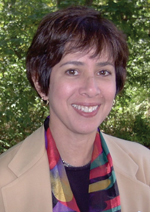
Shoshana Bryen has more than 30 years’ experience as a defense policy analyst and has been taking American military officers and defense professionals to the Middle East since 1982. She was previously senior director for security policy at JINSA and author of JINSA Reports (1995-2011). This article first appeared on the Stonegate Institute website. Bryen may be contacted at shoshana.bryen@sdjewishworld.com