By Rabbi Dow Marmur
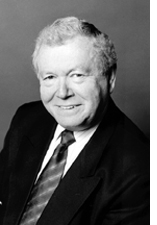
JERUSALEM–You may have already read the words spoken by Steve Linde, the new editor of the Jerusalem Post, at the WIZO – the international women’s Zionist organization -conference in Tel Aviv earlier this week, but they’re worth repeating because they highlight a serious problem of credibility.
Linde is quoted to have said in front of a large gathering of Jewish leaders, and in the presence of the media: “Netanyahu said, ‘You know, Steve, we have two main enemies.’ And I thought he was going to talk about, you know,Iran, maybe Hamas. He said, ‘It’s the New York Times and Haaretz.’ He said, ‘They set the agenda for an anti-Israel campaign all over the world. Journalists read them every morning and base their news stories… on what they read in the New York Times and Haaretz.’”
Netanyahu has categorically denied having said this and Linde obliged by issuing a “clarification” to the effect that what he said was “his personal interpretation of a private conversation.” He stated that the prime minister never used these words.
Whether or not Netanyahu said what Linde initially reported, there’s a widespread view in the land that he could have said it, for government circles tend to believe that the two newspapers are harmful. Not long ago,Israel’s Minister of Justice was reported to have likened Haaretz to Der Stuermer, the vile German anti-Semitic rag during the Nazi period. And Netanyahu refused an invitation from the New York Times to write an op-ed piece as a kind of protest against many of its other op-ed pieces.
I’m among those who think that both Haaretz and the New York Times are splendid newspapers and great assets to Israel- precisely because they’re often critical of the current government. Not so Netanyahu. He believes, according to Carlo Strenger, one of the Haaretz commentators and no doubt despised in government circles, that a criticism of Netanyahu is an attack on Israel as a whole. Strenger suggests that the prime minister affirms the dictum of Louis XIV that “l’etat c’est moi.” (the state is me)
If true, that’s, of course, a dangerous doctrine reminiscent of the way dictators think and act. It may be acceptable in North Korea and Zimbabwe, perhaps still in China and Russia, but not in any Western democracy. Prime ministers who promulgate it are at risk of defeating the purpose for which they were elected.
The fact that Binyamin Netanyahu may not be unique in this respect is small comfort. I seem to remember that Brian Mulroney, Canada’s former prime minister, had similar proclivities. It cost him a better place in history than he seems to have gotten.
Usually it also means that those they once replaced suddenly gain in popularity. The slow ascent of Ehud Olmert, even though he’s currently being prosecuted for financial irregularities, may be a comment on Binyamin Netanyahu who succeeded him.
Even if the Netanyahu quote is a fabrication from start to finish on the part of the editor of the Jerusalem Post, there’re still reasons to raise eyebrows. Did he misquote the prime minister in order to put down a rival newspaper? If he’s so free with “citing” sources, he must be a very unreliable journalist, let alone the editor of a major newspaper.
It’s, therefore, impossible not to conclude that either the prime minister of Israel or the editor of a major Israeli newspaper may have manipulated the truth. This doesn’t inspire much confidence.
*
Rabbi Marmur is spiritual leader emeritus of Holy Blossom Temple in Toronto. He now divides his time between Canada and Israel and may be contacted at dow.marmur@sdjewishworld.com