By Rabbi Dow Marmur
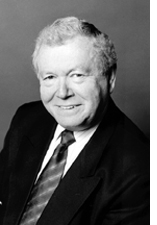
JERUSALEM –In 2002 Meir Dagan succeeded Efraim Halevy as the Head of the Mossad. He retired eight years later and – like virtually all Israeli public figures once they leave civil or military public service – he has taken to expressing strong opinions for all to hear and read on a variety of subjects. By all accounts, he was a good spy chief; whether, like Halevy, he’ll now become a sage-like analyst and critic remains to be seen.
Many of Dagan’s post-retirement public statements have been promising. Thus he has repeatedly warned Israel not to attack Iran. In an in-depth television interview on Saturday night he said that, though Israel’s air force is up to any task that will be set for it, there’s compelling evidence that attacking Iran isn’t good for Israel. He implied that those who say otherwise may have sinister agendas of their own. Perhaps he had Prime Minister Netanyahu and Defense Minister Barak in mind.
Dagan denied vehemently the rumour – maybe a spin by the office of the prime minister who is said to be upset about the ex-Mossad chief’s criticism of the government’s pronouncements on Iran as well as on other matters – that his statements are expressions of sour grapes for not having been allowed to stay on at the Mossad. Writing with customary ignorance, I’m inclined to believe Dagan. His knowledge and experience must be second to none. I, therefore, find it difficult to take seriously the attempts to discredit him as he speaks truth to power.
Even more important than his warning against attacking Iran and the implied criticism of people in high places whose thinking he probably knows only too well, is his criticism of Israel’s electoral system. His views aren’t original but that he has chosen to place himself at the head of an organization that’s mounting a fresh campaign for such reform is significant. Having been close to power, he knows that Israel’s present parliamentary system is a millstone around the country’s neck.
Dagan and others with him are said to be advocating an alternative that has been on the table for a long time: (a) half of the 120 members of the Knesset should be elected in 60 ridings around the country on the first-past-the-post basis; (b) the other 60 by proportional representation as is now the case; and (c) that a party that has received less than 3% of votes cast (currently it’s 2%) should be barred from getting any seats.
The present Israeli electoral system often paralyses governance by giving minority political parties inordinate power as their reward for entering a coalition. The change would reduce this considerably without allowing the majority to dominate unduly. It’s a way of combining the best of both systems.
My guess is that most Israelis agree. In his book on Ben Gurion, President Shimon Peres, writes (probably as much about himself as about his subject) that Israel’s first prime minister soon came to realize that the British (and Canadian) system was superior to proportional representation that was in place. However, fearing loss of seats in the Knesset, most parties have always blocked proposed changes.
But perhaps the time has come for them to act, for once, in the best interest of the country, not themselves. Perhaps people like Dagan, who have been close to power and have a high profile in the land, will succeed where others have failed. The fact that the government doesn’t like him nowadays is, in my book, a hint that he’s on the right track.
*
Rabbi Marmur is spiritual leader emeritus of Holy Blossom Temple in Toronto. Now dividing his time between Canada and Israel, he may be contacted at dow.marmur@sdjewishworld.com