By David Amos
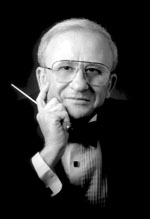
SAN DIEGO — Unfortunately, by its very nature, the arts lend themselves to a lot of charlatanism. At times, when we hear people speak or write with so much confidence and authority, we could be overwhelmed. But behind this façade, there may be plenty of bloated misinformation. Let me cite a few amusing examples, but as always, bearing serious undertones.
A few years ago I visited a local record store (at a time when we still had record stores!), looking for a recording of the Beethoven Rondo in B Flat Major for Piano and Orchestra. On my own, I could not find it, so I asked for help from the resident “classical music expert” available at that time. I told him what I was looking for, and without any hesitation he answered, “There is no such work”. Most politely, I suggested that I know that such piece does exist, and he responded with “C’mon, fella; Mozart wrote rondos for piano and orchestra, but Beethoven? Never!”.
By this time, my patience was nearing its limit. I told him that A) I have the orchestral score of this work at home, B) That I will be conducting it in concert in a few months, and C) That I know of at least two recordings of this Rondo. “Now will you help me find it?” He simply turned around and left me there.
As much as it is useful to get one’s information from recordings and the bible of record guides, the Schwann Catalog, that can hardly be the entire picture. But this person did not even do that.
A few years before this incident, I overstepped my bounds, but it was fun. I kept seeing a lady in concerts, recitals and receptions, who was a know-it-all in every sense of the word. A bit of solid information, spoken at the appropriate moment can be impressive, but it can only carry you so far.
I could not resist myself. At one fine reception, I told this person, “I just heard this incredible performance of Stravinsky’s Fantasy and Variations on an Original Theme, played by the newest German sensation, pianist Fritz Umschlag-Omschlag” What I didn’t tell her was that Stravinsky never wrote such a composition, and that this pianist was also my invention. No such music or person. But her reaction was quick and emotional: “Oh, I love that piece! And with Umschlag-Omschlag, it must have been wonderful!” I rest my case.
In opera, it is worse. It lends itself to even more imaginative, marvelous faking.
In my life’s experiences and contacts in the world of music, I have learned enough to distinguish the princes from the clowns, the pretenders from the contenders, and the charlatans from the real thing.
Some people’s perceived knowledge, inaccurate, but sincerely expressed, and others’ purposeful fakery, can sometimes blend into unexplainable perceptions and conclusions. And, even some well meaning movers and shakers can not see through their self created blinders, and differentiate the subtleties between semi-frauds from reasonable talents, to say nothing of both extremes.
But, surprisingly, I know of many enthusiastic amateurs with a musical photographic and encyclopedic memory that could make a seasoned musicologist shudder.
And in turn, I have talked to experienced orchestral musicians, some from the world’s great orchestras, to see that their knowledge of the repertory is strictly limited to the music they have learned and performed. Considering that most professional orchestras play a limited slate of the standard works over and over again, and that of only the most popular classics, season after season, by their own honest admission, these musicians’ knowledge of the repertory can be, in many instances, rather small.
What is the answer? Well, there isn’t really one. All of us can absorb a certain amount of factual and artistic knowledge and data, but we need to focus on a special area if we are to become truly experts in something. The field is enormously wide. Chamber music, orchestral music, piano, Jazz, the American Theatre, opera, or the popular song, theory, history, ancient music, literature for the various instruments, ethnic music, modern music, and so on. Sure, we gather vast information in other disciplines within music, but those additional areas would probably be complementary to the specialty.
I find it useful to prepare myself before attending an upcoming music program. It is not only satisfying to learn something new about the music I am to hear, whether I have heard it before or not, but this makes the listening experience that much more meaningful and enjoyable. Also, it is of great value to really listen. As the music is being played, try not to let the mind wander. Penetrate the sounds beyond their superficial effects. There, you will surely find a treasury of subtleties and nuances, and as you become a more seasoned listener, you will be able to distinguish more and more between the good, the not-so-good, and the occasional abominations.
Our availability of information on opera, solo, chamber, and orchestral music is vast, convenient and quick. The internet, libraries, pre-concert lectures, record jackets, and encyclopedias. Try it!
*
Amos is conductor of the Tifereth Israel Community Orchestra and has guest conducted professional orchestras around the world. He may be contacted at david.amos@sdjewishworld.com