By Cynthia Citron
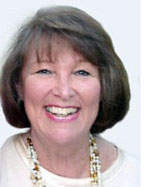
LOS ANGELES — “I’m not camouflaging Auschwitz,” says Lucy Deutsch, a survivor of the notorious concentration camp. “But I’m a little bit in a daze. It’s my life up there on the stage! It’s like a dream coming true.”
“Her songs tell the horror and joy of her experiences,” Caitlin Gallogly explains. “They are not ‘down’ songs. They have a range of emotions, both bitter and lovely.”
Deutsch and Gallogly are talking about No Time to Weep, the autobiographical musical in which the two women become one, opening as a rental production at the Matrix Theatre. Deutsch, a writer and poet, puts the words in the mouth of her doppelganger, actress Gallogly, who brings her story to life.
“I feel that we are related,” Deutsch says. “I am very touched by her performance. My heart is melting.”
“The songs are what does it,” Gallogly notes. “It’s a coming of age story about a girl who resolves to be strong in the face of disaster.”
“A young Czech girl who is supposed to die, and what she can accomplish; what can come from suffering,” Deutsch adds. “The songs come from the heart and tell my story.”
Deutsch was 14 when she and her family were transported to a ghetto and then to Auschwitz in 1944. “It was the last day of Passover when they came for us,” she says. “We had 30 minutes to get ready.” Of her parents and three siblings, she alone survived.
“It’s a small story—one story in a cacophony of Holocaust stories,” Gallogly says, “but it doesn’t fall into the trap of self-indulgence. It’s a microcosm of that world, instead of being a myopic representation of a single life.”
“Caitlin’s looking at it with a different eye,” Deutsch adds. “She’s asking ‘How does it look to the audience?’ They will find out that it’s reality for today,” she says, answering her own question.
“The Holocaust is never to be forgotten,” she asserts. “It talked to the world.”
Elie Wiesel, the Nobel Laureate who has spent his life writing about that dark time, was imprisoned in Auschwitz at the same time as Deutsch, “but we never met,” she says. “The men and women were housed separately. So he did his thing and I did mine.”
“This is not a sad story,” Gallogly repeats. “It reflects the joyful spirit of a young girl. Even through anger, hunger and cold there always has to be hope.”
“The ‘meat and potatoes’ of the play is Auschwitz,” Deutsch says, but the rest is about leaving and getting on with my life.”
She had met Mickey, a Buchenwald survivor, who protected her in the camp, and they bonded because “we needed each other,” she says. “In the camps young people were left by themselves – everybody else was dead – and Mickey and I were transients together. That’s a bond deeper than love or sex.”
Their marriage lasted for 10 years and produced a son, Michael, born in Haifa, where she and Mickey had gone to help in the fight for the establishment of Israel.
But eventually, Deutsch says, “I needed to be free. We couldn’t stay together, but we are still best friends” — best friends with benefits, apparently, because their daughter was born 10 years after their divorce.
She came to Los Angeles to “make a life” for herself and “invented the magazine clutch purse,” she says. Setting up her own manufacturing company, she decided that her name, Lucy, wasn’t distinctive enough, so she named the company “Lutci of California.” The purses incorporated “themed artwork” with city motifs—Hollywood, Paris, New York—and were highly successful. Eventually, however, Taiwan began producing cheap knock-offs “in plastic,” she says scornfully, and so she re-invented her company to manufacture various fine leather goods.
“I was totally absorbed in the company,” she says, “but when I came home from work, I wrote.” Her output includes novels that she has turned into screenplays (The Tool, Alliance by Design, The Mission from Onius, Innocence in the Devil’s Jaw) and poetry (A Child’s Journey Through the Holocaust.)
Her autobiography Shattered Childhood, is also a screenplay, and she served as executive producer for a film musical, The Street Singers, for which she won the Silver Award at the Philadelphia Film Festival.
Gallogly, who plays Deutsch as a teenager and young woman, remains onstage while Christopher Callen plays the older Deutsch. Gallogly is a soprano with a range from Low E to E above High C. She also has a black belt in Tae Kwon Do.
She is a graduate of Lawrence University in Wisconsin (“I wanted to be far enough away [from LA] so that my parents couldn’t drop in on me,” she laughs), and went on to pursue her doctorate at the University of Minnesota. Her dissertation topic dealt with propaganda in American literature that influenced the making of the nation. “It was about how the American identity was forged in the 18th and 19th centuries,” she explains. But she left before completing it because “I wanted to be onstage.”
She has appeared onstage as such diverse characters as Snow White, the governess in Turn of the Screw, Fantine in Les Miserables, Maria in West Side Story, and Madame Defarge in A Tale of Two Cities.
As a member of the company of Theatre West, where her father John Gallogly serves as executive director, she has an ongoing role in the award-winning web serial Reel Housewives of Theatre West. Written by, and starring, her mother Mary Garripoli, the comedy “gives more than a healthy nod to the Housewives of Beverly Hills, Atlanta, and so forth,” she says. “But our series deals with five actresses clawing their way to the middle. We celebrate toil rather than success, excess, and leisure.
“The women are hyperbolic representations and I am the straight man,” she continues. “It’s a solely female series, and industry-specific, that straddles the line between non-reality and sitcom. My character is grounded in reality, but she recognizes that the others are not. They have their own reality—to the nth degree.”
Her role as Lucy Deutsch is a dramatic departure from the comedy series. It’s her first production at the Matrix Theatre and first time working with director Ivor Pyres.
“Ivor is a master of the booth and the sets,” Deutsch interjects. “And Deedee O’Malley, who composed the music [with Herman Biftink and Pyres] and worked with me on the lyrics, is just marvelous.
“My hope is that 50 years from now people will still be playing the songs and telling my story.”
No Time to Weep, presented by Lucy Deutsch and produced/directed by Ivor Pyres, opens April 14, and plays Thur-Sat. 8 pm; Sun 2 pm. through June 3. Tickets: $30. Matrix Theatre, 7657 Melrose Ave., Los Angeles . 323-960-7780. www.plays411.com/notime .
*
Citron is Los Angeles bureau chief for San Diego Jewish World. She may be contacted at cynthia.citron@sdjewishworld.com