By Rabbi Ben Kamin
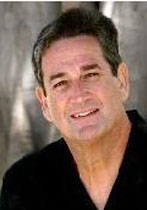
SAN DIEGO — I am passing through this with some professional perspective: too often, like any clergyperson, I have assisted parents whose child was ill—or worse. Have been, and leavened by, the vicissitudes of the mortality drama, the stomach-turning sojourns in hospital waiting rooms, the phone calls skewed by both static and caution, the attempts to be civil and helpful to well-meaning friends who want information, the inability to forbear the intrusions of others who just yearn for gossip or control.
My second daughter, Debra, an accomplished international journalist living happily in Tel Aviv, just recently engaged to a wondrous young man who is now—and immediately—proving his mettle as a life-partner, is sick with some kind of meningitis. Debra, with pinwheel eyes and hearty laughter, is starting her second week in hospital, now under the care of the neurology department.
The doctors infer that her condition, indicated by an unyielding wave of excruciating and inexplicable headaches that have turned over the sockets of my daughter’s soul, is ultimately treatable. They have yet to offer a conclusive diagnosis, which is maddening. The full slew of the most ominous outcomes has been eliminated; I know that Debra will recover. But I also know that she is still sick and uncomfortable and certainly frightened and beyond exhausted. Like anybody in her situation, she has endured IVs, injections, scans, painful spinal taps, eye pressure tests, a few classic hospital missteps, and the general gloom of clinical incarceration. I live in San Diego, some 9,000 miles away. The cyber-miracles of this era, from Facebook to Skype to Whats-App texting to cellular phones in general, have served to somewhat bridge this harsh geographical gap. The technology, for which I’m of course grateful, has nonetheless failed to cure my most urgent need: to be there with and for her, to really see what her situation is, to touch her hands, to tell her things that live in my heart that cannot be transmitted digitally. And yet, she is a grown woman, with a dedicated partner, and a host of friends. Even if I had proximate access, I’d have to accept the boundaries and rules that are attendant to “parenting” an adult child who wants my attention but does not need my coddling. I can’t read her a story, or cleverly soothe her anxieties with platitudes that worked when she was a little girl. I can only listen—even as I clearly understand that whatever anguish and frustrations are peeling my skin have no analogy with my daughter is physically and emotionally enduring. It doesn’t matter how old she is or where she is. When your child is sick and vulnerable and scared, her location is right in the middle of your heart—the one place that cannot be dialed. It can only be felt and it only hurts—with the exact measurement of your love.
*
Rabbi Kamin is a freelance writer based in San Diego. He may be contacted at ben.kamin@sdjewishworld.com
Dear Don,
Genuinely touched by your uncommonly kind comment.
Gratefully … Ben Kamin
Rabbi–I’m sure many of our readers join me in wishing a speedy recovery for Debra, and for an easing of the pain in your heart. If only we could beam ourselves back and forth between here and Israel! — Don Harrison