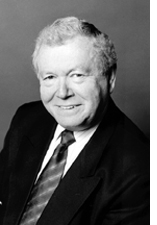
By Rabbi Dow Marmur
JERUSALEM — The late Prime Minister Rabin is said to have been fond of a story about a Jew in some small East European town who was facing execution by the local squire. The Jew asked for a postponement for a year and promised that in that time he’d teach the squire’s horse to speak. The request was granted.
When he came home, his wife was beside herself: “What have you done? You cannot teach a horse to speak in a year or ever!” The husband: “A year is a long time. In the course of it the horse may die, the squire may die or I may die.” This may have been Rabin’s version of the maxim that a year is a long time in politics.
It seems that the current prime minister of Israe land his government applied it in response to the decision by the Supreme Court of Israel that houses built on private Palestinian land in the Jewish settlement of Bet El had to be demolished within a year.
The year expires at the end of this month. But the horse, the squire and the Jew are still alive and kicking. The government has done nothing about it all this time and only now will apply to the Supreme Court for a three months’ extension. It seems that Netanyahu – who tells all and sundry that he and his government respect the rule of law – relates to the Supreme Court in the way the Jew in the story related to the squire.
But the government – this time like the squire, not like the Jew – has the power. This may, therefore, be a way of preparing for legislation that’ll overrule the decision by the Supreme Court. If – or probably, when – that happens, the rule of law will no longer prevail in the land, despite the pious protestations by the prime minister.
From now on the government will be able to erect settlements in the West Bank at will with no regard for private Palestinian property, because there’ll always be ways to show that the individual claims are “fraudulent” or “cannot be substantiated,” etc. etc. In preparation, it has already “legalized” some other illegal settlements.
This may constitute a much greater threat to the future of Israel than Iran, the Arab Spring, international anti-Semitism and the rest put together. For it bears an eerie resemblance the proclamations by the Hebrew Prophets that the woes that then befell Israel were entirely due to its sins, especially the sins of the leaders. Later sages ascribed exile and the trials and tribulations of the Jewish people to similar internal misconduct.
Perhaps these misgivings are unfounded. Perhaps the Supreme Court will reject the government’s petition and insist that its order be complied with and the settlement be destroyed in the next couple of days so that the law remains the law.
Perhaps. But even then, there’s much to suggest that the government won’t comply but use one excuse after another, because it’s afraid of upsetting the settlers and their fellow-travellers. The government has enough Members of Knesset to push through a “law” however dubious to make sure that might will prevail over right.
That’s how I sense the mood in many circles in Israel. The outpouring of sympathy for settler Lt.-Col. Shalom Eisner who injured a Danish protester with his rifle is an indicator. Judging by attacks on the Chief of Staff who demoted the officer and normally isn’t subject to public censure, we can expect much worse, this time aimed at the Supreme Court which is the thorn in the flesh of all right-wing reactionaries.
Can this time Israel save itself from its self-inflicted wounds?
*
Rabbi Marmur is spiritual leader emeritus of Holy Blossom Temple in Toronto. Now dividing his time between Canada and Israel, he may be contacted at dow.marmur@sdjewishworld.com