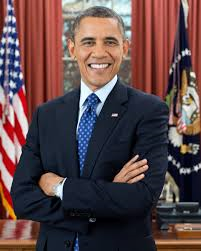
WASHINGTON, D.C. (SDJW) — President Barack Obama on Wednesday, Feb. 11, formally requested Congress to authorize the use of force against ISIL. Here is the text of his letter requesting that authorization:
TO THE CONGRESS OF THE UNITED STATES:
The so-called Islamic State of Iraq and the Levant (ISIL) poses a threat to the people and stability of Iraq, Syria, and the broader Middle East, and to U.S. national security. It threatens American personnel and facilities located in the region and is responsible for the deaths of U.S. citizens James Foley, Steven Sotloff, Abdul-Rahman Peter Kassig, and Kayla Mueller. If left unchecked, ISIL will pose a threat beyond the Middle East, including to the United States homeland.
I have directed a comprehensive and sustained strategy to degrade and defeat ISIL. As part of this strategy, U.S. military forces are conducting a systematic campaign of airstrikes against ISIL in Iraq and Syria. Although existing statutes provide me with the authority I need to take these actions, I have repeatedly expressed my commitment to working with the Congress to pass a bipartisan authorization for the use of military force (AUMF) against ISIL. Consistent with this commitment, I am submitting a draft AUMF that would authorize the continued use of military force to degrade and defeat ISIL.
My Administration’s draft AUMF would not authorize long‑term, large-scale ground combat operations like those our Nation conducted in Iraq and Afghanistan. Local forces, rather than U.S. military forces, should be deployed to conduct such operations. The authorization I propose would provide the flexibility to conduct ground combat operations in other, more limited circumstances, such as rescue operations involving U.S. or coalition personnel or the use of special operations forces to take military action against ISIL leadership. It would also authorize the use of U.S. forces in situations where ground combat operations are not expected or intended, such as intelligence collection and sharing, missions to enable kinetic strikes, or the provision of operational planning and other forms of advice and assistance to partner forces.
Although my proposed AUMF does not address the 2001 AUMF, I remain committed to working with the Congress and the American people to refine, and ultimately repeal, the 2001 AUMF. Enacting an AUMF that is specific to the threat posed by ISIL could serve as a model for how we can work together to tailor the authorities granted by the 2001 AUMF.
I can think of no better way for the Congress to join me in supporting our Nation’s security than by enacting this legislation, which would show the world we are united in our resolve to counter the threat posed by ISIL.
BARACK OBAMA
The President’s request was followed up with this statement from Secretary of State John Kerry:
President Obama’s draft resolution to authorize the use of military force against ISIL is important, and it’s important for our country that we work with Congress to achieve its passage. We are strongest as a nation when the Administration and Congress work together on issues as significant as the use of military force. The world needs to hear that the United States speaks with one voice in the fight against ISIL. I spent almost thirty years in the Senate. I care about the institution and I particularly respect the voice that Congress can and should have on foreign policy and national security. This is a moment where Congress can make it clear all over the world that no matter differences on certain issuesat home, we’re absolutely united and determined in defeating ISIL. I meet and talk with many of my former colleagues. I know how committed they are to getting this right. I also know from talking with so many Foreign Ministers all over the world that they study our debates here at home, and these public signals matter to them. The coalition itself will be stronger with passage of this AUMF.
The near daily drumbeat of ISIL’s barbaric acts have only strengthened the world’s collective resolve to defeat ISIL. We’ve already taken decisive action to reverse ISIL’s momentum, and it is critical that we move forward together in the next phase of the Coalition’s campaign.
The President has been clear that he wants to work with the Congress to pass a bipartisan AUMF specifically tailored to address the threat posed by ISIL. Enacting an AUMF specific to ISIL will provide a clear and powerful signal to the American people, to our allies, and to our enemies. The Administration has consulted with Republicans and Democrats to develop a smart, targeted, and limited AUMF that reflects the President’s policy and that we believe Congress can pass with bipartisan support.
Secretary of Defense Chuck Hagel also issued a statement in support of the President’s request:
I welcome the president’s proposed resolution for the “Authorization for Use of Military Force (AUMF) against the Islamic State of Iraq and the Levant (ISIL)” and urge Congress to pass it.
While existing AUMFs provide legal authority for our ongoing military operations in Iraq and Syria, I agree with the president that bipartisan support for the proposed ISIL AUMF would provide an important signal of support to DoD personnel, of commitment to our partners, and of resolve to ISIL.
The president’s draft language reflects important input from Congress, and would give our personnel the support and flexibility needed in our military operations against ISIL. The Department of Defense will continue to work with members of Congress to secure this resolution. Given the nature of our adversary and the complexity of our ongoing campaign, I urge Congress to avoid any undue restraints on the commander-in-chief’s choices in the effort to degrade and ultimately defeat ISIL.
ISIL represents a serious threat to the interests of the United States and its allies. The depths of ISIL’s barbarism are matched only by the scale of its ambition. DoD personnel are working each day – with 60 coalition partners – in our campaign against ISIL. We want Congress’ full, bipartisan support in this fight because the country is stronger when both parties and both branches of government stand and work together.
The Speaker of the House of Representatives, Rep. John Boehner (R-Ohio) indicated he felt that the President’s request did not go far enough. He issued this statement:
ISIL is at war with our country and our allies. If we are going to defeat this enemy, we need a comprehensive military strategy and a robust authorization, not one that limits our options. Any authorization for the use of military force must give our military commanders the flexibility and authorities they need to succeed and protect our people. While I believe an AUMF against ISIL is important, I have concerns that the president’s request does not meet this standard. Now we will begin hearings and rigorous oversight so lawmakers and the public can provide their input. Ultimately, our objective is to show the world that the United States is resolute in our commitment to destroy ISIL.”
Senate Majority Leader Mitch McConnell (R-Kentucky) promised a careful review of the request in the Senate. He said:
“This morning, we received the President’s proposed Authorization for the Use of Military Force against ISIL and its affiliates.
“It was clear from the outset that a successful military campaign to defeat ISIL would require a multi-year effort. So it’s certainly in order for Congress to debate an authorization like this.
“And because Congress must meet its responsibility to decide whether our military should use force, the Senate will review the President’s request thoughtfully. Individual Senators and committees of jurisdiction will review it carefully, and they’ll listen closely to the advice of military commanders as they consider the best strategy for defeating ISIL.
“Because this issue demands such serious consideration, I want our members to have an early opportunity to discuss the President’s request. That’s why, later today, our Conference will meet for a discussion led by Senators Corker and McCain.”
*
The leaders of the House Foreign Relations Committee — Chairman Ed Royce (R-California) and Ranking Member Eliot Engel (D-New York) issued a joint statement. It said:
Today, U.S. Rep. Ed Royce (R-CA), Chairman of the House Foreign Affairs Committee, and U.S. Rep. Eliot Engel (D-NY), the Committee’s Ranking Member, issued the following joint statement on the President’s request for authorization to use military force against the Islamic State of Iraq and the Levant:
“As Chairman and Ranking Member of the House Foreign Affairs Committee, we welcome the President’s transmittal of specific legislative language to authorize the use of military force against ISIL. He should now aggressively make the case to the American people. We intend to conduct an in-depth review of the President’s proposal, including through continued hearings on the Administration’s strategy to combat this barbaric terrorist group. This review will begin with a hearing tomorrow (February 12).
“For several months, U.S.-led coalition air strikes have sought to degrade the terrorist threat that ISIL poses to the region. This threat has been growing for too long, jeopardizing key U.S. partners and interests in the Middle East, and inflicting great suffering on the people of Iraq and Syria. All elements of national power must be used to combat ISIL, and the use of military force is but one element of the necessary strategy. We are committed to working with the Administration and our colleagues, as Congress bears a grave responsibility in this matter: ensuring that the Commander-in-Chief has the authority needed to decisively defeat this enemy.”
Early opposition to the request was expressed by Independent Sen. Bernie Sanders of Vermont. He said:
The Islamic State is a brutal and dangerous terrorist organization which has murdered thousands of innocent men, women and children, including Americans. It must be defeated.
I voted against the war in Iraq because I feared very much the destabilizing impact it would have on the region. Today, after 13 years in Afghanistan and 12 years in Iraq, after the loss of almost 7,000 troops and the expenditure of trillions of dollars, I very much fear U.S. involvement in an expanding and never-ending quagmire in that region of the world.
I have supported U.S. airstrikes against ISIS and believe they are authorized under current law, and I support targeted U.S. military efforts to protect U.S. citizens.
It is my firm belief, however, that the war against ISIS will never be won unless nations in the Middle East step up their military efforts and take more responsibility for the security and stability of their region. The United States and other western powers should support our Middle East allies, but this war will never be won unless Muslim nations in the region lead that fight.
It is worth remembering that Saudi Arabia, for example, is a nation controlled by one of the wealthiest families in the world and has the fourth largest military budget of any nation. This is a war for the soul of Islam and the Muslim nations must become more heavily engaged.
I oppose sending U.S. ground troops into combat in another bloody war in the Middle East. I therefore cannot support the resolution in its current form without clearer limitations on the role of U.S. combat troops.
Rep. Adam Schiff (D-CA), the Ranking Member of the House Permanent Select Committee on Intelligence (HPSCI) and author of legislation providing a limited and narrow authorization for use of military force against ISIL, released the following statement:
“The Administration’s engagement with Congress on a new authorization for use of military force against ISIL has been enormously beneficial and should jumpstart Congressional action. With the receipt of specific language from the President, Congress has run out of excuses for any further delay of a debate and vote on a new authorization.
“The Administration has been carefully considering how to craft an authorization of our mission against ISIL and I believe its proposal contains important limiting provisions – including a three year sunset and an immediate repeal of the 2002 Iraq AUMF – but there are some key aspects of the proposal which I believe must be narrowed further. In particular, a new authorization should also include a sunset of the 2001 AUMF; without one, any sunset of the new authorization will be ineffectual, since the next president can claim continued reliance on the old one. Such a result would fail to meet the goal set by the President last summer when he argued that that the old authorization should be refined and ultimately repealed. Additionally, a new authorization should place more specific limits on the use of ground troops to ensure we do not authorize another major ground war without the President coming to Congress to make the case for one.
“There are additional concerns over the lack of a geographic limitation and a broad definition of associated forces which will also be the subject of debate. In the days ahead, I look forward to working with my colleagues on both sides of the aisle to build on the President’s proposal and provide a properly-tailored authorization for the war against ISIL.
U.S. Senator Richard Blumenthal (D-Connecticut) issued this statement:
“I applaud the President’s draft authorization for the use of military force (AUMF) – a starting point for defining and limiting the American military fight against ISIL. I agree that ISIL is a threat – as demonstrated anew by its tragic, horrific murders – that should be degraded and destroyed. I am hopeful for bipartisan cooperation in articulating an authorization for this new use of military force, which cannot be done under existing authority. There remain grave issues still to be resolved – such as clarifying restrictions against use of American combat ground troops, establishing the scope and scale of U.S. military operations, and sunsetting obsolete authorities. Ultimately, U.S. military force alone will not suffice to stop this terrorist threat, which requires a local and regional response, both military and political.
Congress must also consider how Administrations have used prior AUMF authority. We financed the last two wars with credit that future generations will have to pay. Our nation should not adopt a strategy it cannot support and sustain. Congress must commit to keep faith with all who have courageously served and sacrificed in our armed forces, and redouble our efforts to honor and care for all veterans.”
*
Preceding compiled by San Diego Jewish World. Your comment may be posted in the space below or sent to donald.harrison@sdjewishworld.com