By Ira Sharkansky

JERUSALEM — Politics isn’t going anywhere for several more weeks. Officials are busy with the ceremonies for Holocaust Memorial Day, then Memorial Day, and Independence Day.
And meanwhile, the various parties likely to be in the government coalition are making extraordinary demands. Those may be whittled down as Bibi reaches the four weeks allotted to him, than another two weeks as an add-on. Five separate parties have the wherewithal to make or break the government. So far their demands for ministries aren’t leaving much for Likudniks.
Rather than watch and listen to it all, we went north.
We traveled through the Jordan Valley, along a two-lane road that goes through the desert and passes a number of Jewish and Arab villages, along with Palestinian vehicles and sights of agricultural developments across the little river and into Jordan. Not much traffic, and more scenic than conventional routes.
From Tiberias we made a detour to the Druze shrine, the Tomb of Yethro, and a chat with an official who had spent some years earlier posted near us in the Border Guards.
Two nights at Amiad, a kibbutz in the Galilee where we’ve stayed and become familiar with the surroundings. The rooms are small and barely comfortable. A meager provision of one small soap and no cleaning of the rooms puts the facility below others that charge the same price. But it includes a hike alongside groves of avocados and lemons, and onto the site of Jacob’s Well. Then some time in the center of the kibbutz, looking toward the forested hills that characterize the Galilee. And a great breakfast, prepared by people we have gotten to know.
Across the highway is a decent Arab restaurant, and further along Route 90 is Rosh Pina with a number of good places for dinner.
And a wine store attached to the kibbutz, with samples from throughout the north.
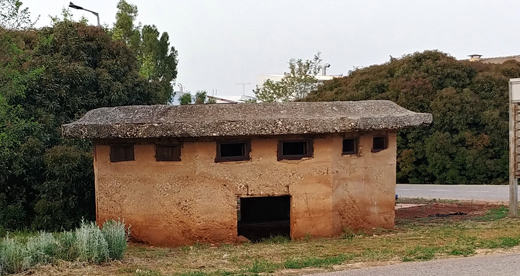
Amiad has been there since 946, and marks its age with a old guard post, and several pieces of equipment.
There was a lot of rain this winter, coming after several years of shortage. It recalls the biblical description of seven years of plenty following seven of sparseness. The earlier week of Passover provided a daily story of jammed roads in the north, as much of the country was on holiday. That was a time for us old folks to stay at home. And now we went to see the results of the rain.
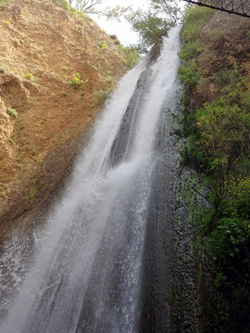
We went north from Amiad to Metula, and Nahal Ayun; then Nahal Banias; then Tel Dan on the road to the Golan.
They are all among the sources of the Kinneret, or Sea of Galilee. From about a year ago, the lake water has risen more than 3.5 meters, and still has another 3 meters to reach its maximum.
The next day we went west to Nahariya, with a stop in Peki’in, and then Nahal Keshet in Adamit.
Nahariya included lunch in the Penguin Restaurant, now 77 years old, a walk along the seacoast boardwalk, and a long sit looking at the ocean.
Our night in Nahariya coincided with the beginning of Memorial Day for the Holocaust. No restaurants were open for dinner, so we visited a supermarket in the late afternoon to acquire the fixings for sandwiches, and returned to our room for an evening of sad television.
The following day we headed for home, with a stop at Hof Habonim, where we paused when hearing the 10 a.m. siren in memory of the victims.
The weather was warm and dry. Lots of walking, and occasional updates on the lack of political movement.
It’ll be another four weeks until we know the nature of the government, assuming that Bibi can put it all together with indictments over his head.
Meanwhile, his lawyers are asking for an extension of the hearings, due to the work required of them and him.
And the next day, things escalated in the south, which may become the subject of my next column.
*
Sharkansky is professor emeritus of political science at Hebrew University. He may be contacted via ira.sharkansky@sdjewishworld.com