The Funniest People are the saddest ones — Confucius
By Alex Gordon
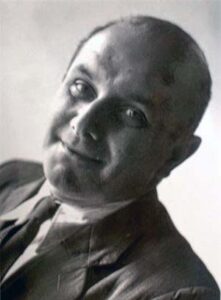
HAIFA, Israel — Stanisław Jerzy Lec, a prominent Polish satirist of Jewish origin, said: “The tragedy of an epoch is best conveyed by its laughter.” Lec, Yiddish for “jester, clown, mocker,” lived a short life full of suffering, during which he made people laugh. Sholom Aleichem said: “a Jew laughs to keep from crying.” Lec suffered a lot and, in order to endure this suffering with honor, he laughed a lot. He wrote: “When people do not have time to laugh – satire is born.”
Stanislaw Jerzy Lec was born March 6, 1909 in Lvov, then part of the Austro-Hungarian Empire. His father was an Austrian of Jewish descent named Benon de Tusch-Letz. Stanislaw used the modified (Lec instead of Letz) second part of his father’s double surname to emphasize his jester’s purpose. His mother Adele Safrin, a member of the Polish-Jewish intelligentsia, was a highly educated and cultured woman. Stanislaw’s parents converted to Protestantism. The writer’s father died when he was a child. The upbringing of Lec was occupied by his mother. Contradictions among Polish, Austrian, and Jewish components created disharmony in Stanislaw’s life. The outbreak of World War I forced Lec’s family to move to Vienna. There he began his studies but finished his studies at the Lvov Evangelical School.
In 1927, Lec enrolled at the Jan Kazimierz University in Lvov at the Faculty of Law. In 1929, a literary supplement to the popular newspaper Illustrated Daily Courier published his first poem Spring. “It spoke, clearly, of spring,” Lec explained years later, “but it was not a traditional spring; in mood these poems seemed … pessimistic.” In 1931, young poets who were Lec’s pals began publishing the journal Inclinations, in the first issue of which he published the poems From the Window and Poster. The circulation of the second issue was almost completely destroyed by the police.
In 1933, Lec’s first poetry volume, Colors, was published in Lvov. In it, Lec appeared as an anti-militarist who criticized the bloodshed on the fronts of the First World War. The first humorous and satirical frasches (trifles) by Lec were published in this collection.
Stanisław moved to Warsaw and became a regular author in Warsaw Barber, Spikes and the political anti-nationalist newspaper Popular Daily. In 1936, he organized the Mocking Theatre (“Lec – Mocker”). After the closure of this newspaper, he fled to Romania to avoid arrest. He then returned to Poland, hiding in the countryside and working in his specialty in a lawyer’s office in the province, but before World War II, Lec returned to Warsaw and to literary activity.
The outbreak of war caught Lec in Lvov. In his autobiography, he briefly talks about his life during the war: “The time of occupation I lived in all those forms that allowed that time. I spent 1939-1941 in Lvov, 1941-1943 – in a concentration camp near Ternopol. In 1943, in July, from the place where I was to be shot, I escaped to Warsaw, where I worked in conspiracy as an editor of the military newspapers of the Ludowa Guard and the Ludowa Army on the left and right banks of the Vistula. Then I went to the partisans fighting in the Lublin province, after which I fought in the regular army”.
In Soviet-occupied Lvov, Lec collaborated with the magazine New Horizons. After Nazi Germany attacked the Soviet Union, he was imprisoned in a labor camp in Ternopol. Lec’s life in the concentration camp was told by his friend Jan Spivak: “After Hitler’s aggression on the USSR, Lec was subjected to the Brown Terror. The Nazis, unlike the Communists, did not need his services and imprisoned the writer in a concentration camp in Ternopol. Lec twice escaped death, and each time it was dressed in a black SS uniform.
“Once drunk, the SS drove a whole group of prisoners to the cemetery and ordered them to stand in funny poses. Lec’s friend asked the SS man in German what poses to stand in. The SS man was furious. You damned Jew, are you going to tell me what poses to stand in? Out! And kicking them out of the cemetery. Another time Lec stood undressed in front of a grave he had dug and was waiting to be shot, he rushed to run towards the camp, they started shooting at him, but didn’t hit him.”
In 1944, Lec escaped from the concentration camp, reached Warsaw, where he established contact with resistance forces and began working in the underground press. In 1944, fighting in the ranks of the first battalion of the Army of Ludowa, he hid in the forests and participated in combat. After the liberation of Lublin, he joined the 1st Army of the Polish Army with the rank of major.
In 1945, after settling in Łódź, Lec and his friends revived the publication of the popular humor magazine Spikes. In 1946, he published the poetry collection Field Notebook, which included wartime poems and stanzas dedicated to partisan battles and fallen comrades, and a volume of satirical poems and frasches, The Cynic’s Walk.
In 1946, Lec was sent to Vienna as cultural attaché of the Polish political mission. In Poland was published (1948) a tome of his satirical poetry Life is a Trifle, followed (1950) by a Collection of New Poems, written in Vienna, the city of his childhood. Seeing from Austria the suppression of creative freedom in Poland, Lec decided to go to Israel, where he spent two years and published the nostalgic Jerusalem Manuscript. In 1952, Lec returned to Poland, where the publication of his own works was tacitly forbidden. Until 1956, Lec was a translator of Goethe, Heine, Brecht, and Tucholsky from German into Polish.
After the onset of the thaw, Lec published Unkempt Thoughts (1957) and four other collections of poetry. In 1964 a second edition of Unkempt Thoughts appeared, and two years later the poet prepared the volume New Unkempt Thoughts, which contained a great variety of themes, among which his historical and philosophical aphorisms were especially popular.
After a long and incurable illness, Stanislaw Jerzy Lec died on May 7, 1966 in Warsaw.
His Unkempt Thoughts brought him world fame. He dedicated some of his sayings to the Jews: “The human body cannot accommodate alcohol and antisemitism: if you put a little alcohol in it, antisemitism comes out immediately.”; “The Jews are to blame for everything: it was their G-d who created us all.”; “I know where the legend of Jewish wealth comes from. Jews pay for everything.”
*
Alex Gordon is professor emeritus of physics at the University of Haifa and at Oranim, the Academic College of Education, and the author of 11 books.