By Donald H. Harrison
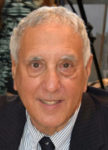
SAN DIEGO – From war-torn Israel, some Jewish San Diegans have returned home via a stopover in Jordan. Among those arriving home safely on separate flights Wednesday, June 18, were Linda Bennett, 79, and Nava Weiser, 14.
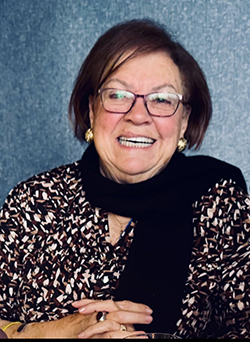
Bennett, a member of Hebrew University of Jerusalem’s Board of Governors, had flown to Israel to attend a week-long conference to celebrate the university’s centennial. However, that celebration was canceled after Israel’s aerial war with Iran began.
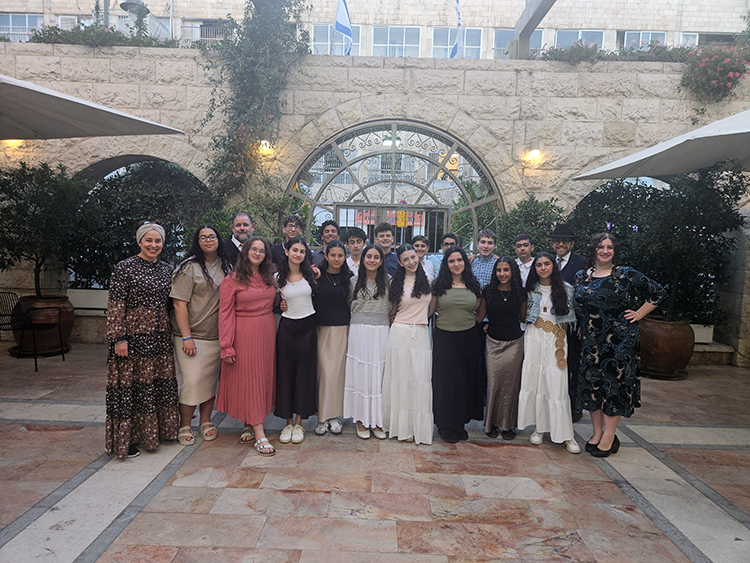
Weiser, an 8th grader at San Diego Hebrew Day School, was one of 18 graduating middle schoolers whose culmination of studies at the Orthodox institution were rewarded with a trip to the Jewish state. However, the Israel-Iran War curtailed sightseeing after Friday, June 13.
Bennett was largely confined to the King David Hotel in Jerusalem, one of Israel’s storied and best-known hotels. The 18 Hebrew Day School students and their three adult chaperones, including Weiser’s father, Yisroel Weiser, stayed at the Prima Palace Hotel, near Jerusalem’s haredi neighborhood of Mea Shearim as well as the Mahane Yehuda market. Yisroel, Hebrew Day School’s Director of School Culture, wrote the article accompanying this one.
Hebrew University’s staff arranged for a charter flight out of Jordan’s capital city, Amman, to Rome, Italy, from whence members of the Board of Governors made independent flight arrangements to their homes, in Bennett’s case a United Airlines flight to Denver with a transfer to San Diego.
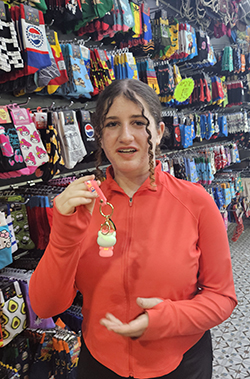
From Amman, 15 of the 18 Hebrew Day students flew via Royal Jordanian Airlines to Istanbul, Turkey, then transferred to Turkish Airlines for a flight to Los Angeles. There they were met by a bus that transported them to San Diego. Three students stayed behind to stay with relatives. The chartered bus trip from Jerusalem to Amman had been arranged by Miriam Belsky, president of the board of San Diego Hebrew Day School, who was visiting Jerusalem on other business.
Despite their 65-year age difference, Bennett and Weiser voiced similar reactions in separate interviews about their experiences. While disappointed that they could not follow their planned itineraries, they recognized that they had experienced an historic moment from which they emerged unscathed.
Bennett’s daughter, Marla, was among the murder victims on July 31, 2002, when terrorists set off a bomb in the cafeteria of Hebrew University, where Marla, 24, had been studying. Linda, who has traveled to the campus site on Mount Scopus where her daughter and six other victims are memorialized, was not permitted to visit there this trip as Israeli authorities considered it too dangerous.
However, a cousin of Linda’s, Jodie Blum, visited her at the King David Hotel. She brought a friend who was a Hebrew University faculty member and that friend had a special gift for Linda, “a paper that Marla had written in about 2000 about her family because her teacher wanted to know everyone’s background,” Bennett said. The paper “was written in Marla’s handwriting, which was very distinctive.” Another visitor, American-Israeli comedian Yisrael Campbell, stopped by the hotel to schmooze with Linda about a movie he made a few years ago, “which was dedicated to Marla’s memory.”
Nava meanwhile played cards and board games with her fellow students in the Prima Palace’s bomb shelter. Given that her father was the trip leader, she said she felt less prone to anxiety than some of the other teens. Parents in San Diego County who spoke with the students by telephone were “prone to worry” and the more worry they expressed, the more stress was felt by some of the students, she reported.
“Parents panicking” made some of the kids terrified, she added.
Crossing into Jordan proved a memorable experience for Nava and Linda.
The students were delayed at the border because one of their number – a boy – attracted the attention of a security guard when he inadvertently carried his belongings through a checkpoint rather than having them separately scanned. Students had been urged not to display any overt symbols of Judaism, Nava said, but when they searched the boy’s belongings they found tefillin, prompting the security guard to escort the boy into a room where he was questioned for over an hour as his classmates waited apprehensively outside. Eventually, the boy was released and his tefillin returned to him. Although classmates inquired, the boy declined to share much about his ordeal.
Asked her feelings about having to hide outward symbols of Jewish identity, Nava responded that she is confident her relationship with God does not depend on any outward symbols.
For Linda, the crossing into Jordan occurred at an especially hot time of day. “My head was perspiring, and my hair was all wet,” she said. “Finally, we drove to Amman through many little towns and villages that reminded me of Mexico with the people’s places being built right on the side of the road. The kids were running around, the people were sitting in chairs—very Third World.”
Originally scheduled to leave at 8 p.m., Linda’s chartered plane didn’t lift off from Amman until after midnight. Food was served on that flight about 1 or 2 in the morning. Linda said the America-bound passengers, including herself, were famished, having nothing to eat since 9 a.m. breakfast at the King David.
*
Donald H. Harrison is publisher and editor of San Diego Jewish World.
Pingback: San Diego Hebrew Day 8th Graders Experience a War in Israel - San Diego Jewish World