By Marsha Sutton
LA JOLLA, California –After experiencing a sudden life-threatening situation in a foreign country three months ago, I now understand more viscerally the “who will live and who will die” part of the High Holy Days.
One minute you’re fine and the next you’re lying on a bed in an emergency room at 2 a.m. facing sepsis and 72 hours until certain death. Add to that that you can’t understand the language as doctors and nurses hover around you discussing your case.
Most of us live our lives as if nothing bad will ever happen. Oh, we surely hear and see – and may personally know – someone, others, who have had a sudden near-death experience. Tragic car accidents, horrific catastrophes. And we all understand, intellectually, how a war veteran can startle when a car backfires.
But to live it and experience the helplessness, the lack of control, the shock of suddenly having to confront your own mortality, unless in my case you make a decision for a radical surgical procedure in a foreign country … well, that brings it all home.
When you survive, not if, your life changes. Priorities change. Things that used to seem important don’t so much any more. And things you took for granted become very important – like being in a place where you can understand what’s being said, somewhere where you can get clear answers and don’t feel so helpless, a safe place where there is compassion and support and a community that both holds you up and grounds you.
There were days in that horrid hospital after the surgery when I really truly wanted to die. But I learned that you cannot will yourself to death – your body somehow knows that you will recover. So you are forced to carry on.
I’m reminded of a famous quote from Samuel Beckett: “I can’t go on. I’ll go on.”
Maybe you’ll have not just physical but emotional scars that need to be dealt with. Maybe if you’re lucky you’ll have a professional who can help with the PTSD, the trauma.
But one thing’s for certain – life will never be the same. We re-evaluate the conditions of our lives and examine how to carry on in a meaningful way.
This is not a story of resilience or courage – not by any means. It’s about the opposite really – about feeling helpless, afraid, confused, and yes — angry and depressed. It’s just survival, and at times reluctant at that.
So that business about who will live and who will die? It’s not just words. It means something.
Some of us have lost loved ones this past year; others may have had to cope with other forms of grief or tragedy. But mourning should not be a lonely business.
That’s why we are blessed to have rabbis and leaders who can offer the comfort and compassion that’s so needed for all of us who grieve – for loved ones missed, for the pain of trauma, for the lost and lonely feeling we all sometimes endure.
As an usher on Rosh Hashanah at Congregation Beth El this year, I greeted congregants at the entrance to the sanctuary with a smile and a Shanah Tova, both of which were always returned – a deeply gratifying feeling of belonging.
For me, Beth El – and to some extent the warm embrace of the greater Jewish community – represents a way to heal, a way forward, a community that offers not just empty words but one that understands that resilience and renewal in the face of trauma and grief are not done alone.
Carrying the weight of inner turmoil and struggle is not meant to be faced in a vacuum. We need community – for support, for comfort, for understanding, for compassion, for connection.
We each wrestle with a burden of our own, some burdens heavier than others. But no one escapes with a lifetime free of distress and, at times, moments of real anguish.
I have a neighbor friend who said something so special to me a week after I returned from Italy after the operation, when I was so despondent and traumatized. He hugged me and said, “We’ve got you now.”
I’ll never forget how those four simple words made me feel no longer alone in my misery.
“We’ve got you now” – community.
This is how is feels to be enveloped by and belonging to a community that offers comfort and care – whether neighbors, dear friends, family or synagogue.
At this time of year, as we attend High Holy Day services and look back at the previous year and face forward to accept whatever lies ahead, I’ve felt a deep, meaningful connection with my synagogue community – and I am honored and grateful to be a part of it.
*
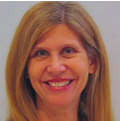
Marsha Sutton is a freelance writer based in Carlsbad, California.
Just wow, Marsha. No words really except that I am glad you’re still here.
Hi Marsha, these are extremely touching words beautiful but painful thoughts written with gut wrenching honesty. Thank you for sharing, May you and yours be inscribed in the Book of Life for a good year, a healthy and happy year.
Hi Marsha,
have no idea that you went through this but wanted to thank you for sharing this beautiful article with us. I look forward to seeing you again soon Ruthi.