Six Key Elements of Judaism Presented in Book by Rabbi Mark Wildes
November 4, 2025
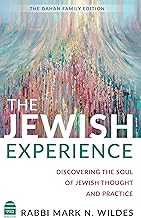
The Jewish Experience: Discovering the Soul of Jewish Thought and Practice by Rabbi Mark Wildes; Maggid publisher; (c) 2025; ISBN 9781592-647125; 312 pages, $29.95
By Rabbi Michael Leo Samuel
Rabbi Dr. Michael Leo Samuel
CHULA VISTA, California — In an era where spiritual seeking often clashes with the fast-paced demands of modern life, Rabbi Mark Wildes’ latest book, The Jewish Experience: Discovering the Soul of Jewish Thought and Practice, emerges as a timely and compelling guide.
This volume is the first in a planned three-part series aimed at bridging the gap between ancient Jewish wisdom and contemporary existence. Drawing from over three decades of engaging with young professionals through the Manhattan Jewish Experience (MJE), an organization he founded in 1998, Rabbi Wildes crafts a narrative that is both intellectually rigorous and spiritually inviting.
At a time when antisemitism has surged globally—particularly following the events of October 7, 2023—Wildes poses a profound question: What about Judaism is worth defending? His answer lies not in reactionary defiance but in a deep, experiential embrace of Jewish thought and practice.
As someone who has explored various spiritual traditions, I approached this book with curiosity tempered by skepticism. Judaism, for many outsiders and even some insiders, can appear as a labyrinth of rituals and rules, seemingly disconnected from the quest for personal fulfillment. Wildes, however, dismantles this perception with grace and clarity. He positions Judaism not as an archaic relic but as a vibrant roadmap to meaning, happiness, and connection.
The book’s core thesis is that by delving into fundamental Jewish concepts—God, Torah, Prayer, Kindness and Charity, Shabbat, and Tikkun Olam—we can transform our lives in profound ways. Each chapter is structured to be accessible, featuring “Kabbalah Corners” for mystical insights, quotes from essential sources, “Stop and Reflect” sections for personal introspection, and practical takeaways. Footnotes and further reading lists add scholarly depth without overwhelming the reader.
Wildes’ writing style is conversational and relatable, born from real dialogues with his MJE students—millennials and Gen Zers navigating careers, relationships, and identity in New York City. He avoids dogmatic preaching, instead opting for an intellectually honest approach that acknowledges doubts and questions. This makes the book ideal for beginners encountering Judaism anew, as well as for those with a yeshiva background seeking fresh perspectives. In the wake of recent global events, Wildes emphasizes that strengthening Jewish knowledge is essential for resilience: “We don’t pursue Judaism to fight antisemitism. We fight antisemitism so we can pursue our Judaism.” This refrain, echoed in his promotional blog posts and interviews, underscores the book’s urgency.
The book opens with an introduction that sets the stage, quoting the Rambam (Maimonides) from Mishneh Torah on loving God through knowledge: “You can only love God according to the knowledge you have of him.” Wildes uses this as a springboard to invite readers into a dialogue, promising not blind faith but informed exploration. The six main chapters form the heart of the text, each dedicated to a pillar of Jewish life.
Finding God: In a secular age rife with doubt, Wildes tackles the existence of a supernatural, personal God head-on. He draws on rational arguments, such as the improbable survival of the Jewish people through millennia of persecution—from the Exodus to the Holocaust and beyond—as evidence of divine intervention. He also appeals to intuition, exploring the “stirrings of the soul” and the intricate design of the human body. A standout section discusses the Torah’s view of the soul (neshama) as an eternal spark of the divine, with mitzvot (commandments) serving as tools to reveal its essence.
The Kabbalah Corner here introduces concepts from the Zohar, explaining how the soul’s multi-layered structure (nefesh, ruach, neshama) mirrors the world’s spiritual dimensions. Wildes shares anecdotes from his students, like a skeptic who found faith through witnessing a miracle in everyday life, making the abstract tangible. The “Stop and Reflect” prompts encourage readers to journal about personal experiences of awe, fostering a sense of connection.
This chapter’s strength lies in its balance: It doesn’t shy away from philosophical challenges, such as the problem of evil, but counters them with Jewish responses, like the idea that suffering can refine the soul. For me, this resonated deeply, reminding me of Viktor Frankl’s logotherapy, which echoes Jewish emphases on meaning amid adversity.
Torah: Moving from belief to scripture, Wildes makes a case for the Torah’s divine origin while addressing common rebuttals. He contrasts the Written Torah (Tanakh) with the Oral Tradition (Mishnah, Talmud), clarifying misconceptions that often confuse even educated Jews. For instance, he explains how the Oral Law prevents rigid literalism, allowing Judaism to adapt while remaining rooted. The chapter delves into how Torah study leads to dveikut—spiritual intimacy with God—transforming passive reading into active engagement.
Wildes uses historical examples, like the transmission of Torah through generations, to build credibility. A memorable quote from Rabbi Akiva illustrates perseverance in study despite Roman persecution. The takeaways include practical tips, such as starting with a weekly Torah portion (parsha) study group. In a post-October 7 world, Wildes ties this to identity: Knowing Torah equips us to articulate why Judaism endures, countering narratives that paint it as outdated.
Prayer: Often seen as rote recitation, prayer is reframed here as a transformative practice for mindfulness and divine bonding. Wildes breaks down the daily service into four parts: Birchot Hashachar (morning blessings) for gratitude, P’sukei D’zimra (psalms of praise) for inspiration, Shema U’birchoteha for affirmation of unity, and the Amida (silent devotion) for personal supplication. He draws parallels to modern mindfulness techniques, noting how prayer cultivates presence in a distracted world.
The Kabbalah Corner explores the mystical ascent during prayer, likening it to climbing Jacob’s ladder. Wildes addresses barriers like language hurdles (Hebrew vs. English) and shares stories of students who found emotional release through tefillah. A “Stop and Reflect” asks readers to experiment with one prayer element daily, making it actionable. This chapter shone for its empathy toward those who struggle with prayer, offering gentle encouragement rather than judgment.
Kindness and Charity: Wildes posits that true worth comes from giving, quoting philanthropist Sir Moses Montefiore: “We are worth what we are willing to give.” Rooted in textual sources like the Torah’s commands for tzedakah (charity) and gemilut chasadim (acts of kindness), this chapter explores obligations toward fellow Jews and all humanity. Practices such as hospitality (hachnasat orchim), visiting the sick (bikur cholim), and comforting mourners are detailed, showing how they shape character—from acting kindly to becoming a kind person.
In the context of rising antisemitism, Wildes urges extending kindness beyond the community as a form of resistance, embodying Jewish values. The takeaways include simple challenges, like volunteering weekly. This section’s warmth is palpable, reflecting Wildes’ own approachable style at MJE.
Shabbat: Described as the “beating heart of Jewish life,” Shabbat is portrayed as salvation from our “frantic, screen-saturated age.” Wildes outlines its Torah and rabbinic sources, guiding readers through a full Shabbat experience—from candle lighting to Havdalah. He emphasizes rest not as laziness but as soul renewal, with prohibitions creating space for relationships and reflection.
Anecdotes from students, like one who “turned off the cell phone” and discovered inner peace, illustrate its power. The chapter notes Shabbat’s unique role in reconnecting Jews to their roots more than any other mitzvah. In discussions with figures like Shai Davidai at the book launch, Wildes highlights starting small to build observance.
Tikkun Olam: The final chapter elevates Jewish practice into global purpose, framing tikkun olam not as vague social justice but as partnering with God to repair a fractured world. Wildes traces the concept from Lurianic Kabbalah—where human actions gather divine sparks scattered at creation—to practical imperatives like environmental stewardship, ethical business, and interfaith dialogue. He challenges the secular co-opting of the term, insisting that true repair flows from Torah-guided intent. Stories of MJE alumni launching initiatives, from food drives to advocacy amid post-October 7 tensions, bring this to life. The “Stop and Reflect” prompts urge readers to identify one “broken” area in their lives or communities and commit to mending it, turning ideology into action.
In sum, The Jewish Experience succeeds brilliantly as an entry point and a revitalizer, blending scholarship, storytelling, and sincerity without ever feeling preachy. Rabbi Wildes doesn’t just defend Judaism—he invites us to live it, proving its relevance in a world hungry for depth. Whether you’re a curious seeker, a lapsed observer, or a committed practitioner, this book ignites a spark of possibility: that ancient wisdom can illuminate modern souls, fostering resilience, joy, and unbreakable connection. In embracing these practices, we don’t merely survive challenges—we thrive, building a brighter future one mitzvah at a time. A must-read that leaves you inspired and eager for the series’ next volumes.
*
Rabbi Dr. Michael Leo Samuel is the spiritual leader of Temple Beth Shalom in Chula Vista, California.

 CHULA VISTA, California — In an era where spiritual seeking often clashes with the fast-paced demands of modern life, Rabbi Mark Wildes’ latest book, The Jewish Experience: Discovering the Soul of Jewish Thought and Practice, emerges as a timely and compelling guide.