On Two Legs and Three Wheels by Cary D. Lowe; Black Rose Writing; (c) 2025; ISBN 16851-35587; 337 pages; $18.95.
By Rabbi Dr. Michael Leo Samuel
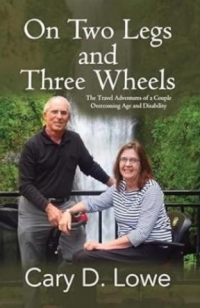 CHULA VISTA, California — On Two Legs and Three Wheels, as referenced in the provided context from East County Magazine, is a travel memoir by Donald Lowe, chronicling the adventures of a couple in their seventies who navigate global journeys despite mobility challenges, particularly due to the wife’s multiple sclerosis. The title evokes a vivid image of their travel dynamic—one partner ambulatory, the other relying on a mobility aid, likely a wheelchair or tricycle—symbolizing their shared resilience and adaptability.
The book’s premise is inherently compelling: a couple, undeterred by age or physical limitations, embarks on journeys spanning the Arctic Ocean to tropical islands, deserts to urban centers, via planes, trains, cars, buses, and even a cruise in San Diego’s waters. Lowe’s prose, described as offering “wonderful descriptions of sites, flora and fauna, views, accommodations, and restaurants,” invites readers into a vicarious travel experience. The narrative captures the sensory richness of diverse locales—imagine the crisp chill of Arctic air or the vibrant chaos of bustling city markets—making each destination palpable. This aligns with the best of travel memoirs, like Bill Bryson’s A Walk in the Woods, where vivid imagery transports readers. Lowe’s ability to paint these scenes ensures the book is accessible and engaging, appealing to armchair travelers and adventurers alike.
The emotional core of the narrative lies in its portrayal of perseverance. The couple’s story, with one partner navigating multiple sclerosis, resonates with the theme of overcoming obstacles through “perseverance and ingenuity, combined with equal measures of patience and flexibility,” as Lowe notes. This echoes the spirit of other disability-focused memoirs, such as Jean-Dominique Bauby’s The Diving Bell and the Butterfly, where physical limitations are met with profound resilience. The book’s uplifting tone, emphasizing that “the world has become far more user-friendly for disabled travelers,” offers hope and practical inspiration. Lowe’s reflection on his own ambulatory past—hiking Swiss Alps, climbing Mayan pyramids—contrasts poignantly with his wife Trish’s current reliance on mobility aids, highlighting their shared adaptation. This dynamic adds a layer of intimacy, making their story not just about travel but about partnership and mutual support.
The book’s structure, weaving together anecdotes from varied destinations, keeps the pace brisk. Each chapter likely serves as a vignette, detailing a specific trip or challenge, from negotiating accessibility in foreign hotels to savoring local cuisines. This episodic approach suits the memoir’s goal of showcasing travel’s joys and hurdles, allowing readers to dip into different experiences without needing a linear narrative. Lowe’s background as a retired attorney and professor lends credibility to his observations, grounding the memoir in a reflective, almost academic lens that elevates it beyond mere travelogue. His nod to the Rolling Stones—“You can’t always get what you want, but if you try… you’ll get what you need”—infuses the text with a playful wisdom, framing their challenges as surmountable through effort and adaptability.
In conclusion, On Two Legs and Three Wheels is a heartfelt, engaging memoir that celebrates travel, resilience, and partnership in the face of physical challenges. Its vivid descriptions and optimistic tone make it a delightful read, particularly for those inspired by stories of overcoming adversity. However, its tendency to prioritize breadth over depth and its occasionally surface-level treatment of disability’s emotional complexities prevent it from reaching the genre’s highest echelons. It’s a book that uplifts and informs, ideal for readers seeking inspiration or planning accessible travel, but it could push further into the raw realities of its subject matter. For its accessibility, warmth, and vivid travelogue, it earns a commendable 80/100, a testament to its ability to inspire without fully transcending its narrative constraints.
This is a fine spirit to uplift people who have suffered from this terrible illness. Everyone needs a daily dosage of hope—On Two Legs and Three Wheels delivers it in generous, globe-trotting measures, proving that the human spirit, like a well-worn passport, only grows richer with every stamp of adversity.
*
Rabbi Dr. Michael Leo Samuel is spiritual leader of Temple Beth Shalom in Chula Vista, California.