By Dana Toppel in San Diego
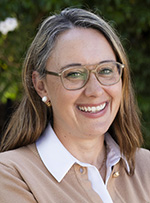
“Because of what I went through, I had no teeth in my mouth. I never smiled with an open mouth,” said Ben, 89.
Ben survived the Holocaust. Today, he lives in San Diego as one of thousands of Holocaust survivors still with us. His story is a testament not only to unimaginable resilience, but also to the responsibility we share to ensure that those who endured history’s darkest chapter can age with dignity.
While the number of Holocaust survivors is steadily declining, their needs are growing more urgent. I see this every day in my role at Jewish Family Service of San Diego, which supports more than 500 Holocaust survivors in San Diego and Orange Counties. They range in age from 81 to more than 100 years old and speak English, Russian, Yiddish, Ukrainian, French, Hungarian and other native languages. Each survivor carries a lifetime of memories of loss, survival, rebuilding and perseverance.
These men and women endured unspeakable trauma during the Holocaust. Many lost parents, siblings, spouses and entire communities. They rebuilt their lives from nothing, often arriving in the United States with no resources and deep emotional scars. Today, as they age, many face new challenges, often alone and in poverty.
In just the past three years, 234 newly identified Holocaust survivors have reached out to us for help. This increase is not because survivors are suddenly in greater need, but because they are living longer and outlasting their financial resources. Like many older adults in Southern California, they are struggling with the rising costs of housing, medical care, food and caregiving.
The reality is stark. Four out of five Holocaust survivors we serve are living in poverty, with most surviving on less than $1,600 a month. That amount must cover rent, utilities, food, medications and transportation expenses that continue to rise while their fixed incomes do not. For survivors who already endured deprivation and hunger, this insecurity can be retraumatizing.
Our goal is simple: to help survivors remain safely and comfortably in their own homes for as long as possible. Services include home care assistance, transportation to medical appointments, access to nutritious food and help navigating complex healthcare systems. Just as important is addressing the emotional and social impacts of aging and trauma.
We listen. We visit. We ensure survivors know they are not forgotten.
Many Holocaust survivors also need help accessing Claims Conference reparations – funds provided by the German government as a measure of justice for Jewish victims of Nazi persecution. These reparations can be life-changing, but the process is complex. Survivors must complete annual paperwork, and many who were never compensated need help applying for the first time. For someone in their 80s or 90s, often with limited English or mobility challenges, this support can mean the difference between stability and despair.
For Ben, support changed his life in an unexpected way. Dental care, something not covered by insurance, restored more than his physical health. After a year of treatment and seven implants, he shared, “The dentist reengineered my whole mouth. And finally, I can open my mouth and give a smile.”
That smile represents more than dental care. It represents dignity. It represents healing. It represents what is possible when we show up for survivors in meaningful ways.
Every Holocaust survivor deserves to age with dignity, comfort and the reassurance that they are not alone.
This sense of connection is especially critical today. For survivors who lived through state-sponsored hatred and violence, the rise in antisemitism and hate crimes can reignite fear and trauma. Many survivors tell us they feel less safe, more isolated and deeply concerned about the world their grandchildren are inheriting. Addressing their emotional well-being is not optional; it is essential.
On International Holocaust Remembrance Day, January 27 is designated by the United Nations as a global reminder of the dangers of hatred, bigotry and antisemitism. The date marks the liberation of the Auschwitz-Birkenau German Nazi Concentration and Death Camp on January 27, 1945.
As time takes more of the survivor generation, it is our responsibility to honor the memory of those who are no longer with us. At the same time, we carry an urgent obligation to care for the survivors who are still here — individuals who continue to live with the lasting impacts of what they endured.
Yet at this critical moment, essential funding that supports Holocaust survivors in California is at risk. Governor Gavin Newsom and the California Legislature previously allocated $14.5 million to California’s Holocaust Survivor Assistance Program, sustaining services for more than 2,000 survivors across the state through multiple agencies. This funding will expire in June.
The need, however, will not.
This moment calls on all of us: community members, advocates, supporters and policymakers to come together and ensure that Holocaust survivors in California continue to receive the care they deserve in the second half of 2026 and beyond.
We owe them more than remembrance ceremonies and historical lessons. We owe them compassion in action.
We must keep our promise to never forget and never abandon.
*
Dana Toppel is the CEO of Jewish Family Service of San Diego, which operates the Supporting Our Survivors program for Holocaust survivors in San Diego and Orange Counties. She serves on the California Commission on Aging.