Parshiot Vayakhel Pekudei (Exodus 35:1-40:38)
By Barrett Holman Leak
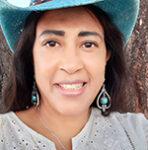
I am writing on the road, some in the car as we travel, some in my hotel room, and in a quiet corner of the hotel. I am blessed to be spending a few days with an assembly of several hundred other Women of Reform Judaism. There is nothing quite so memorable as a road trip in a car full of women! Packing in all the luggage and bags (we were each to bring one small carry-on). Carpooling without getting too lost. Adjusting the A/C for those having “personal summers.” Pit stops. Finding a delicious restaurant someone remembers (which you end up at after being asked which of several places you want to go, and you then choose one, and the questioner says they don’t like that one, so, you will all be going to the restaurant she already had in mind; now you at least feel you were included in the decision). And lots of laughter and storytelling.
This evening we will welcome Shabbat together. In this portion today, we reach a momentous conclusion. We are finishing not just one, but two Torah portions—Vayakhel and Pekudei—and with them, we close the entire Second Book of the Torah, Shemot.
If we look at the journey we’ve taken through this book, it’s staggering. We began in the depth of Egyptian slavery, moved through the miracles of the Ten Plagues, stood trembling at the foot of Mount Sinai, and survived our devastating spiritual failure via the Golden Calf. Now, we arrive at the resolution.
Vayakhel begins with “And he assembled.” Moses gathers the entire community. This is a crucial moment of healing. After the division caused by the Golden Calf, Moses brings everyone back together for a singular purpose: the building of the Mishkan.
But before a single gold ring is forged or a single curtain is woven, Moses reminds them of one thing: Shabbat. He tells them that even the most sacred work in the world—building a home for the Divine—must stop for the Seventh Day. It is a reminder that our “doing” must always be grounded in “being.” The rest of these portions move with incredible detail. Vayakhel focuses on the generosity of the people. Moses asks for contributions, and the response is overwhelming. People bring gold, silver, copper, yarns, and animal skins. In fact, they bring too much. It is perhaps the only time in history that a fundraising campaign had to be officially shut down because the people’s hearts were so open. We see the master craftsmen, Bezalel and Oholiab, taking these raw materials and transforming them into the Menorah, the Table, the Altars, and the Ark.
Then we move into Pekudei, which means “Accountings.” This is the audit. Moses accounts for every shekel and every talent of metal. It teaches us that holiness requires transparency and integrity. We see the final tailoring of the Priestly Garments, and finally, the assembly of the structure itself. The book ends with the Cloud of Glory filling the Tabernacle. God has “moved in.”
Exodus 35:26 says: “And all the women whose hearts stirred them up in wisdom spun the goats’ hair.”
Rashi (Rabbi Shlomo Yitzchak) points out something extraordinary about this. Normally, you shear a goat and then spin the wool. But the text implies that these women were so “wise-hearted” that they spun the hair while it was still on the backs of the living goats. This is a powerful metaphor for creating holiness while life is moving, jumping, and chaotic. As I look around this gathering of Reform Jewish women, I see the faces of those who carry on this tradition of “making something out of nothing.”
When I think of a “wise-hearted” woman who knew how to spin the materials of life into a sanctuary, I think of my mother. After becoming a widow, she was a woman who navigated the “moving goats” of a harsh reality to ensure I had every opportunity. She was suddenly the sole provider, yet she used every skill she possessed—her music, her hands, her intellect—to open doors for me.
She played the piano, guitar, violin, and flute to bring in extra money. She worked in the high-pressure environment of a stock brokerage, where she endured the indignity and pain of being openly sexually molested and harassed by the brokers she worked for. Yet, despite that darkness and the weight of her grief, she never stopped spinning. She turned her talent and her sheer resilience into the physical items I needed, the open doors I walked through, and the future I was able to build. She took the raw, sometimes bitter materials of her world and wove them into a life of beauty for me. And you can be certain she instilled that valuable resilience and skill in me, and I, in turn, intentionally teach this to other people to enable them to get back up after every knockdown.
We see this same “wise-heartedness” right here in our Sisterhood. Just this weekend at our Convention, I learned of two women who embody this sacred weaving. They are like sisters. When one of them had open-heart surgery, the other didn’t just send a card. She traveled a long distance to stay with her.
She became the “architect” of her friend’s recovery—making sure she exercised every day, ensuring she took her medications, and managing her nutrition so that today, that friend is back to full, vibrant health. That is what it looks like to “spin the goats’ hair.” It is taking the fragile, moving pieces of a friend’s life and holding them together with wisdom and fierce love until they are strong again.
These are Chachmat Lev—Wisdom of the Heart. It isn’t just a professional skill; it is the ability to see a need and meet it with everything you have. Whether it is a mother playing four instruments to pay the bills or another Jewish woman acting as a recovery coach for someone in need, this is the labor that builds our living Mishkan.
When the women of the desert brought their textiles to Moses, they weren’t just bringing fabric; they were bringing their intent. They were bringing the hours of patience, the gentleness of their hands, their ability to make something out of nothing and their ability to see the Divine even when life was at its most difficult.
As we finish the book of Exodus, we say the words: Chazak, Chazak, v’Nitchazek—Be strong, be strong, and may we be strengthened.
We strengthen each other when we bring our unique “wisdom of the heart” our stories to the community. Like the women in the desert, like my mother, and like our sisters here at our sacred gathering, we don’t need to wait for life to be perfect to start living and contributing to it. We only need to be ourselves and give from our hearts.
May we all be blessed with “stirred hearts.” May we recognize that our resilience and our care for one another are the very materials God is waiting for us to use to build a home for the Divine in this world.
Chazak, Chazak, v’Nitchazek. Shabbat Shalom.
*
Barrett Holman Leak is a freelance writer based in San Diego.