By Shayna Kaufmann in San Diego
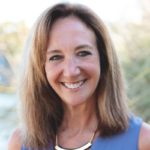
Tuesday, March 3rd was my 61st birthday. In “normal” times, this birthday probably wouldn’t have been a big deal. In fact, I might have even groaned at the reality of being further into my 60s. But this was not a normal year. Eight months ago, I wasn’t sure I would even be here to celebrate it.
As soon as I was diagnosed with metastatic cancer this past July, my husband and I came across statistics online which stated an average life expectancy of seven months for my type. We were obviously shocked, but there was still a part of me that held onto the fact that this was generalized information, not taking into account my personal situation.
But about a month later, my (former) oncologist sat across from us and told me, very matter-of-factly, that my prognosis was “about a year.” Google is one thing but hearing this from someone who was looking at my scans and labs was another. I remember watching my husband’s entire body slump and his mouth slightly open in disbelief, as if words eluded him.
I immediately pushed back. “But there are miracles, there are outliers… there are people who beat this.” And each time, he shut me down. “Yes, but cancer is smart,” he said. “Cells mutate. They become resistant to chemo after a while. Let’s make sure you have something for pain.”
I was stunned. He was literally walking me towards my grave. He was completely devoid of any hope and, even worse, chipped away at mine.
As a psychologist—as someone who understands the profound connection between mind and body—I know how dangerous it is to lose hope. Hope is not a luxury in moments like these. It is a lifeline.I could not afford to let anyone define the limits of what was possible for me. I needed hope as much as I needed treatments.
At the beginning, I wasn’t sure I could beat the disease. My tumors were growing rapidly, and I was fearful they had too much of a headstart. But I was determined to heal and retain hope: So I began, in small but intentional ways, to protect my hope—not by denying my reality, but by choosing not to collapse into it.
- I bluntly told people that I only wanted positivity around me and would never discuss timelines. I was not interested in hearing any cancer stories unless they had a positive outcome and the person was still alive.
- I read books on characteristics of people who defied the odds and was thrilled to learn that I shared the majority of those traits. My hope grew. I could absolutely be one of them.
- I asked those following my journey to see me healed, and many friends wrote that they believed I would. Each one of those affirmations lifted me and gave me strength.
- And, in those moments when my hope wavered, my community held it for me—through prayers, messages, and love. Many times, I felt as though I was being carried by something larger than myself. Maybe that’s what collective hope feels like.
When I blew out the candles this year, I didn’t have to make a wish. It already came true. I simply paused and took in the beautiful faces of those around me, while bursting with gratitude.
Life is fragile, unpredictable, and profoundly precious. None of us knows what the future holds. But if there is one thing this experience has taught me, it is this: Hope makes a huge difference. Not because it guarantees an outcome but because it shapes how we live in the moments we are given.
We all need hope at times, and not just when facing a serious illness. We need hope when we are struggling emotionally, when a relationship feels uncertain, when we feel unable to reach a goal, or anytime we feel like giving up.
In all of these situations, hope is what keeps something open inside of us. Hope matters… a lot.
With gratitude and an abundance of hope,
*
Clinical psychologist Shayna Kaufmann, Ph.D., is an author and freelance writer.