By Rabbi Dr. Israel Drazin in Pikesville, Maryland
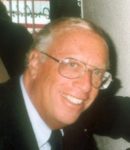
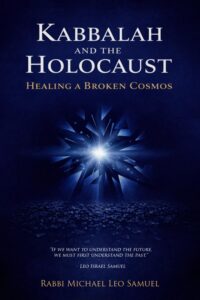 Rabbi Dr. Michael Leo Samuel is an American rabbi, educator, author, and lecturer whose many superb books span Jewish theology, philosophy, biblical interpretation, mysticism, and interfaith dialogue.
Born in San Francisco and raised in California, he is the son of a Holocaust survivor to whom he dedicates his 2026 book. The Holocaust experience significantly influenced his reflections on suffering, religion, and Jewish resilience, and produced some of his writings that benefit many people.
I am a fan of his writing and have written more than a dozen Forewords to his books, always praising them as they deserve.
He received extensive traditional rabbinic training in Orthodox yeshivot, including rabbinical ordination (Yoreh De’ah) and the higher rabbinic degree Yadin Yadin, which few rabbis hold and which also makes him a judge. He taught Bible and Talmud in Jewish day schools before serving as a congregational rabbi. He later became affiliated with the Conservative movement while maintaining an intellectually broad and ecumenical approach to Judaism. In 1995, he was awarded a PhD in pastoral counseling from the San Francisco Theological Seminary.
Rabbi Samuel, who serves as the pulpit rabbi at Temple Beth Shalom in Chula Vista, California, has written extensively on subjects ranging from the Hebrew Bible and Philo of Alexandria to Maimonides, Jewish mysticism, psychology, ethics, and comparative religion. His writings usually integrate classical Jewish sources with modern psychology, philosophy, literature, and contemporary scholarship.
He published well over 20 books, and the total continues to grow as new titles appear so fast that one thinks they appear monthly. His publications include biblical commentaries, theological studies, works on Philo, Maimonides, Jewish mysticism, pastoral theology, and Holocaust-related subjects.
Among his better-known books are: The Lord Is My Shepherd: The Theology of a Caring God; Birth and Rebirth Through Genesis; Shepherd Song: Psalm 23 and the Shepherd Metaphor in Jewish Thought; Torah from Alexandria (multiple volumes); Rediscovering Philo of Alexandria (multiple volumes); Maimonides’ Hidden Torah Commentary; Seeds of Wisdom; The Holocaust: Does Judaism Believe in Gilgul? and Kabbalah and the Holocaust: Healing a Broken Cosmos (2026).
Rabbi Samuel’s writing is clear, very instructive, and easy to read, even for readers unfamiliar with the subjects the books cover. He combines extensive use of classical Jewish sources alongside modern scholarship; integration of psychology, philosophy, and spirituality; willingness to compare Jewish teachings with Greek philosophy, modern science, and literature; pastoral concern for readers struggling with suffering and faith; frequent use of narrative and historical examples to illustrate and make abstract theological ideas fascinating. Rather than presenting Kabbalah as an esoteric speculation that only non-rationalists enjoy, he explains mystical concepts in language that educated non-specialists can understand.
Kabbalah and the Holocaust: Healing a Broken Cosmos is among Rabbi Samuel’s most ambitious theological works. Instead of asking only the usual, most often heard question, “Where was God during the Holocaust?” he investigates how Jewish mystical thought attempts to understand the existence of evil without diminishing God’s justice and human responsibility.
Kabbalah’s central idea comes from the 16th-century mystical system of Isaac Luria. Rabbi Samuel explains this system. He does so by employing Lurianic concepts such as Tzimtzum (divine contraction), Shevirat ha-Kelim (the shattering of the vessels), and Tikkun (repair of creation) as theological metaphors for understanding both “cosmic brokenness” and humanity’s obligation to heal the world.
His book carefully engages with both traditional Jewish sources and modern Holocaust scholarship; a refusal to offer simplistic explanations for immense suffering; a presentation of Kabbalah as a moral rather than merely mystical, non-rational tradition; and an emphasis that healing requires ethical actions, remembrance, and compassion for others as well as for all creation.
He does not claim that Kabbalah explains the Holocaust. Instead, he reveals that mystical symbolism offers ideas for confronting evil and tragedy while preserving hope, responsibility, and joy.
Kabbalah (Hebrew: “receiving” or “tradition”) is the major tradition of Jewish mysticism. Its principal goals are to understand: the nature of God; the creation of the universe; the relationship between God and humanity; the spiritual meaning of the Torah; and how human actions influence the world.
Classical Kabbalah teaches that the infinite God (Ein Sof) is beyond human comprehension but becomes manifest through the Ten Sefirot, divine attributes, through which God interacts with creation. Lurianic Kabbalah teaches that creation involved a primordial “breaking of the vessels,” which Rabbi Samuel explains. These attributes leave sparks of holiness scattered throughout existence, which he also explains. Humans participate in Tikkun, the restoration of creation, which the rabbi shows is done by living ethical lives.
Rabbi Samuel introduces readers to many other significant and fascinating ideas. Among the noteworthy ideas are: The Holocaust is treated as a challenge to the entire cosmic order. Rather than viewing it solely as a historical catastrophe, Rabbi Samuel examines how Jewish mysticism portrays evil as affecting both humanity and the spiritual fabric of creation, and how the breach can be mended.
He shows that Lurianic cosmology serves as a lesson in moral responsibility. The “doctrine of the shattered vessels” is interpreted less as mythology than as a profound metaphor for human participation in repairing a fractured world.
He reveals that the idea of “Divine hiddenness” does not suggest Divine absence. Still, it leaves room for human freedom, including the tragic possibility of great evil and the pleasurable possibility of a utopian world.
His book describes Holocaust memory itself as an act of Tikkun, restoration. Remembering victims is presented not only as a historical obligation but also as a contribution to the restoration of moral order.
He brings psychological healing and mystical symbolism together. He draws connections between pastoral counseling, trauma recovery, and Jewish mystical ideas, offering an unusual interdisciplinary perspective.
He shows that Jewish mysticism is ethically universal. While deeply rooted in Jewish tradition, the themes of healing, responsibility, compassion, and repairing broken relationships are significant for all humanity.
Rabbi Samuel contributes greatly to Jews and non-Jews alike, opening their minds and improving them. For Jewish readers, he introduces classical Jewish thinkers to modern audiences; encourages serious engagement with Jewish philosophy and mysticism; demonstrates that traditional Judaism can converse fruitfully with psychology and contemporary thought; and emphasizes that religion should inspire ethical responsibility rather than dogmatism.
For non-Jewish readers, he offers an introduction to Jewish mystical theology; explains difficult Jewish concepts without assuming prior knowledge; provides a humane perspective on the Holocaust grounded in both scholarship and compassion; and illustrates how Jewish wisdom can contribute to broader discussions of suffering, hope, resilience, and moral responsibility.
In short, Rabbi Dr. Michael Leo Samuel’s writings bridge ancient Jewish tradition and contemporary concerns. His work invites readers—regardless of religious background—to see Jewish mysticism not as an escape from current life and ancient history but as a guide for confronting evil and participating in the ongoing work of healing a broken world.
*
Rabbi Dr. Israel Drazin is a retired brigadier general in the U.S. Army Chaplain Corps.