By Oliver B. Pollak in Oslo, Norway
We witnessed the total eclipse of the sun on August 12 from a cruise ship in the North Sea. At Oslo, Norway we planned to tour the Nobel Peace Center. It was a walking tour that proved too strenuous. After ten minutes off the ship Karen and I were falling behind the group.
Although the guide was accommodating, I judged better to bail than risk the rest of the tour. We bid the group and our traveling companions adieu and continued a self-guided slower paced walk.
Oslo like Copenhagen, and Reykjavik have benefited from the discovery and exploitation of North Sea gas. While they sell the petroleum all over the world the local population prefers EVs – electric vehicles. The revenue from petroleum has fueled social services and iconic public architecture such as eye grabbing libraries and cultural performance spaces.
Our friends continued their tour and purchased a book for what we missed, People Who Change the World, The Little Book about the Nobel Peace Prize and all the Peace Prize Laureates, by Julius Grasaasen (2025) at the Peace Center gift shop. The 266-page paperback lists 143 recipients.
Alfred Nobel (1833-1896), the Swedish chemist who invented dynamite in 1866, created the prizes in his will to benefit mankind. The first Nobel Prizes were awarded in December 1901. They have been awarded to 965 individuals, at least 220 of whom were Jews. The 143 Nobel Peace Prizes have gone to 106 men, 28 institutions, and at least 10 women. At least nine Jews have received the Nobel Peace Prize.
The first Jewish recipients were Tobias Asser (1911), a Dutch lawyer was honored for his work on international law and the Hague Conferences and Alfred Fried (1911), the Austrian pacifist, journalist, and co-founder of the German Peace Society.
The Holocaust, genocide, the State of Israel, Peace in the Middle East, nuclear weapons and permutations of the Cold War are perpetual issues. Almost no peace awards were granted during the two world wars.
René Cassin (1968), a French jurist helped draft the Universal Declaration of Human Rights ratified in December 1948. Henry Kissinger (1973), shuttle diplomat and US Secretary of State, received the award for negotiating the Vietnam ceasefire. Nuclear physicist Andrei Sakharov (1975) represented dissidents, Refuseniks and human rights activists.
Menachem Begin (1978) Prime Minister of Israel received the prize jointly with Egyptian President Anwar Sadat for the Camp David Accords. Elie Wiesel (1986), Holocaust survivor, was honored as a human rights advocate. I met him when his visited Omaha. Israeli leaders Shimon Peres and Yitzhak Rabin (1994) received the award jointly for their negotiations with Yasser Arafat, leader of the Palestine Liberation Organization in formulating the Oslo Accords. I recall Rabin’s assassination and writing his obituary for the Omaha Jewish Press in November 1995. Finally British physicist Sir Joseph Rotblat (1995) was honored for his efforts to reduce nuclear weapons.
Three American Presidents have received the Peace Award: Woodrow Wilson (1919), Jimmy Carter (2002), and Barack H. Obama (2009).
The names of many recipients resonated from my youth. I was familiar with Albert Schweitzer (1952) through the Book of the Month Club and Dag Hammarskjold (1961) as Secretary General of the United Nations (1953-61). Ralph Bunche (1950), the first Black Nobel awardee, mediated the late-1940s Arab Israeli conflict. The UCLA History Department was in Bunche Hall. Martin Luther King (1967) was recognized for his nonviolent campaign against racial segregation. Vice President Al Gore, Jr. (2007) received acclaim for raising awareness of climate change.
I regret not visiting the Peace Museum. I have been to the Peace Museum in Hiroshima, the Canadian Museum for Human Rights in Winnipeg and visited a multitude of war memorials, museums and cemeteries and frequently hum Pete Seegers 1955 lyrics “Where have all the flowers gone…?”
*
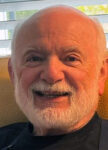
Oliver B. Pollak, Ph.D., J.D. is a professor emeritus of history at the University of Nebraska at Omaha, a lawyer, a member of the Institute for Historical Study, and a SDJW correspondent based in Richmond, California.