By Alex Gordon
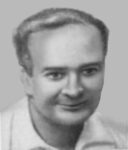
Boris Hessen, a Soviet physicist, philosopher, and historian of science, was born into a Jewish family on August 28, 1893, in Yelisavetgrad, where his father, later a second-guild merchant, was the bank manager and deputy chairman of the city stock exchange committee.
Boris studied at the gymnasium together with the future Nobel Prize laureate in Physics, Igor Tamm. He studied physics and natural sciences at the University of Edinburgh (1913–1914) and the University of Petrograd (1914–1917). Simultaneously with his studies at the Faculty of Physics and Mathematics at Petrograd University, he studied at the Economics Department of the Polytechnic Institute.
In 1917, Hessen went to Yelisavetgrad to be with his father, where he participated in revolutionary events. In August 1917, he became one of the founders and the secretary of the Yelisavetgrad organization of Menshevik internationalists. In September 1917, he was elected a member and secretary of the Yelisavetgrad Council of Workers’ Deputies and, along with Tamm, became a member of the Yelisavetgrad Revolutionary Committee.
Hessen participated in the nationalization of the bank whose branch his father managed. He left the Menshevik party when he learned that its leaders condemned the October Revolution. In 1918, Hessen went underground due to the rise to power of Hetman Pavel Skoropadskyi in Ukraine. In 1919, he became a member of the All-Russian Communist Party of Bolsheviks. In April 1919, Hessen returned to Yelisavetgrad, where he worked as the deputy head of the Department of Public Education and a member of the board of the Department of Labor.
During the Civil War, Hessen fought in the Red Army units in Ukraine, participated in the suppression of the Grigoriev uprising as part of the Yelisavetgrad Communist detachment, which captured Yelisavetgrad in May 1919, and worked in the Political Directorate of the Revolutionary Military Council (1919–1921) and at the Sverdlov Communist University (1921–1924).
After the Civil War, Hessen continued his studies in physics at the Institute of the Red Professorship (a higher educational institution of the Central Committee of the All-Russian Communist Party of Bolsheviks for training top ideological cadres of the Communist Party and teachers of social sciences in higher educational institutions), which he graduated from in 1928. After graduating from the Institute of the Red Professorship, he initially worked there.
In 1931, Hessen became a professor of physics at Moscow State University. Since the establishment of the Faculty of Physics at Moscow State University (May 1, 1933) and until December 15, 1934, he was the dean of this faculty. He conducted a seminar on the theory of relativity and a seminar on the methodology of physics. On February 1, 1933, Hessen was elected a corresponding member of the Academy of Sciences of the USSR in the Department of Social Sciences (philosophy).
In February 1935, Hessen was awarded the degree of Doctor of Physical and Mathematical Sciences without defending a dissertation. Since 1935, he held the positions of director of the Research Institute of Physics at Moscow State University and deputy director of the new Physical Institute of the Academy of Sciences. He was a member of the editorial board of the journal “Progress in Physical Sciences” and the “Great Soviet Encyclopedia.”
In 1930-1931, philosophical discussions accompanied by political accusations took place in the USSR, during which Hessen’s philosophical views on modern physics were subjected to criticism that bordered on persecution, after which Hessen practically ceased to publish (prior to this, he had presented a series of works that provided a philosophical justification for modern physical theories). A resolution was adopted in which Hessen was accused of “identifying the latest works of bourgeois naturalists with Marxism” and asserting that the provisions of the “theory of relativity largely coincide with dialectical materialism.” He was blamed for a mechanistic interpretation of the problem of randomness and the “incorrect” definition of matter.
Hessen had to formally acknowledge his mistakes and repent for the separation of theory from practice. He continued to be exposed for his fascination with bourgeois sciences, among which the theory of relativity was mentioned, and was accused of “mathematical idealism” and a “non-Marxist approach to the laws of thermodynamics.” As a result, Hessen not only stopped publishing new articles on physics issues but also did not complete the works he had already started, “Mechanical Materialism and Modern Physics” and “The Statistical Method in Physics and a New Justification of Richard von Mises’ Theory of Probability.”
The only exception to Hessen’s enforced “silence” during this period was his report on Newton and the book published based on it. Hessen’s report “The Socio-Economic Roots of Newton’s Mechanics” was read in 1931 at the second International Congress on the History of Science and Technology in London.
Boris Hessen’s report had the effect of a bombshell on Western scientists. For Europe, accustomed to seeing the history of science as merely an evolution of “pure thought” and brilliant insights, Hessen’s Marxist approach was a shock. The listeners were struck by how he connected Newton’s abstract mathematical equations with very earthly matters—logistics, ballistics, mine drainage, and the nascent capitalism.
It was 1931, the height of the Great Depression in the West. Against this backdrop, Hessen’s report, which proposed a clear, systematic, and materialistic model of societal and scientific development, appeared to many intellectuals as an attractive alternative to the crisis of capitalism.
Traditional historians of science accused Hessen of “vulgar Marxism.” In their opinion, he oversimplified the process of cognition, reducing Newton’s genius to merely serving the economic needs of the bourgeoisie.
Hessen’s report initiated a long-standing academic debate. Internalists argued that science develops exclusively according to its own internal logical laws. Externalists (followers of Hessen) argued that science is shaped by external socio-economic and cultural factors.
Abram Ioffe, one of the leaders and organizers of Soviet physics, referred to as the “father of Soviet physics,” said that Hessen was the only philosopher who understood modern physics.
At his Department of the History and Philosophy of Natural Science, Hessen employed people who had previously been persecuted for their involvement in the Trotskyist opposition. In this regard, on March 3, 1936, the committee of the Communist Party of Moscow State University decided that Hessen had shown “a dulling of party vigilance.” As a result, on August 22, 1936, Hessen was arrested on fabricated charges of participating in a counter-revolutionary organization and preparing terrorist acts.
Hessen was accused of “maintaining personal connections with those arrested in the case of the Trotsky-Zinoviev terrorist center and engaging in counter-revolutionary Trotskyist activities until recently.” On December 20, 1936, he was convicted at a closed session of the Military Collegium of the Supreme Court, where he admitted his guilt. On the same day, he was shot. He was posthumously expelled from the USSR Academy of Sciences. Hessen was buried in Moscow at the Donskoy Cemetery in a common grave.
On April 21, 1956, Boris Hessen was posthumously rehabilitated by the Military Collegium of the Supreme Court of the USSR. The General Assembly of the Academy of Sciences reinstated him on March 5, 1957. The employes of the NKVD (People’s Commissariat for Internal Affairs) who fabricated the case against Hessen were themselves repressed: the head of the Moscow NKVD, Stanislav Redens, who signed the arrest warrant for Hessen, and three investigators who tortured him were shot.
The Soviet repressive machine, drenched in the blood of millions of people and intoxicated by mass killings, also destroyed the executioners it had created.
*
Alex Gordon is professor emeritus of physics at the University of Haifa and at Oranim, the Academic College of Education. He is the author of 12 books