By Ronit Weiss Berkowitz
Translated from Hebrew
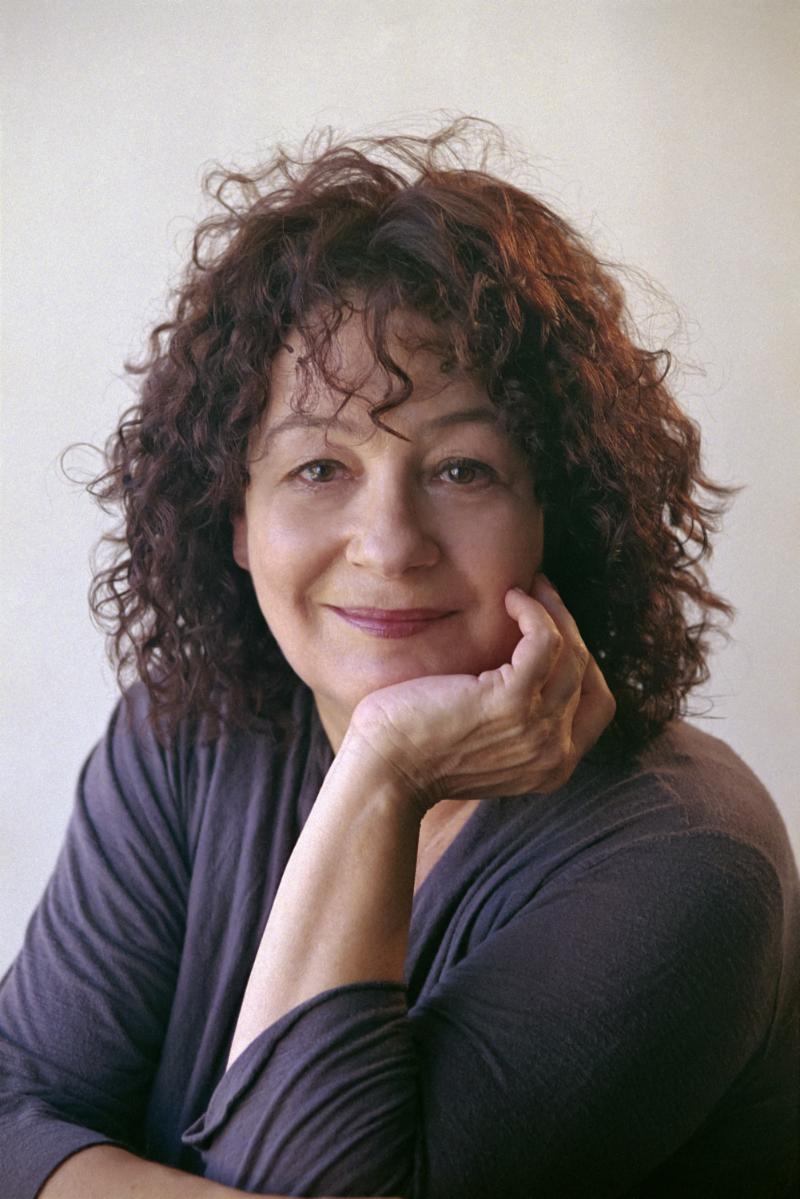
SAN DIEGO — I am still emotionally overwhelmed by the powerful experience I had recently in class. I apologize for writing in Hebrew, it comes to me faster and I do not want those moments to slip away.
I planned to talk to the students briefly about the shooting attack at the Poway synagogue, to tell them what happened here two days ago, so close to home. To let them know and understand the implications of what happened there before we would move on to the planned class topic. I also mentioned that this week happens to include Holocaust Remembrance Day, which gives an additional shocking dimension to that so-called “act of hatred.” It was important to me to connect these two things.
And then it hit me all of a sudden, this is the first Holocaust day I’ve experienced without my mother (who passed last year)…
Most of the students have pretty vague knowledge of the Holocaust. I told them that my mother was 16 when she was taken to the Auschwitz extermination camp, and informed them about extermination camps and the Final Solution. I told them that I never had the joy of knowing or seeing a grandmother, grandfathers or uncles, and informed them about signs that read “Entry to dogs and Jews is forbidden.” And I began to cry.
I have been teaching for many years and I have never cried in front of a class. Even in the most intimate atmosphere, there is always some distance between lecturer and students, but the longing for my recently deceased mother and the juxtaposition of the shooting and Remembrance Day, and perhaps also the lecture by Rabbi Scott Meltzer … stripped me of all defenses.
I shared with the students the story of my parents’ lives. They lost everything – family, home, language, security, citizenship, mental and physical health – and the happiest day of their lives was not the liberation from the death camps, or the day they were married in the Displaced Persons camp, but rather it happened when the UN voted to approve the establishment of the State of Israel.
I told my students (with tears) what it is to grow up in a house that has no past – no picture or object from a previous life – a life that must rise like a phoenix from the sands. And how my mother always declared that she was still alive only in order to tell what she had witnessed. That was the only reason she could find to justify her survival…
I told the students how important it is to tell – to remember through story what made us who we are and where we came from. We tell stories to remember the stories of our parents, to be part of humanity, to choose which people we would like to be. I have been encouraging them since the beginning of the semester to write about their families, who come from a rich cultural diversity of worlds and languages. This diversity makes it so important for me to hear their stories.
I shared the fact that I, too, was a “first generation” university student like many of them (instead of attending college, my parents struggled to survive in the camps for another day, another hour) and my students’ pride in this achievement of making it to university is familiar to me and exciting.
I do not remember everything from that class, it was very emotional and spontaneous. I do remember that I explained that although I am completely secular, do not attend synagogue, that as a Jew, this hatred in Poway was directed directly at me, wounding me and breaking my heart. Because I grew up in a house where Mother yelled at night in her sleep, and until her last day she had not forgotten the smell of the chimney smoke in Auschwitz. That is how far hatred can go.
I saw the students’ eyes gleaming with tears. They rose to embrace me. Jonathan said that his great-grandfather was one of the liberators of Auschwitz. Jesse said her family also had Holocaust survivors. An amazing conversation took place all of a sudden, in which students, including LGTBQ students, shared harsh experiences of racism and violence, especially if they were not “white.” Students discussed their immigrant parents and their desire to belong – to be human, not Jews or Mexicans or Muslims or people of color or lesbians or foreigners, but simply people. It was the most moving lesson I’ve ever experienced. No partitions or barriers.
At the end, the students came to hug me, commiserated with my sorrow and thanked me for sharing my story. I thanked them for their support, apologized for the tears and told them I loved them.
*
Ronit Weiss Berkovitz is currently the Jewish Studies Program’s Visiting Israeli Artist. She is teaching ENGL 577 “Techniques of Screenwriting” this spring. Her residency at SDSU is made possible by the Murray Galinson San Diego Israel Initiative and the Israel Institute.