By Rabbi Dow Marmur
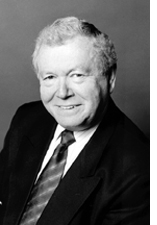
JERUSALEM — Today (Sept 1) is the 80th anniversary of my becoming a displaced person. That’s how I described the day in my memoir Six Lives:
On September 1, 1939, my world collapsed. I mark the date every year as the anniversary of my anxiety neurosis. It was the day Nazi Germany invaded Poland and my mother and I, together with a few others, were taken to the eastern part of the country. The owner of the glassworks where my father worked had a farm outside Lwow (Lviv nowadays) and was prepared to offer us shelter there on the understanding that my father stayed behind to look after the factory. Of course, they all believed that the war would be over in days or weeks and then we would return home and continue life as before.
I recall no details of the journey other than it was horrendous. The cart that the horses were pulling was full of people and household items. At some point a jar of jam broke and landed on me. It was very sticky and most uncomfortable. I can’t bear sticky things to this very day.
The journey marks a rupture and a dramatic end to my childhood. I still long for it.
After some seven years as a Holocaust refugees in different parts of the Soviet Union (Ukraine, Siberia and Uzbekistan) I returned with my parents to Poland. But it wasn’t a homecoming. I couldn’t even go to a state school out of fear of being persecuted by fellow students, poisoned by notorious Polish anti-Semitism, and probably also by hostile teachers.
Two years later we emigrated to Sweden. Nine years after that, now with my wife Fredzia, a survivor of the ghetto of Lodz and the concentration camp of Ravensbrueck, we became immigrants in Britain. I came to study in a rabbinic school hoping to serve God and my people. A quarter-of-a-century later we emigrated to Canada.
Today, as residents of Israel, the land of our ancestors, we’re still viewed as immigrants (olim in Hebrew) by our people and as usurpers by our Palestinian neighbors.
We are displaced but not homeless. Not being at home anywhere has made us, in a way, at home everywhere and in many languages. I spoke Yiddish, the language of Polish Jews, with my parents but we corresponded in Polish. I speak Swedish to my wife, English to my children and grandchildren, and Hebrew to my neighbors in Jerusalem.
As I’m telling my story I know that versions of it are being told by Jews around the world. It might have been different had the Holocaust not taken the third of our people, including most members of my wife’s and my family, but the fact that some of us are here to tell the tale is nevertheless miraculous. Our gratitude is boundless as are our prayers that our children and grandchildren may be spared what we had to go through.
*
Rabbi Marmur is spiritual leader emeritus of Holy Blossom Temple in Toronto. Now a resident of Jerusalem, he may be contacted via dow.marmur@sdjewishworld.com