By Alex Gordon, Ph.D
HAIFA, Israel — My grandmother brought up her sons, my father and his brother, in the spirit of loyalty to Communism. She herself could not have been a Bolshevik, for in her youth she had been tainted by her membership in the Menshevik Party. She did not hide her biography and taught her children to be honest and frank with their motherland and the Bolshevik party. In the upbringing of my uncle, her eldest son, my grandmother had tremendous success.
The truthfulness of Uncle Lev, a communist and head of the planning and economic department in the factory, was boundless. It was hard to find a more honest and principled man. What my uncle was like can be imagined from the way he filled out the dangerous items on the questionnaires. In 1930, my uncle was enrolling in the Komsomol (The Union of Communist Youth). The question: “Were you in the occupation (meaning World War I. – A. G.)?” The vast majority of people answered this question in the negative, in order to avoid trouble. My uncle answered, “Yes, I was. During the Civil War, Aleksandrovsk (Zaporozhye) fell into the hands of the soldiers of Petlyura, Makhno, Denikin and Wrangel (And other opponents of Soviet power, but he was born in 1908, and at the time of these events he was ten or eleven years old! What could he have been accused of? – A.G.).”
The question, “Do you have relatives abroad?” The vast majority answered this question in the negative out of a sense of self-preservation. My uncle’s answer read: “I do. During the Jewish pogroms of 1903–1905 a group of relatives left for the United States and Palestine” (they left before he was born, he could not know them. – A.G.). The Soviets were anxious to stress that they had only served and were serving the socialist state, and Uncle Lev’s service record began with the following entry: “At the age of thirteen I worked for the APA (a branch of the American organization which helped Jews in need. – A. G.) as a courier for a month and a half. For this job I received 1.5 parcels. The parcel contained 2 kilos of maize, 2 kilos of rice, a jar of cocoa, a jar of corn oil, and a kilo of sugar.” Any other man would have concealed his connection to the United States. Uncle hid nothing from the Communist Party and believed it in everything. In fits of honesty toward the Soviet government, Uncle was on a knife edge, naively unaware of it.
When my uncle learned of my decision to move to Israel, he severely criticized me and gave me the example of a relative whose vicious path I was about to follow. Apparently, my uncle had been told about the family “freak” Aronchik Gordon, who was characterized as an “adventurer,” a “schlimazel,” and a “freak.” Instead of fighting for the victory of the socialist revolution in his “native” Russia, he chose to move to Palestine in 1904 and engage in building socialism there by non-Marxist means.
Obviously, my uncle wanted to crush me and dissuade me from this ruinous undertaking by telling me a cautionary tale about the famous socialist in Israel, Aaron David Gordon. I, however, had no intention of building socialism in Israel. This was very different from my uncle, but my uncle was also different from his fellow citizens. In all circumstances he spoke the truth and defended it in various professional and everyday situations. With the advent of perestroika, however, the usual Communist truth faded and began to take on the appearance of untruth, which terribly confused and saddened him. He was a sweet, kind and gentle man of character. The new harsh and brutal reality created after perestroika shattered all that was dear to him. “My uncle of the most honest rules” (of course, this is a quote from Pushkin’s poem Eugene Onegin) was experiencing the tragedy of an “superfluous man” (the Russian “superfluous man” is a character type often repeated in Russian literature of the 19th century, bright enough to make him a national archetype; usually an aristocrat, intelligent, educated, driven by idealism and goodwill, but incapable, for reasons as complex as Hamlet’s, of effective action), which he knew about from the Russian literature lessons lovingly taught by his mother, my grandmother. And in general, the best lessons in Russian literature, apparently, were given by Jews, for they needed to be more Russian than Russian by birth. After the collapse of the USSR, my uncle lived perpendicularly to the direction of society: the development was such that he remained, as they say in soccer, offside – out of the game. His rules were no longer being played, other techniques and skills were needed, which he did not have and did not perceive.
Now let’s think about the title of this story, “The Soviet Man’s American Dream.” How could a Soviet man have an American dream if everything American was forbidden in the USSR? For a Soviet man, a builder of communism and later a consumer of the fruits of this construction, the American dream was repugnant, for its hostile origin was deeply alien to him. The ideologically correct dream of the Soviet man was to see America fall into hell or rot to the end, as it was bound to do according to Marx’s teachings. The Soviet man resented the American contrasts between rich and poor, but sometimes longed to see the contrasts and smell the rot of the ultra-capitalist West.
Despite the great strides made in building socialism and the internationalism constantly proclaimed, Soviet society could not digest the existence of the Jews as a people equal in rights to other Soviet citizens. When all the numerous Soviet nationalities were listed, Jews were not mentioned. It was as if they did not exist, but everyone knew they did, only they were not quite like all the other Soviet peoples. The Jews, natives of the USSR, wanted to be like everyone else, but they were seen as aliens from a place not quite understood. Jews were and at the same time were not. Although they had one head, they were perceived as two-headed beings, Soviet and not quite Soviet. So, they were different from the other Soviet people who were present all the time and served as carriers of the anti-American dream. The more my uncle felt alienated from the Soviet masses, the more he wanted to belong to them. He was drawn to Soviet power, but it repelled him. The proverb “one head is good but two is better” did not characterize the Jewish existence very harmoniously.
Jews were imbued with duplicity, insincerity. Even such a pure, straightforward, and honest man as my uncle was portrayed as duplicitous. My uncle was shocked when his brother and my father were labeled “traitors to the fatherland” and “foreign intelligence agents” in 1949 during the anti-Jewish campaign of “homeless cosmopolitans,” that is, Jews whom the authorities declared unworthy of belonging to the Soviet fatherland. When my father was accused of espionage, he insisted that it be stated which intelligence agency he worked for, but his request was not granted. The accusation was not voiced to a clear and logical end and remained vague. But something not quite Soviet and sometimes even anti-Soviet did nest in Soviet Jews, especially during their humiliation and persecution at different periods of Soviet power. And then, deep underground and in fear, Soviet Jews’ souls were filled with memories of their relatives’ stories about the relocation of various family members to the United States, as was the case with my uncle.
One of the dreams of Soviet Jews was to have a rich American uncle who would send them packages to the USSR from the United States, who would support them financially in times of need and even in times of no need at all. When emigration to the United States became possible, the conversations of would-be emigrants to that country were filled with stories of American relatives, and were of course filled with dreams of a rich American uncle.
I did not have a rich American uncle. I had a poor Soviet uncle who hated capitalism and America and destroyed all ties with American relatives. In doing so, he also destroyed the American dream that could have been born in my head. Therefore, America could not be my dream, and I had to choose Israel, against which all my relatives, especially those who had been ruined by the Soviets because of their Jewish background, were opposed. When I told my father, who had been persecuted for being Jewish in the past, that I intended to move to Israel, he gave two decisive arguments against my idea: 1) I was going to sit on a powder keg, and 2) I had no connections and useful acquaintances in Israel, and a reasonable Jew cannot move to a country where he has no connections. The connection to the historical homeland was considered by my father not a connection, but a romantic delusion. I found myself in a difficult situation: I had no rich uncle in America, and I had no connections and useful acquaintances in Israel. A complete dead end.
Deprived of the American dream and with no connections, I moved to Israel and dragged my five-year-old son there, who also had no rich American uncle and no connections in Israel. The “powder keg” mentioned by my father quickly found me, later my son, and even my daughter, who was born in Israel: we all served in the Israeli army for a long time. But lo and behold, one day an uninvited, unexpected, perhaps misguided American dream burst into our family and quickly became a reality. Failing to find a rich American uncle, I suddenly discovered in my family, quite close to me, a rich American relative. It was my son, who had no connections in Israel or America, but still got rich.
I will not tell you how my son became a millionaire in the very America in which I did not have a rich uncle, in order to protect him from being introduced to many business associates. To anyone who has made himself without connections there is always a chain of eager connections. My communist uncle resented my moving to capitalist Israel, but his indignation would have been many times greater if he had learned that his problematic nephew’s son had become a capitalist in America. His Communist dream would have been deeply wounded by the ugly face of the American dream.
*
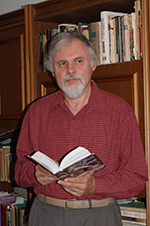
Alex Gordon is a native of Kiev, Ukraine, and graduate of the Kiev State University and Haifa Technion (Doctor of Science, 1984). Immigrated to Israel in 1979. Full Professor (Emeritus) of Physics in the Faculty of Natural Sciences at the University of Haifa and at Oranim, the Academic College of Education. Author of 8 books and about 500 articles in paper and online, was published in 62 journals in 14 countries in Russian, Hebrew, English and German.
As a remote relative and close friend of prof. Gordon, I can testify that nothing in this brilliant piece is fiction.