By Donald H. Harrison
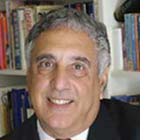
SAN DIEGO, April 4 – An Israeli and a Nigerian walked into an Italian restaurant last night, and ….
No, this is not a joke. The restaurant was Pernicano’s in Scripps Ranch, and after they both ordered veal parmigiana, the two septuagenarians compared memories of the times when their native countries were under British rule.
My Israeli friend, a Sabra, recalled the days before Israeli independence, when Britain blockaded the country so Jews couldn’t get in. The British sent refugees to camps on the island of Cyprus, preventing them from beginning their new lives after the Holocaust. “We hated the British!” the Israeli declared. “We were glad when they were gone!”
My Nigerian friend had an opposite impression of the British. Things in Nigeria ran well under British colonial rule, he said. After Nigeria became independent, things fell apart (as the author Chinua Achebe once wrote). Mails were infrequently delivered, if at all; electricity stopped flowing, transportation was chaotic, government officials demanded bribes for just about everything, and not long after independence, the Biafran War broke out, in which his father was killed by a bomb that hit their village.
He remembered the civility and the sense of order Nigeria had under British rule. “I wish they’d come back,” he said wistfully.
Both men had married American women and after living here awhile came to the realization that their futures were as citizens of the United States of America.
The Israeli decided to apply for U.S. citizenship after completing his doctoral studies in this country, obtaining a job in industry, and fathering his first son. The Nigerian took a bit longer to decide to become an American; having lived in London, he already enjoyed all the privileges of a British subject inasmuch as Nigeria was part of the British Commonwealth. However, after his mother-in-law died, his elderly father-in-law became ill in San Diego. The couple decided to move here to look after him. They soon became woven into the fabric of American life.
The Israeli told us that although he is a loyal American, he sometimes feels guilty for not being an Israeli during this momentous era in the long stretch of Jewish history, when Jews after nearly 2000 years of exile, have their own state. Because he has relatives in Israel, two sisters among them, he travels back there on a fairly regular basis. The Nigerian said he too travels home now and again to visit a sister who is the only one of his six siblings still alive today. But, unlike the Israeli, he said he feels no guilt, only relief, that he lives somewhere other than the land of his birth.
*
As we listened to these comparisons by members of an immigrant generation, it occurred to us that the owner of Pernicano’s restaurant – Larry Pernicano—was continuing a tradition that had been started in San Diego by his father, George.
Old-time San Diegans may remember that the elder Pernicano owned a restaurant of the same name in the Hillcrest section of San Diego, a restaurant that stands empty today because the father neither wants to operate it nor let go of the land on which it was built.
George Pernicano was born in the United States, and his family moved to San Diego from Detroit shortly after World War II. Back in 1946, his father’s place became “the first restaurant to have pizza in San Diego,” Larry said proudly.
I couldn’t help but wonder if Larry Pernicano’s grandparents—who had come to the United States from Sicily—ever speculated, as my two friends were now speculating, whether they had made the right decision leaving the old country and coming to the United States. For that matter, did my immigrant ancestors, and Nancy’s, ever ask themselves the same question?
*
Harrison is editor of San Diego Jewish World. He may be contacted at donald.harrison@sdjewishworld.com