By Alex Gordon
HAIFA, Israel — The defeat of France in the Franco-Prussian War and the annexation of Alsace by Germany in 1871 led to the emigration of Jews to France, where new Jewish communities were established by immigrants from Alsace.
The reason for the emigration was apparently that France, through its revolution, was the first country to emancipate the Jews. Among the Jews who moved was the family of Alfred Dreyfus, up until that point the most famous Jew since Jesus Christ, who was sentenced to death by a court. Slandered and hounded, Dreyfus was and, despite everything, remained an arch-patriot of France. France was a place of spiritual attraction for the people from Alsace, but among the Jews from Alsace, there were also those who wavered between Judaism and France.
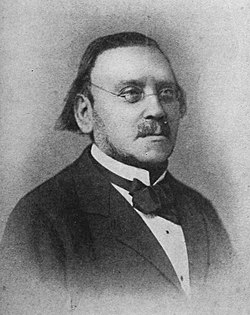
On May 10, 1811, in the picturesque village Schirhoffen, located near the capital of Alsace, Strasbourg, the future French writer Abraham (Alexander) Weill was born. When Weill turned 13, his parents sent him to a Talmudic school in Metz, the capital of Lorraine, which had also been captured by the Germans as a result of their victory in the Franco-Prussian War. He continued his Jewish education in German Frankfurt am Main.
But in Germany, his views underwent a transformation after he studied the works of world classical literature. From a religious Jew, he transformed into a critic of the Talmud and the orthodox version of Judaism. He stopped attending the synagogue and dedicated himself to journalism and publicism. In his early youth, he published extensively in the periodicals of Berlin, Cologne, Leipzig, and Stuttgart.
In Frankfurt, Weill joined the Young Germany society, which consisted of writers who, under the influence of the 1830 revolution in France, called for the transformation and unification of Germany based on constitutional democracy and political liberalism. The leaders of Young Germany were initially considered to be Ludwig Börne and Heinrich Heine, baptized Jews. Members of Young Germany idolized France, its political life, and its literature. In 1836, he met the French writer Gérard de Nerval in Frankfurt, who facilitated his move to Paris, which was then the Mecca of the members of Young Germany.
In his memoirs about Heine, Souvenirs intimes de Henri Heine (1883), Weill wrote: “In 1836-1837, I was a translator and contributor to the French newspaper Journal de Frankfurt, […] and later the chief editor of The Parisian Capitol; I had at my disposal all the Parisian newspapers and magazines, and I regularly sent reports from Paris to The Leipzig Elegant World, but, of course, without a signature, and the public honored me by attributing these reports to Heinrich Heine.”
Next, the memoirist describes his first meeting with Heine, who was living in Paris: “Madame Heine greeted me; although her beloved was a great German poet, she had a poor opinion of Germans – she had suffered at the hands of curious and indiscreet journalists who had portrayed her in a caricatured manner in the pages of the German press. She greeted me very poorly and shouted to her husband, “Henri, here’s another young man who has come from Germany and wishes to see you. Will you see him?” As soon as Heine appeared at the threshold of his office, I recited in Hebrew a phrase from Ibn Ezra, known to all Talmudists […]: “I came into your house, found the door open, but as soon as I entered – your wife became angry.” […]
“It was also a trap. I wanted to know if Heine, who was raised as a Jew until the age of thirteen, remembered the language he was taught. He burst out laughing, not quite understanding the ambiguity of my words, and when I introduced myself and handed over the letter of recommendation, he said: ‘You don’t need recommendations. You were mistaken for me, and I can only assume that you possess a wealth of wit, for I have not read any of your correspondence.’ The ice was broken. ‘We were going to have lunch,’ he said, ‘have lunch with us, and we’ll talk.’
“Heine knew that I was Jewish and introduced me to his beloved in that capacity. Jews, who had only recently received full civil rights from Louis-Philippe, remaining pariahs almost throughout Europe, then formed something like a secret alliance of the oppressed and easily forged friendships, especially among scholars, artists, and writers, wishing to achieve liberation and deliverance from eighteen centuries of slander, oppression, and disgrace. This did not apply to baptized Jews, who displayed religious zeal and avoided any connection, any association with their former co-religionists, whom they had to regard as unfortunate outcasts with blindfolds, unwilling to behold the dazzling radiance of the triune God.
“But Heine, who laughed at his own baptism, was not among these hypocrites. However, this did not prevent him, like all Germans, from having prejudices against his co-religionists and mocking them. When he found out that I was Alsatian, not German, not French, and not Prussian, he greeted me as follows: ‘You can come to me every day, you can have lunch with me whenever you want, but never ask me for money!'”
From this meeting, the friendship and collaboration between Weill and Heine began. According to the German composer Friedrich Kükken, “Alexander Weill, the author of rural stories, […] was at that time the translator of all of Heine’s articles intended for French newspapers.” Weill himself wrote in his memoirs about Heine: “And since he wrote a wonderful preface to the German edition of my rural novels, in which he declared me the pioneer of this genre, long before Berthold Auerbach and George Sand, albeit scolding me for my socialist tendencies, one day, while dining with them, I promised Mathilde (Heine’s wife) to translate a short poem by Heine as a trial.”
After Heine moved to Amsterdam Street, according to Weill, he met with the poet three to four times a week. Once, Heine told Weill: “Converted Jews lie, as no Jew will ever believe in the divinity of another Jew.” One day, in 1848, when Heine was already seriously ill, bedridden, and under the influence of pain-relieving opium, Weill sat next to Heine and sang him Jewish prayers and psalms. Mathilde asked him, “Enough, Mr. Weill!” and, turning to her husband, asked, “Henri, what are these terrible songs?”
“These are our ancient songs, songs of the German people,” said the poet. According to Weill, “At that moment, a sly smile appeared on his pale, waxen face for an instant. He lies motionless, his eyes closed, immersed in the Psalms of David, soaring on their wings. Thus, in his thoughts, the poem Judah Halevi begins to take shape (published in the collection Romancero in 1851).
Having settled in Paris, Weill began working for local publications. Besides countless magazine articles, he published more than 40 books and brochures, including religious-philosophical and dramatic works, a collection of poems, and novels. He had close relationships with writers Honoré de Balzac and Victor Hugo and the Jewish composer Giacomo Meyerbeer.
The main focus of his work was numerous books dedicated to Judaism. Weill claimed to create a new religion, which he based on “pure Judaism,” free from any impurities and additions. He considered the preaching of this new religion to be the task of his life, and over time he became increasingly convinced of his “mission.” In the later period of his life, he even began to consider himself a prophet and was known by the name Le prophète du Faubourg St. Honoré (The Prophet of the St. Honoré Quarter in Paris).
The books by Weill, that describe the life of Alsatian Jews in the early 19th century, are of great interest: Village Tales From Alsatia (1847) and My Youth (1870). Weill was a versatile writer: history, politics, religion, philosophy, philology, music criticism, education. He wrote in the genres of scientific research, political pamphlets, novellas, novels, lyrical poems, and diaries. His works on Jewish themes are interesting: The Pentateuch according to Moses (1886); The Five Books of Moses (1890); Moses, the Talmud and the Gospel (1891); Comparative study of the French language with Hebrew, Greek, Latin, German and English (1898). Weill dedicated a brochure to the history of Jewish emancipation titled The Centenary of Jewish Emancipation (1888).
Weil died in Paris on April 18, 1899, at the age of 87.
While Weill lived in Alsace and Lorraine, he was a devout Jew, faithful to national and religious traditions. His fascination with world literature during his time in Germany led him away from his ordination as a rabbi in Metz. He became a French liberal and a rebel against Orthodox Judaism. He became a French writer, but throughout his life he thought and wrote about Jews, trying to soften his choice.
*
Alex Gordon is professor emeritus of physics at the University of Haifa and at Oranim, the Academic College of Education, and the author of 11 books.