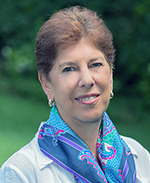
By Linda Ambrus Broenniman
GREAT FALLS, Virginia — When beloved Sesame Street Muppet Elmo becomes the subject of an antisemitic firestorm on social media, it tells us something is deeply broken. What once felt safe and innocent—symbols of kindness and inclusion—can now be twisted into platforms for hate.
The recent surge in anti-Jewish violence across our country is even more devastating. Each attack shocks the conscience and leaves us grappling with haunting questions: How did we get here? And what can we do—right now—to stop this tide of antisemitism and hate?
Beneath the horror of these acts lies a quieter, more insidious crisis: a crisis of understanding.
Last month, I shared my family’s Holocaust story with an interfaith youth group in one of the wealthiest corners of our country. I told them about my Jewish father, who escaped from a Nazi labor camp. I told them about my Catholic mother, who risked her life to hide Jews—including her dearest friend, Eva, along with Eva’s boyfriend and both their families, my father after his escape, my grandmother, and many other Jews at risk for deportation to Auschwitz. My mother was later honored as Righteous Among the Nations by Yad Vashem for her courage.
The students listened with wide-eyed empathy. They asked thoughtful, even courageous, questions. But one fact left me shaken: not a single one of them had ever heard of the Holocaust.
How could this silence exist—especially in communities rich with opportunity and resources? What does it say about our society, our schools, and our collective memory when an entire generation grows up unaware of history’s greatest atrocities?
The old warning echoes louder than ever: Those who do not know history are doomed to repeat it. Today, the danger feels even more urgent. If we no longer teach history—real, complicated, human history—how can we expect the next generation to recognize the roots of hatred?
In San Diego, a region celebrated for its diversity, multiculturalism, and vibrant interfaith community, there is an opportunity—and a responsibility—to lead. Holocaust education is not just about Jewish history. It’s about humanity. It’s about what happens when fear replaces empathy, when lies take root, when silence becomes complicity.
If we erase the stories of different ethnicities, faiths, and cultures from our classrooms, how can we expect young minds to resist the toxic pull of scapegoating and conspiracy? When students learn dates but not consequences, facts but not humanity, we hand the narrative to those who thrive on distortion.
My mother was just 20 years old when she became a rescuer. She lived under the constant threat of discovery—in a world ruled by fear, surveillance, and betrayal. And yet, she defied it all. She hid Jews in makeshift hiding places, scavenged for food, and lied to Hungarian Nazis with steady resolve as they searched her home again and again. One wrong move, one misstep, could have meant death—not just for her but for every life she sheltered. When asked how she had the courage and why she risked her life, she didn’t speak of bravery or sacrifice. She simply replied: “I did what any decent person would have done.”
Today, we are asking far less of our young people. Yet, far too often, we fail even to give them the basic tools of understanding. We leave our children unprepared for a world where hate and violence still exist.
We cannot wait for the next “inevitable” act of violence. We must make Holocaust education—and the broader study of how hatred thrives—inevitable instead.
Having been in San Diego multiple times, I am aware that it is surrounded by resources: Holocaust survivors who still share their stories, community organizations dedicated to memory and education, and programs like the Holocaust Living History Workshop at UC San Diego. Let’s support them. Let’s bring these stories to our schools, synagogues, churches, and community centers.
In my lectures, I’ve met students who wanted to understand. They were open-hearted and unafraid of difficult truths. What a tragedy it would be to leave them—and others like them—without the knowledge that could inoculate them against hate.
What a gift it would be to give them that power.
*
Linda Ambrus Broenniman is the author of The Politzer Saga