By Alex Gordon

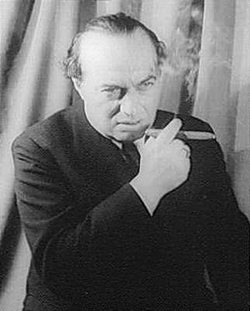
HAIFA, Israel — Austro-Jewish writer and poet Franz Werfel was born on September 10, 1890, in Prague, then part of the Austro-Hungarian Empire. He was born into a wealthy Jewish family of manufacturers. His father, Rudolf Werfel, was a wealthy merchant known in the local German-speaking Jewish community. Werfel’s father wanted his only son (the family also had two daughters) to continue his business. Disagreements between father and son became apparent early on.
According to the biographer of Werfel, Richard Specht, even in his early youth, he would write poetry on his father’s accounting papers. As a result of disagreements with his father, 20 -year-old Franz Werfel left his parental home. He studied at the universities of Prague, Leipzig, and Hamburg. At the lyceum, he met Franz Kafka and Max Brod.
In 1911-1912, Werfel served in the Austrian army. In 1912, during his service, he was arrested for his sharp speeches against militarism.
As a writer, he was one of the founders of Expressionism. Expressionism is art that speaks about the inner world of the artist, rather than the outer world. He was acquainted with the Austrian satirist of Jewish descent Karl Kraus and the poet Rainer Maria Rilke. From 1915 to 1917, he fought on the Eastern Front. Upon returning from the front in 1917, he met in Vienna the widow of composer Gustav Mahler, a major representative of expressionism in music, Alma, whom he married in 1930. Werfel participated in the revolutionary events of 1918, became one of the founders of the anti-militarist secret union, and with the help of the Czech-Austrian writer Egon Erwin Kisch of Jewish descent, became acquainted with Marxist ideas.
The writer’s friends, including Franz Kafka, considered Werfel to be the prophet of their generation—the generation of expressionists. But, as Thomas Mann wrote, “He was too richly gifted and too great a personality to confine himself within the framework of a single school, and he went far beyond the boundaries of Expressionism.”
In 1929, Werfel traveled through Syria. Here, the idea for the novel The Forty Days of Musa Dagh was conceived for the first time. After Syria, Werfel visited Palestine and Egypt.
Even before the Anschluss, Werfel and his wife left for Rome; for some time, they lived on the island of Capri, from where they moved to France (1938, Sanary-sur-Mer). When the Nazis occupied France in 1940, Werfel and his wife, along with writer Heinrich Mann, his wife, and the son of writer Thomas Mann, fled from France through the Pyrenees to Spain and Portugal, and from there to the USA.
He settled in Beverly Hills, California, where his colleagues Thomas and Heinrich Mann, Lion Feuchtwanger, and composer Arnold Schoenberg lived. In 1941, he became an American citizen. On August 26, 1945, Werfel died of a heart attack.
In 1933, Werfel wrote his main book, the historical novel The Forty Days of Musa Dagh. Musa Dagh is a mountain in the Ottoman Empire, where in 1915, Armenians defended themselves against the Turks and achieved victory. Franz Werfel, a Jew who saw the inevitability of the impending disaster for Europe, depicted the Armenian Christians as a people condemned to complete extermination. This book warned Europe and the entire world that Hitler and Mussolini had their predecessors in the 20th century, and that these students would surpass their teachers in the sophistication of their bloody deeds.
The Nazi propaganda machine noticed the author’s parallels between Armenians and Jews in the book. The Nazis burned Werfel’s works, calling them “the poisonous fruits of a Jewish author” who preached pacifism, love for humanity, and hostility towards Nazism. The book The Forty Days of Musa Dagh was first published in Austria a few months after the Nazis burned other works by the author in Germany.
Some readers got the impression that the book The Forty Days of Musa Dagh was full of symbolism related to Jewish history and Judaism, as Musa Dagh means Mount Moses, and 40 days is the time of Moses’ ascent to the mountain. In reality, the defense of Musa Dagh lasted not forty, but fifty-three days. Forty days of resistance – 40 years of wandering in the desert. Werfel describes the exodus from Egypt, from passive fate.
Haika Grossman, a future member of the Knesset, who in her youth was a supporter and participant in the uprising in the ghettos of Poland and Lithuania, stated that The Forty Days of Musa Dagh was popular among Jewish activists in Europe, was read and “passed from hand to hand”: The Forty Days of Musa Dagh by Franz Werfel left an indelible impression on us. The bloody, merciless massacre of more than a million Armenians by the Turks in 1915 before the eyes of the whole world reminded us of our fate. Armenians died of hunger, were shot, drowned, and tortured to exhaustion. We compared their fate with ours, the world’s indifference to their situation, as well as the complete abandonment of the unfortunate people who found themselves in the barbaric hands of a tyrannical regime.”
A prisoner from one of the ghettos in Belarus described the mood in her ghetto: “Many were looking for good literature. The book by Franz Werfel. The Forty Days of Musa Dagh passed from hand to hand, telling the story of the heroic uprising of a group of Armenians during the Turkish massacre. Following this example, the Jewish youth gathered weapons and formed an underground movement. ”
A member of the Dutch underground said about Musa Dagh: ‘For us, it was a ‘textbook’ that opened our eyes and prescribed what could happen, even though we didn’t know what would actually happen.'” In a 1938 letter from prison in Italy, the Italian politician and writer of Jewish descent, Vittorio Foa, said: “In Franz Werfel’s novel The Forty Days of Musa Dagh, I found a fairly accurate description of what the attitude towards Jews would be in Central Europe.”
Lionel Bradley Steiman, Professor of History at the University of Manitoba, Winnipeg, Canada, writes: “Looking back, the book presents an almost supernatural sketch of aspects of the later Nazi Holocaust in which the Jews of Europe perished.”
In 1934, this novel by Werfel was published in Hebrew. In 1942, the Jewish community during the British Mandate in Palestine feared a Nazi invasion. Some argued that they had no choice but to surrender. Others said they had to fight, and Mount Carmel was chosen to unite the Jewish forces there. This plan received various names, one of which was the “Musa Dagh Plan.” Mount Carmel was supposed to play the role of Mount Musa-Dagh.
His Jewish sentiments, usually concealed by him, were revealed by Werfel in a novel about Armenians, which inspired many Jews in Europe and in the state of Israel.
*
Alex Gordon is professor emeritus of physics at the University of Haifa and at Oranim, the Academic College of Education, and the author of 11 books.