By Eileen Wingard
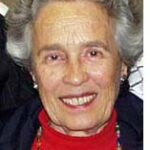
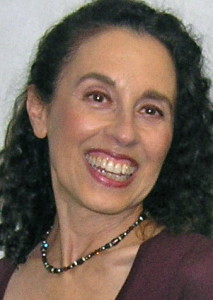
SAN DIEGO — How thrilled I was this week to receive my sister, violinist Zina Schiff’s latest CD, Alan Hovhaness, part of NAXOS’s American Classics, and to read on page 4 of the liner notes, “This release is dedicated to my first violin teacher, my sister Eileen, who encouraged me to explore and promote American music.”
I still remember the first lessons I gave my three-year-old sister on a quarter-sized violin. Soon thereafter, she won a trophy playing on a radio amateur hour. Her next important achievement was when Russian-born Peter Meremblum, violin pedagogue and conductor of the California Youth Symphony, accepted her as his youngest student. I was off to Germany with my husband and baby daughter, Myla, under Fulbright programs and Zina needed another teacher. My mother, Rose Schiff, appealed to Meremblum, speaking in Russian and persuading him to take on my talented little sister. The fact that Mrs. Meremblum was also named Zina, may have helped.
The following year, 11-year old Zina’s performance of Vivaldi’s Concerto in G minor with the California Junior Symphony prompted the critic of the Hollywood Citizen News to describe her playing “with confidence and competence, showing a warm, full tone and secure intonation, as well as veteran stage poise.” He concluded, “unless she relinquishes an assured career, it is safe to include Miss Schiff among the violin virtuosos of the coming generation.”
Zina received a scholarship as the youngest student at the Curtis Institute in Philadelphia and began studying with Ivan Galamian, teacher at both Curtis and Juilliard. While there, she won both the junior and senior auditions to solo with the Philadelphia Orchestra. The assistant conductor, William Smith, wrote: “your performance with us was GREAT!! The members of the orchestra still talk of you, your charming appearance, your poise, and (above all) of your playing!”
At 17, back in California, she was the youngest to be admitted into Jascha Heifetz’s masterclass as she finished her high school year at Beverly Hills High.
The great cellist, Gregor Piatigorsky, awarded Zina first prize in the Young Musicians Foundation Competition and soon thereafter, film composer, Maurice Jarre, tapped Zina to play the solo violin for his score for the movie, The Fixer, based on the Pulitzer-prize winning book by Bernard Malamud.
After her New York debut in Carnegie Recital Hall, the New York Times wrote, “Miss Schiff plays in the grand romantic style with a luscious, firmly centered tone, generous yet tasteful portamento and in an expansive, outgoing manner—even her high-voltage program was vintage Heifetz.”
In addition to solo performances with orchestras in the US and abroad and recitals in venues such as New York’s Metropolitan Museum and London’s Wigmore Hall, Zina began making commercial CDs.
Her debut recordings were Bach/Vivaldi and Vaughn Williams with the Israel Philharmonic Orchestra, Dalia Atlas, conductor. Zina was praised in Gramophone for “the purity of her interpretation,” and “the strength and brilliance of her tone.”
Her next two recordings were Here’s One featuring American composers, Aaron Copland, Henry Cowell, Lee Hoiby, Florence Price, and William Grant Still and King David’s Lyre.
The critic of The American Record Guide wrote of the latter, “one of the most beautiful recordings of Jewish music I have heard. Schiff is a great violinist in every way.”
Of her 17 recordings, one of my favorites is Ernest Bloch, the Naxos CD made with the Royal Scottish National Symphony.
Of this recording, Classics Today wrote, “Zina Schiff plays this music with exceptional passion and communicative depth… For a single disc containing all of Bloch’s major works for violin and orchestra, let this release be your choice.”
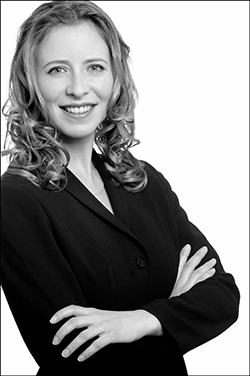
Three of Zina’s recordings have her daughter, Avlana Eisenberg, on the podium conducting. They first collaborated on the MSR Classics 2013 release, Sibelius Violin Concerto, Barber Violin Concerto, Ben-Haim Three Songs without Words in which Avlana conducted Budapest’s MAV Symphony Orchestra.
Two years ago, their highly acclaimed Naxos record, William Grant Still had Avlana conducting the Royal Scottish National Symphony and in this current release, Alan Hovhannes, Avlana is conducting the Salzburg Chamber Soloists.
She is the music director of the Boston Chamber Symphony and has guest conducted orchestras in the United States and abroad. Her most recent guest conducting stint was last June with the Free State Symphony Orchestra in Bloemfontein, South Africa.
Avlana is conducting the Salzburg Chamber Soloists in their accompaniment of Zina in Hovhannes’ Concerto #2 for Violin and Strings, and in Dana Paul Perna’s orchestration for violin, strings and harp of Hovhannes’ Oror (Lullaby). These works were recorded in Salzburg in 2016.
Other works on the disc are Yeraz (The Dream) for solo violin, and Khirgiz Suite, Les Baux, Violin Sonata, Three Visions of Saint Mesrob, and Varak, for violin and piano. The pianist is Valerie Stark, a highly sought after pianist, teacher and collaborator. She is an officer for the Boston chapter of Mu Phi Epsilon fraternity, where Zina is a member, and an officer in the Massachusetts Music Teachers Association.
These selections were recorded in Massachusetts in 2022 and Zina’s younger daughter, Cherina Carmel, served as the producer.
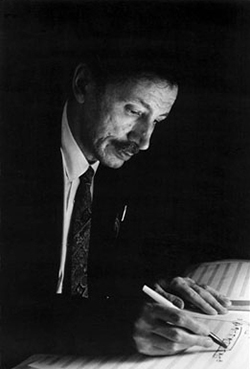
Zina was attracted to Hovhaness’ music because, in the words of American composer Lou Harrison, Hovhaness was “one of the great melodists of the 20th century.” He absorbed much of his father’s Armenian musical culture when serving as the organist for the St. James Armenian Church in Watertown, Massachusetts.
A Fulbright fellowship to India brought familiarity with the music of that culture, and a visit to Japan also influenced his compositions. In addition, he was a great admirer of Jean Sibelius, who took a great interest in the younger composer. All these influences are evident in Hovhaness’ music.
The opening Violin Concerto #2 was composed in 1951, during Hovhannes’ Armenian period. The composer’s spirituality is reflected in the sublime high notes used in the final movement, Hymn. Zina’s tapered fingers are able to make the stratospheric high notes shimmer.
A favorite of mine is Yerez (The Dream) for solo violin which Zina performed at my 90th birthday celebration. Composed in 1945, it overflows with passionate warmth and rhapsodic fantasy.
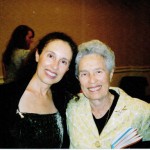
Zina’s sweet sound warms my heart. But, of course, as her sister and first teacher, I may be accused of bias. I shall therefore wait until others evaluate this just-released recording and write another article containing their quotes critiquing this outstanding music, performed by my sister, violinist Zina Schiff, the Salzburg Chamber Soloists under the direction of my niece, conductor Avlana Eisenberg, and fellow Mu Phi member, piano collaborator Valerie Stark.
*
Eileen Wingard, a retired violinist with the San Diego Symphony Orchestra, is a freelance writer specializing in coverage of the arts.
Wonderful to read more about your talented family. ALso want to wish you a Happy Birthday, Eileen. You’re like the ever-ready battery that just keeps going and going and it’s so impressive! I recall your sister’s violin playing yet was unaware that you were her first teacher. Of course though, it makes perfect sense!
Eileen, what a wonderful article about your sister. She is clearly quite a talent — and was lucky to have you as her first teacher.