By David Amos
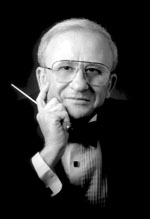 SAN DIEGO — One often hears at the end of a concert or recital second guessers as to the music just performed. The Mozart Sonata was played too fast, the Chopin Adagio too slow, and so forth. We all know that it is up to the interpreter, the soloist or the conductor to make these artistic decisions, but there is a lot more to it than just that.
I occasionally give a lecture in which I compare the exposition, the opening section of the first movement of Beethoven’s Fifth Symphony. I play examples of fourteen different recordings of the great conductors. When you hear them, one right after the other, the contrast is astounding. It almost sounds like a different composition. Toscanini, Reiner, and Carlos Kleiber take it very fast and aggressively; Bernstein, Walter, and others are more moderate; Pierre Boulez is downright slow. Even the most inexperienced listener can distinguish these contrasts immediately, and is off to a good start in becoming a more discriminating concertgoer.
There are many factors which determine tempo, and the same performer may choose different tempi in different venues. Here are a few variables:
Is the concert indoors or outdoors? In a concert hall, there are warmer acoustics, an opportunity to hear subtleties, less extraneous noises, and in general we have more knowledgeable audiences. (Yes, of course, there are many exceptions to this). Outdoors, with little or no reverberation than a hall provides, and in less formal settings, faster tempos are preferable.
In a very live hall, with lots of reverberation (echo), music blends into a kind of thick soup. In contrast, with dry, lifeless acoustics, there is no echo, blend, or warmth, and intonation and ensemble problems become far more obvious. A tasteful adjustment of the tempos can compensate for these extremes. I have conducted recordings in venues in London, Israel, and other places, where the acoustics were so “live”, that different tempos were not only advisable, but very necessary.
This is why visiting orchestras or ensembles like to have a short practice in an unfamiliar hall, to test the sound, to have what is called an “acoustic rehearsal”.
Where is a particular piece placed on a program? Is it the first half, when both the audience and the musicians are fresh, or at the end of a long evening, where subtle brevity is appreciated by all concerned? A Mahler or Brahms symphony offers less flexibility in tempo choices, while other music, both from earlier or later musical eras allow more options.
There is not a single right tempo, as some people claim. Yes, there is a margin of good taste and knowledge of the composer’s intentions and the traditions of the time to take into account. Variations are not only possible, but at times, required. Is this a children’s concert, a recital in a gym, a pops concert, in a concert hall, in the Ravinia Festival, in Tanglewood, Aspen, Spoleto, or our own SummerFest?
Sometimes, the abilities of the performers have to be considered. I have compromised in taking slower tempi than I would have preferred in a few recordings in Eastern Europe, with full awareness that the London orchestras I have conducted would have no technical limitations with faster tempi at all. This can be compensated with more expansive phrasing, and different lengths of individual notes, if rehearsal and recording schedules allow it.
The size of an ensemble is also a factor. The same Mozart symphony played by the English Chamber Orchestra or the Vienna Philharmonic might be much faster or slower, simply because of the number of musicians playing. Quality here is not an issue, but we all know that a sports car can take a corner with far greater grace and speed than a Rolls Royce!
Slower tempi can bring out the music’s inner strength, insight, and creative energy, but on the down side, it can be dull, lifeless, and with no intensity. The quality of the music may be marginal, even if it comes occasionally from the sublime Mozart, and a very slow tempo drags and stretches the material beyond its message.
Faster tempi can give the music propulsion, drive and excitement, but if not controlled, can become sloppy and trivial. It may revert to being a showpiece for the solo artist, with little artistic merit, or there might be too much musical material to be absorbed and appreciated in a shorter span of time.
Foremost, however, are the composer’s intentions, and the conductor or soloist’s interpretation of what is in the printed page, what sounds right, and what tradition and good taste dictate to combine all these elements and make a legitimate musical statement.
Some composers’ music lends itself to variances in tempi, dynamics (louds and softs), the size of the ensemble, and even the balances between the instruments. This is where the interpreter’s role becomes an important factor in the mix. Composers can be most specific: “This is what I wrote; this is what I want; don’t interpret, don’t mess with it!”
Others, such as many Romantic composers, allow more freedom and a variety of expressions. In an example of something that happened to me, the late composer Alan Hovhaness told me in preparations of recording his music, “This is what I wrote; now it’s up to you, the conductor, to do with it as you wish”. The other extreme.
But, there is a certain point, which I call the “critical mass”, that if the music is played simply too slow or too fast, it loses effect and relevance. It just doesn’t fly. Here is where knowledge, experience, tradition, and again, good taste, come into play. And this is where master musicians almost always show their insight and greatness.
*
Amos is conductor of the Tifereth Israel Community Orchestra (TICO) and has guest conducted professional orchestras all over the world. He may be contacted at david.amos@sdjewishworld.com