By Betzy Lynch
LA JOLLA, California — Sometimes I like to walk around the J and pretend I’m invisible, just to take in the sights, scents, and sounds of our community. I like to wander out to the Friedenberg Pool when no one is swimming and watch the still water holding its breath. I like to step into the newly renovated preschool classrooms after they’ve been cleaned for the evening, breathing in the freshness of polished floors and seeing children’s artwork still glowing on the walls. Sometimes I head out to the field, noticing how the grass grows or sometimes where it doesn’t. I love hearing the unmistakable pop of a pickleball against a racquet and the laughter of players floating across the campus.
The JCC is open nearly 4,800 hours each year to our members and guests. And even when we say we’re “closed,” the Jacobs Family Campus is alive with our partners, Tsofim (Israeli Scouts), IAC (Israeli American Council), Dor HaDash Synagogue, TEDxSan Diego, the Indian Fine Arts Festival, the Turkish School, and so many others who use the J as their home base. In reality, those 4,800 hours stretch closer to 6,000. There is very little downtime here.
Because there is so little downtime, there are almost no true breaks. Instead, what we experience is a shift in energy as we move through the year. This week was one of those shifts. Camp Jaycee marked the close of its 80th summer. The echo of hundreds of children singing camp songs, racing down hallways, splashing in the pool has begun to fade. Camp supplies are sorted and packed away for the future. A fresh coat of paint brightens the walls of the Gotthelf Art Gallery, now hung with new artwork. The Garfield Theatre floor is swept after the final Camp Shabbat, its projection system tested for upcoming film screenings. The inflatable obstacle course from Thursday Family Fun Nights is rolled into storage, while lifeguards practice attaching lane ropes for the return of long-course swimming.
These changes are part of the rhythm of community. You can almost feel the flow of energy as lines of Camp Keshet children in swimsuits and towels transform into lines of adults waiting to hear an acclaimed author or enjoy a performance in the theater.
As the energy shifts, I notice not only the people and programs changing, but the spaces themselves. Not just the furniture or the equipment, but the space between them.
There is a teaching in the Midrash that says: “The Torah given to Moses was written with black fire upon white fire.” The letters of Torah, the black fire, cannot exist without the white fire, the empty parchment that surrounds them. Rabbi Akiva and generations of sages taught that revelation lies not only in the words, but in the spaces between them. The pauses, the margins, the silence between sounds, all carry divine meaning.
When I witness the quiet transitions at the J, the still pool, the freshly cleaned classrooms, the shifting of camp into concerts, I am reminded of that teaching. Holiness is not found only in the noise and action of daily life, but also in the margins, the in-between spaces where energy is shifting and something new is waiting to emerge.
Our Jacobs Family Campus is a jewel of the Jewish community. Whether you come every day or only once a year, it is grounding to know that this hub of Jewish life is here for you, for every kind of person. I never take that for granted. I hope you don’t either.
As Shabbat fades tonight and we step into another week of fresh starts, shifting energy, and new beginnings, I invite you to reflect on the spaces in your own life. Just as the white fire gives life to the black fire of Torah, the space between us is not distance, but opportunity. Opportunity to infuse our relationships with holiness, to find meaning in the pauses, and to honor the connections that make our community thrive.
*
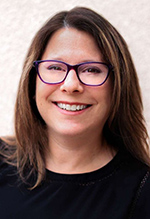
Betzy Lynch is the chief executive officer of the Lawrence Family JCC, Jacobs Family Campus.