Theological and Halakhic Reflections on the Holocaust edited by Rabbi Dr. Bernhard H. Rosenberg; Ktav Publisher; (c) 1991; ISBN 08812-53758; 363 pages, $19.95.
By Rabbi Michael Leo Samuel
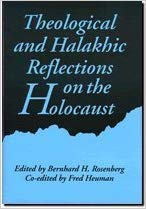
CHULA VISTA, California — It is a privilege to revisit Theological and Halakhic Reflections on the Holocaust, edited by my esteemed colleague Rabbi Dr. Bernhard H. Rosenberg—a landmark anthology that remains indispensable three decades after its 1991 publication.
Gathering luminaries of Orthodox thought—Rabbi Joseph B. Soloveitchik, Rabbi Norman Lamm, Rabbi Eliezer Berkovits, Rabbi Emanuel Rackman, Rabbi Reuven P. Bulka, and others—the volume confronts the Shoah’s theological and halakhic rupture without claiming resolution. Its 363 pages, organized thematically around theodicy, extreme halakhic decision-making, survivor memory, and Jewish continuity, model sustained rabbinic dialogue rather than dogmatic closure.
Rosenberg’s preface sets a tone of intellectual humility: the Holocaust demands reflection, not facile answers. The essays mine classical sources—Job, Maimonides, Talmud—to probe divine justice amid genocide. Soloveitchik’s Kol Dodi Dofek hears a divine “knock” summoning human response; Lamm’s “The Face of God” wrestles with hester panim (divine concealment); Berkovits rejects punishment theodicies; Rackman proposes human-divine partnership. Emil Fackenheim’s “614th commandment”—to affirm Jewish life despite Hitler—threads through the collection. Bulka’s comparative study of Berkovits and Viktor Frankl introduces the term “Shoalogy,” signaling a new discipline of Holocaust theology.
Halakhic sections are equally rigorous. Rabbi Stanley Boylan analyzes wartime responsa invoking pikuah nefesh to suspend Shabbat or Yom Kippur observances; Rabbi Zevulun Charlop examines providence in extremis. Clandestine matzah baking and barrack Shema recitations testify to both flexibility and defiance. The unresolved debate over kiddush Hashem—martyrdom versus survival—retains its poignancy.
Survivor voices and second-generation reflections ground abstraction in lived memory. Rosenberg’s own contribution, “The Parasites Among Us,” extends the volume’s concerns to contemporary antisemitism, a theme he pursues with unflagging vigilance. His critiques of figures like New York State Assembly member Zohran Mamdani—whose anti-Israel positions, BDS advocacy, and selective outrage Rosenberg views as echoing historical leftist indifference to Jewish peril—reflect broader Orthodox anxieties about progressive coalitions that may marginalize Jewish security. These interventions, while provocative, underscore the anthology’s enduring relevance: the Shoah’s lessons are not archival but urgent.
The volume’s Orthodox lens, while internally coherent, excludes Reform, Conservative, and secular voices, narrowing its representation of post-Holocaust Jewish thought. However, a new edition, enriched with essays from contemporary writers—Orthodox, Reform, Conservative, Israeli, feminist, and interfaith—would continue the legacy of open rabbinic dialogue that Rosenberg inaugurated in 1991.
By inviting today’s voices to wrestle with the Shoah’s ongoing theological and ethical reverberations, such an update would ensure the conversation remains as vibrant and unresolved as the first edition intended. For scholars, clergy, and lay readers seeking faith amid catastrophe, Rosenberg’s anthology remains essential: a testament to rabbinic courage, intellectual honesty, and unbreakable hope.
*
Rabbi Dr. Michael Leo Samuel is spiritual leader of Temple Beth Shalom in Chula Vista, California.