By Shor M. Masori in San Diego
A global webcast sponsored by the Conference on Jewish Material Claims Against Germany (Claims Conference) on Thursday, Dec. 18, centered on the theme “Resilience,” and culminated with a candle lighting ceremony at the Western Wall in Jerusalem honoring Holocaust survivors.
Right before the event’s proceedings, Greg Schneider, Executive Vice President of the Claims Conference, told viewers the program had been recorded before the tragic events in Bondi Beach in Sydney, Australia, and added: “With horror and heartbreak, we mourn with the Jewish community of Australia.” The speaker then pivoted to the evening’s central message of perseverance: “When faced with tragedy, the Jewish people always choose life,” a lesson the speaker said the world learns “especially from Holocaust survivors.”
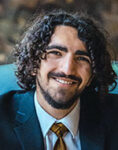
Co-hosts Schneider and actor Noah Emmerich guided the broadcast. Emmerich was introduced alongside a note about his recent film work, including The Ice Cream Man, described as the story of a Jewish ice cream shop owner whose resistance helped spark an early anti-Nazi protest during World War II.
Claims Conference President Gideon Taylor later framed resilience not only as a personal achievement, but as a public inheritance. Speaking directly to survivors, Taylor called their resilience “a guiding light for the world,” and said survivors have offered “a roadmap for facing darkness with determination and with dignity,” providing “moral clarity that our world so desperately needs.”
A central message came from Germany’s Chancellor Friedrich Merz, who said the memory of the Holocaust must never be abandoned and emphasized “never again” as both “the duty and the promise” owed to victims and to Jews of future generations. Merz praised survivors for rebuilding lives when they “would have every reason to turn your backs on the world,” and he warned that antisemitism is rising at a concerning rate. He referenced the barbarism of “Oct. 7,” arguing that the obligation to keep Jewish life safe remains urgent, and said Germany would do everything it can so Jews can live “without fear.”
One of the most emotionally charged segments was an “In Memoriam” tribute to filmmaker Rob Reiner, who along with his wife, photographer-producer Michele Singer Reiner, was killed in Los Angeles on Sunday, Dec. 14. In the played-back clip, Reiner described his family’s deep connection to the Holocaust through both sides of his family. He said his wife’s mother was imprisoned at Auschwitz and was the only survivor of her family, and he added that his own aunt was also in Auschwitz. Reflecting on the night’s theme, Reiner said, “I know the theme of the evening is resilience and if ever we needed to be resilient, it’s now,” warning that the political climate felt “scary” and “reminiscent” of what has happened before.
The program returned repeatedly to survivors themselves, pairing celebrity tributes with firsthand testimony.
Ella Blumenthal, 104 years old, recalled surviving the Warsaw Ghetto and multiple Nazi camps, including Majdanek, Auschwitz, and Bergen-Belsen. She shared a small ritual she still keeps to preserve hope: “I never sleep with my curtains closed so that I can see the new day arrive and I can see the light and hope that the new day brings.”
Rachel Ruzena Levy described being 13 when she was sent to a ghetto and later to Auschwitz. She remembered prewar Hanukkah celebrations in vivid detail. In her telling, potatoes became essential sustenance to survival in every way, including as a practical support for an improvised menorah: “The potatoes were so important in our lives. Even my hanukia was made… to stand in potatoes.”
Together, the testimonies served as a living counterpoint to the program’s recurring reminder that the number of survivors able to speak firsthand is shrinking, raising the stakes for remembrance and education.
A later segment broadened the lens beyond individual stories. Yonathan Arfi, president of the Representative Council of Jewish Institutions in France, described survivors as inspiration for “every generation of Jews to come.” David Revcolevschi of the same organization said survivors’ presence demonstrates that “it was possible to rebuild their lives.” Claudia Fellus of the European Council of Jewish Communities said she reflects on survivors’ resilience “every time I light a candle.”
Among the on-camera figures who spoke directly about family members murdered during the Holocaust was Wolf Blitzer, who said all four of his grandparents died in the Holocaust and described how his family rebuilt after immigrating to the United States. Blitzer also referenced his parents’ receipt of German “Wiedergutmachung,” describing it as reparations, and fellow CNN anchor Dana Bash added that the story of the Holocaust and the survival of the Jewish people are “one and the same.”
The program’s lineup also included a wide range of entertainers and public figures, including Barbra Streisand, Billy Crystal, Jamie Lee Curtis, Debra Messing, Mayim Bialik, Patricia Heaton, and Montana Tucker, along with the reunited cast of The Love Boat. Curtis shared her family roots in the Hungarian town of Mátészalka and described refurbishing a local synagogue connected to her grandparents into a revitalized community center, noting that family names remain carved in the building’s memorial stonework.
Messing told survivors they were targeted “for no reason other than being Jewish,” and Bialik thanked survivors for “giving voice to those who were silenced.” Tucker was introduced as a TikTok Influencer and Holocaust educator whose achievements include the docuseries How to: Never Forget. She was credited with speaking to an audience that now spans “more than 14 million” followers across platforms. She thanked survivors for modeling how “hope can rise again,” urging future generations to “stand up, speak out, and choose courage.”
The a cappella group SIX 13 delivered a Hanukkah medley that used humor to keep the message accessible, riffing on rituals like latkes and the perennial spelling debates around Hanukkah.
Museum leaders then spoke in a more solemn register. Jack Kliger of New York’s Museum of Jewish Heritage described being the son of survivors and called carrying memory forward both an honor and a responsibility. Ronald Leopold of the Anne Frank House offered a poetic tribute, saying survivors carried “a spark that refused to go out.”
Former U.S. Ambassador Stuart Eizenstat recounted the honor he felt from his work on Holocaust memory, urging President Jimmy Carter in 1978 to create a Holocaust commission and later negotiating recoveries totaling roughly $8 billion from European governments and industries tied to Nazi-era crimes, including forced labor.
Israeli actress Dar Zuzovsky spoke of her grandparents’ survival paths, describing a grandfather who survived Auschwitz and a grandmother who escaped through forests with partisans.
Then, in an intentionally lighter beat, the cast of The Love Boat appeared together “at sea,” sending survivors greetings from a reunion cruise “just like old times,” followed by additional well wishes from children.
Heaton, introduced as “one of television’s favorite moms,” told survivors that a single light can pierce darkness. Actress Tovah Feldshuh closed the celebrity greetings by calling each survivor “the brightest candle on the Hanukkiah.”
In the closing moments, Rabbi Shmuel Rabinovitz, identified as rabbi of the Kotel and holy sites, lit the Hanukkah candles at the Western Wall in survivors’ honor. The hosts returned to the night’s recurring image, the insistence that even amid grief and fear, “the light is greater than darkness.”
*
Shor M. Masori is a freelance writer based in San Diego. He holds two master’s degrees: one in conflict resolution from Tel Aviv University, and another in international affairs from Johns Hopkins University’s campus in Bologna, Italy.