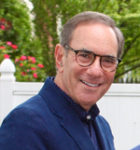
By Dr. Michael Mantell in El Cajon, California
A sacred calling, once recognized, gives structure to life. It steadies us and gathers our scattered priorities into a clear direction. Like a reliable guide in moments of low visibility, it keeps us oriented when confusion sets in. When we understand that our lives are granted by Hashem for a purpose, distractions begin to lose their hold, and our actions begin to reflect the Divine image within ourselves and others.
Parashat Mishpatim shows how lofty spiritual experiences can become daily living. After the thunder and awe of Sinai in last week’s parasha, the Torah now turns to the details of life: laws of justice, business ethics, personal responsibility, compassion, and integrity. No fewer than fifty-three mitzvot appear here, teaching that holiness is built not only through inspiration, but through conduct.
Among these laws appears the Torah’s first explicit command to protect the stranger: “You shall not wrong or oppress a stranger, for you were strangers in the land of Egypt.” In fact, the sages of the Talmud teach that the warning to protect the stranger appears 36 times, so often that we cannot ignore how central it is to our faith and moral responsibility (Bava Metzia 59b). The Torah reminds us: our past suffering is meant to shape a future of kindness. Suffering is not meant to harden us; it is meant to refine us.
Rashi teaches that these laws were not meant to be memorized mechanically. They work best when explained and understood, so they become internalized. Rambam similarly insists that Torah requires thoughtful engagement. Faith without understanding risks becoming hollow or misused. Torah calls upon both our heart and mind so that obedience transforms into a conscious partnership with Hashem’s will.
At Sinai, we didn’t merely receive commandments; we received a mission, to become a treasured nation bringing holiness into the fabric of ordinary society. Revelation unfolds in stages: first awareness of Hashem’s presence, then the covenant that translates that awareness into daily responsibility. Torah is not simply a list of rules; it’s a guide for transforming eating, speaking, working, loving, and resting into expressions of sacred purpose.
Holiness therefore, appears in everyday fair business dealings, restraint in speech, compassion for others, and ethical sensitivity. Even laws that seem ritualistic or technical shape character. Consider the separation of meat and milk that we learn about this week. Beyond dietary regulation, one lesson is moral: combining the life-sustaining substance of milk with the death of an animal risks dulling our moral sensitivity. Torah trains us to preserve clarity between nurture and harm, generosity and restraint. Spiritual awareness grows through such careful distinctions.
Another lesson emerges from Sinai itself. Revelation occurred on a simple, barren mountain, teaching that holiness is not confined to dramatic places. Even ordinary spaces become sacred when infused with purpose. Spiritual life is built not only in synagogues or on holidays but in kitchens, workplaces, and conversations.
This idea appears again in Hashem’s instruction to Moshe: “Come up to Me on the mountain and be there.” The phrase seems unnecessary. How can one come and not be there? Yet Torah reminds us that physical presence does not guarantee inner presence. One may stand in prayer while the mind wanders, sit with loved ones while distracted, or perform mitzvot without engagement. Torah calls us to truly be present in our relationships, attentive in our responsibilities, and mindful in our service of Hashem.
To lead a life of true religion, we act truthfully, empathically, compassionately, and with equanimity, inwardly and outwardly, to all. To do so, we wisely follow these words, והיה שם / “be there”, “Come up to Me on the mountain, and be there.” Can we be in a relationship with Hashem or our spouse and not be there? What does “be there” mean? Are you being in the moment in your relationships, in your activities, in your life, in your prayers? Or are you looking around, judging others?
Perhaps you’ve thought that the gift of being present was a hip current, mindful trend? No. Like all the tools for living an optimal life, it’s in our Torah. We learn in the words, “be there,” that the most valuable present we can each offer ourselves is the gift of living fully in the moment, interacting wholeheartedly with life, bonding profoundly with others, listening compassionately, keeping an open perspective, and withholding criticism. That’s why we call it “present,” it’s a genuine gift to ourselves and to others in our lives.
When we look at and reorder the letters of “be there,” והיה, we see the Name of Hashem, יהוה. When we take the time to reorder our lives, to “be there” to be present in life, to be mindful, He is with us. Perhaps this is what Shabbat is for. The Sfas Emes teaches us that being there, being still, brings an entirety of peacefulness to us. We can “…throw away the hammer, there’s nothing left to do, go on home and find the gift that’s waiting there for you…”
Our shared mission, then, is concrete. Each person must shape daily choices considering Torah wisdom, bringing holiness into routine life. Acts of fairness, kindness, and disciplined restraint are how the covenant takes form.
Shabbat Shalom…
*
Michael R. Mantell, Ph.D., prepares a weekly D’var Torah for Young Israel of San Diego, where he and his family are members. They are also active members of Congregation Adat Yeshurun. He may be contacted via michael.mantell@sdjewishworld.com