Parsha Terumah (Exodus 25:1 – 27:19)
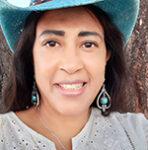
By Barrett Holman Leak in San Diego
What does it mean to truly give? I, like many, many people, have experienced a type of generosity that no bank account can quantify. I remember a moment when my little girl decided to “give back” to me. She didn’t have money, but she gave me her resources: She went into her room and emerged later with a crinkled drawing and a polished stone she had picked with a ribbon.
She presented these to me with eyes shining, her “willing heart” fully on display. Thankfully, most parents understand that these offerings are not just “crafts”—they are pure gold. I saw this truth when I inherited my own mother’s belongings. As she aged, she purged almost all of her physical life, letting go of furniture and tchotchkes. By her bed, she kept a box with items from me that she refused to part with: a hand-drawn card I made her with a crayon drawing and a poem which said in part “I love you so, I’ll suck my toe.” To her, this was a true treasure, and she wanted to remember it as her days became shorter.
This is the essence of Parsha Terumah. It marks a revolutionary shift from the mandatory tithe (Ma’aser) to the voluntary offering (Nediv Lev—the “willing heart”). It suggests that the holiness of a community is not measured by the size of its endowment, but by the breadth of its participation. We do not build institutions for people; we build them with people.
While the Torah calls for this “willing heart,” our modern structures can impose a “financial wall.” When a synagogue ignores the systemic wealth gaps within the Jewish world, it risks becoming a country club rather than a sanctuary. There is a documented racial wealth gap, with Jews of Color generally earning much less income. We could eliminate that through intentional inclusion of Jews of Color in our professional networks, by making referrals and recommendations, and by hiring them in jobs for which they are educated and qualified. When their income increases, it can go back into the community.
There is another wealth gap shared recently by Dana Toppel of Jewish Family Service of San Diego. She highlighted the crisis of the “hidden poor” among elderly Jewish San Diegans. Many, including Holocaust survivors, live on less than $1,600 a month. In a high-cost city, a “suggested donation” for a meal can be the difference between community and isolation. If we ignore these community members, we lose our living history. We trade the wisdom of a survivor for a line item in a budget.
Just as my daughter gave something precious to her, and as my mother saved what I gave her, we must ask: “Shouldn’t what a person can give be accepted as holy?”
In the Mishkan, the materials included gold and silver, but also acacia wood. If the architects had rejected the wood because it wasn’t “gold,” the structure would have collapsed.
When a member gives their time—preparing congregational meals, baking hamantaschen, teaching a class, or ushering during the High Holy Days—they are providing the acacia wood. When they teach a class or share stories about their Holocaust experience or their time helping build Israel in the 1960s and 1970s or their time in the IDF or their experiences in the civil rights period, they are contributing acacia wood that enriches the congregation and the community. If a community values a large check over the time and energy of hands that bake the cookies for the camper scholarships fundraising, it has lost the spirit of Terumah. A $35 gift from a “willing heart” is holier than a higher payment that causes a member to struggle with the rent, food or medical bills.
All this made me ponder a “bill of rights” we have in the community to ensure the Mishkan is built with all of us:
1. The Right to Dignity: No member shall be shamed or sent “debt notices” due to financial hardship.
2. The Right to Pastoral Care: access to the rabbi, hospital visits, and meal trains are birthrights of membership, never contingent upon financial status.
3. The Right to “In-Kind” Honor: we honor volunteer labor—baking, ushering, teaching — as a sacred contribution (Terumah) equivalent to financial dues.
4. The Right to the Table: we include all in a Shabbat or other community meal, never excluding folks by making them choose between paying rent and being in community.
5. The Right to Belong: The honors of the Torah belong to the entire community. We do not sell what God gave us for free.
Of course, there are people with high incomes who can afford higher membership dues, and they willingly pay them. We must also be practical about what it takes to operate a synagogue, and yet some synagogues thrive while using only a Terumah model (what you can give). A compassionate, loving community recognizes that the “gold, silver, and copper” are not distributed equally in this world. But the “willing heart” is found in every corner. As we make room to accept what some people can give—whether it is a gift of labor, a survivor’s story, or a child’s wildflower, a volunteer shift—we ensure that no one is isolated. We build a community where the Shekhinah can finally dwell, because the door is held open by everyone.
*
Barrett Holman Leak is a freelance writer based in San Diego.