By Alex Gordon in Haifa, Israel
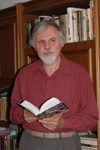
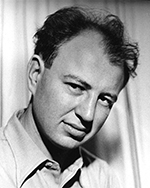
This is the story of an American writer who became a famous Soviet writer without moving from the US to the USSR. This is the story of an American writer who ceased to be a famous Soviet writer after he ceased to be an American communist. This is the story of an American writer who became an enemy of socialism after he, as a Jew, expressed solidarity with Jewish victims of Soviet state antisemitism.
Writer Howard Melvin Fast was born on November 11, 1914, in New York City to a Jewish family; his father, Barney Fastowski, came from the Russian Empire, from the town of Fastov, near Kiev, and his mother, Ida Miller, was from Great Britain.
Fast made his literary debut with Wrath of the Purple (1932). In 1933, his first novel, Two Valleys, was published, followed by Strange Yesterday (1934) and Place in the City (1937). The novel The Children (1937) showed the corrupting influence of racial hatred. In 1941, he published The Last Frontier, a novel about the fate of the Cheyenne Indian tribe. In 1943, he published Citizen Tom Paine, and in 1944, Freedom Road, a novel about the Reconstruction period after the Civil War in the United States.
In 1944, Fast joined the Communist Party of the United States. In 1950, he was summoned to appear before the House Un-American Activities Committee, where he refused to name the people who had donated money to a fund for a home for orphaned children of American veterans of the Spanish Civil War, as well as the names of Communist Party members known to him, and was sentenced to three months in prison for “contempt of Congress.” He began writing his novel Spartacus (1951), which became a bestseller and his most famous work, translated into more than 45 languages, while in prison.
In 1952, Fast won the International Stalin Prize “For Strengthening Peace Among Nations.” In 1954, his novel Silas Timberman was published, about human rights violations in the United States during the McCarthy era. At that time, Fast was one of the most highly praised American authors in the USSR. His articles were published in Pravda and Literaturnaya Gazeta, and his books were published in Russian, Armenian, Georgian, Kazakh, Uzbek, and Ukrainian.
In his later years, Fast wrote a series of historical and political novels: The Immigrants (1977), Second Generation (1978), The Establishment (1979), The Outsider (1984), and Immigrant’s Daughter (1985), dedicated to several generations of immigrants from Europe who settled in the United States. At the center of The Outsider is a young rabbi who survived the horrors of the Holocaust; the novel Pledge (1988) takes the reader back to the era of McCarthyism. In 1990, his autobiography, Being Red, was published.
Howard Fast died on March 12, 2003, in Old Greenwich, Connecticut.
The fall of the renowned writer Howard Fast in the eyes of the Soviet authorities began in 1949 with his participation in the Peace Congress in Paris. There, Fast met with the head of the Soviet delegation, writer Alexander Fadeev, and asked whether the rumors about the dissolution of the Jewish Anti-Fascist Committee in the USSR and the murder of Jewish actor Solomon Mikhoels were true. Fadeev denied everything: “There is no antisemitism in the USSR.”
In 1953, Fast wrote a poem dedicated to the victims of the Warsaw Ghetto. His historical novel My Glorious Brothers about the Maccabean Revolt was included in the 1949 plan of the Soviet publishing house Khudozhestvennaya Literatura. But Stalin’s sudden change of attitude towards Israel led to the book’s print run being scattered. At the ceremony awarding Fast the Stalin Prize, someone asked the writer Boris Polevoy about the fate of his neighbor, the Jewish writer Lev Kvitko, who was rumored to have been arrested and shot. Polevoy replied that this was typical anti-Soviet slander and added that he was a witness to Kvitko’s well-being, as he lived in the same building as him.
Later, Fast wrote: “We were happy. We asked what Kvitko was doing now. And Polevoy told us that Kvitko was finishing a translation of a book and had plans for a new book. He said that he had seen him before leaving and that he had asked him to convey his best regards to his friends in America.” Polevoy was lying: Kvitko was shot along with other Jewish writers, members of the Jewish Anti-Fascist Committee.
In 1956, following Nikita Khrushchev’s report “On the Cult of Personality of Stalin and Its Consequences” at the 20th Congress of the Communist Party of the Soviet Union and the suppression of the Hungarian uprising, Fast broke with the Communist Party of the United States. On February 1, 1957, in an interview with the New York Times, Fast announced his break with the Communist Party. His books were no longer published in the USSR. In 1957, he published a book about his relationship with the left-wing labor movement, The Naked God: The Writer and the Communist Party.
The writer recalled the story of his rise and fall in the USSR: “During the past ten years they themselves built me up out of all proportion to my work or place in the literary world. They created, within the Soviet Union, a person of immense stature – and suddenly they found themselves faced with the problem of turning this image they had created into a non-person. It is most difficult to praise a man for a dozen years, heap every sort of honor upon him, and then about-face and prove that he is a contemptible wretch and always has been one. But suppose you have at hand and already prepared a national reaction to the Jew; then the problem is simplified.”
He recalled that the Soviet authorities had also criticized other non-Jewish writers who had criticized the USSR after visiting the country—André Gide, John Boynton Priestley, and John Steinbeck. But the Soviet authorities’ criticism of the recently glorified Fast was antisemitic: “The others had been criticized, slandered and defamed as renegades, traitors, spies, tools of the capitalists, degenerates, liars, decadents. I was called all of this and more – but the basis of the attack was concentrated upon the fact that I was a Jew. All other adjectives were used simply to underline the fact that my betrayal was a Jewish betrayal, that my wickedness was Jewish wickedness. The sum total of the filth directed against me was summed up as “militant Zionism”… [They] have decided triumphantly, that Howard Fast is not only a Jew, but a Jewish-Jew, in other words, a militant Zionist. Then, immediately, our world will understand the depths of his corruption. They will understand that no matter how he acted in the past, there was always within him that Jewish disease.”
The writer claimed that there was a connection between the accusation of ‘cosmopolitanism’ and the classic accusation that Jews sought to take over the world, including the “world of socialism”: “The charge of cosmopolitanism is merely another aspect of the old, murky “Elders of Zion” canard.”
Fast explained the behavior of the Soviet authorities as a consequence of deep-rooted traditional antisemitism: “Obviously, there were Jews and Jews, and in a mechanical sense—a line of reasoning often resorted to by Russians—a Jew who spoke Yiddish was a ‘Jewish Jew’. It is almost impossible for the average person to understand this dual national identity, unless … one recognizes … that, unable to express their seething hatred of Jews within the framework of the socialist ideals they pretended to worship, Soviet leaders, like the tsarist officials before them, classified their resentment, reserving its most acute part for Jews who were most conscious of their Jewishness.”
As long as Fast was a communist, he was not considered a Jew. When he ceased to be a communist, he became, in the eyes of the Soviet authorities, a militant and hostile Jew and Zionist, even though he had never been a Zionist.
*
Alex Gordon is professor emeritus of physics at the University of Haifa and at Oranim, the Academic College of Education, and the author of 12 books.