By Rabbi Dr. Israel Drazin in Pikesville, Maryland
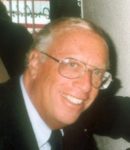
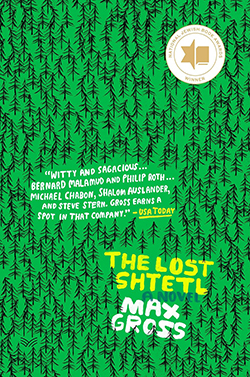 Max Gross is an American writer, journalist, and editor. The Lost Shtetl is his first novel and established him as an imaginative new voice in contemporary Jewish fiction. He published it on October 13, 2020. It is the winner of the National Jewish Book Award and the Jewish Fiction Award from the Association of Jewish Libraries. Before becoming a novelist, he worked as a journalist, editor, and staff writer for the New York Post and The Forward, writing on politics, culture, and Jewish life. He later became Editor-in-Chief of the Commercial Observer, a publication covering commercial real estate and business.
His novel begins with a fascinating “what if?” question: What if a tiny Jewish village in Poland escaped the Holocaust because no one outside knew it existed? It contains 396 mind-opening pages, with 5 pages of Glossary that introduce readers to the meanings of non-English words.
The book is filled with currently relevant symbols. In Yiddish and Slavic languages, the village’s name Kreskol suggests “the edge,” “border,” or “fringe.” It mirrors Kreskol’s role as a town on the fringes of civilization, hidden deep within a dense Polish forest like a thick protective wall that completely conceals it from the modern world.
The village is called a shtetl, a Yiddish word meaning “little town.” It is a diminutive of the Yiddish word shtot, which means “city.” It refers to the small, vibrant historical towns with a large Jewish population that existed across Eastern Europe before the Nazis tragically destroyed them during the Holocaust.
The protagonist Yankel Lewinkopf’s name is also symbolic. It is the Yiddish diminutive of Jacob (Hebrew: Ya’akov), meaning “supplanter” and “one who follows at the heel.” In Jewish folklore, a “Yankel” often represents a simple, everyday everyman. Lewinkopf means “Lion’s Head” in Yiddish and German (Löwenkopf). The name reflects the book’s themes of hidden courage and the Jewish diaspora experience. At the start of the book, Yankel is an awkward, illiterate, community-considered-disposable orphan. Pairing his submissive, low-status lifestyle (“following at the heel”) with the surname “Lion’s Head” creates a sharp, significant irony. As the town’s pariah, he is considered expendable enough to be sent into the dangerous unknown. Yet, over the course of the novel, he is forced to live up to his “Lion” surname, showing immense resilience, adapting to the terrifying modern world, and finding that he belongs to both his community and the modern world.
Kreskol has remained hidden for generations. In interviews, Gross revealed that the name Kreskol stems from a classic Yiddish expression about worms living in horseradish: “A worm that lives in horseradish thinks there is nothing sweeter.” The author used this proverb to describe the town’s population, who know nothing beyond its immediate, harsh yet familiar environment, in many ways similar to people living even in America and other countries today.
Secluded and protected by dense forests and foolish local superstition, the Kreskol community continued to live as though the twentieth century had never happened. The residents still speak Yiddish, observe traditional Jewish customs, and know nothing of the Holocaust, the Cold War, automobiles, electricity, TV, or the Internet.
Everything changes when a troubled young wife flees her unhappy marriage. A humble orphan and baker’s apprentice, Yankel Lewinkopf, is sent to find her. His journey brings him into modern Poland, where he encounters a world utterly unlike anything he has ever imagined. Eventually, Kreskol discovers itself, and its inhabitants must decide whether to embrace modernity or preserve their centuries-old, seemingly happy way of life.
Although the premise is whimsical and humorous, combining fantasy, satire, and history, the novel explores many serious themes: Jewish identity, tradition versus change, assimilation, prejudice, antisemitism, community, love, loss, memory, the purpose of life, and the meaning of a home.
Readers can derive many insights from the novel. They can learn to appreciate working with others in a community. The people of Kreskol depend upon one another in ways that modern society often neglects. The novel reminds readers that strong communities are built through daily acts of kindness, cooperation, and shared responsibility. They can better understand the value of tradition. Gross does not portray tradition as good or bad. He shows that it provides identity and stability, yet remains flexible, able to adapt as circumstances change.
The novel helps people understand and use empathy. Yankel is an unlikely hero—poor, socially marginalized, and underestimated by people who fail to realize his worth. His journey encourages readers to judge people by their character and acts rather than by their social standing. It highlights the importance of history. Reading that the villagers know nothing of the Holocaust, they come to understand history from a new perspective. The new insight highlights the importance of remembering the past while building a more humane and profitable future. The novel asks whether technological and economic progress always improve life, or whether something precious can be lost when communities become too focused on material success.
The novel not only encourages readers to improve but also to help others do so. One of the novel’s strongest messages is that ordinary people can perform extraordinary acts of compassion. Readers see and appreciate Yankel repeatedly assisting people despite receiving little recognition himself, demonstrating that compassion is valuable even when it goes unnoticed. Many other characters also place communal welfare above personal convenience, illustrating that healthy societies depend upon mutual responsibility. As strangers enter Kreskol and its residents encounter the outside world, the novel explores the importance of seeking understanding rather than experiencing fear.
Throughout the story, readers see the damage caused by stereotypes and intolerance, as well as the healing that comes from empathy and respect. The novel suggests that every person, even those in the lower levels of society and those with substandard intelligence, has opportunities to improve the lives of others through honesty, sharing, generosity, forgiveness, and courage.
The Lost Shtetl is more than an imaginative alternate-history novel. It is a meditation on what makes a community flourish. Its memorable characters demonstrate that improving oneself, preserving human dignity, caring for one’s neighbors, and helping those in need are timeless values, regardless of whether one lives in a nineteenth-century shtetl or the modern world.
The exploration of an ideal society in literature is known as utopian fiction, a genre named after Sir Thomas More’s 1516 book, Utopia. Writers throughout history have used these books as blueprints for perfect political, social, and economic systems, often to critique the flaws of their real-world societies.
The most famous books that detail an ideal society include Plato’s The Republic (c. 375 BCE).
Guided by Socrates, it proposes a harmonious society ruled by wise “philosopher-kings” and organized around strict social classes, justice, and state-directed education. Utopia by Sir Thomas More (1516) describes a fictional island nation governed by reason. It features communal property, religious tolerance, no money, and free healthcare. New Atlantis by Francis Bacon (1627) is about an ideal society centered around a state-sponsored scientific institution called “Salomon’s House,” where human knowledge and technological advancement are used to improve the human condition. Island by Aldous Huxley (1962) was written as a peaceful counterpoint to his famous nightmare vision in Brave New World. It details the island of Pala, where people blend Eastern philosophies, such as Buddhism, with Western science to build a compassionate society.
We can now add The Lost Shtetl to the list.
*
Rabbi Dr. Israel Drazin is a retired brigadier general in the U.S. Army Chaplain Corps.