The Best Day: A Memoir of Finding Joy, Inspiration, Resilience, and Hope by Rabbi Joseph H. Krakoff; 182 pages.
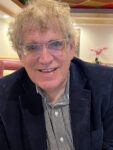
By Rabbi Dr. Michael Leo Samuel in Chula Vista, California
Rabbi Joseph H. Krakoff’s The Best Day is a luminous, deeply humane work that arrives precisely when it is needed. In a world shadowed by loss, division, and rising darkness, this memoir offers no easy consolations or theological shortcuts. Instead, it practices a rarer and more demanding art: it shows, through lived experience, how the hardest days of a life can become the very ground from which gratitude, perspective, and quiet strength grow.
Krakoff writes from a singular vantage point. For more than two decades he has walked with people through life’s most tender and difficult passages—first as a congregational rabbi in Metro Detroit and, for many years since, as President and CEO of the Jewish Hospice & Chaplaincy Network.
He has sat at bedsides, held hands, listened to final words, and witnessed both the raw edges of grief and the unexpected radiance that sometimes breaks through. That professional intimacy with mortality shapes every page. The book’s central claim is deceptively simple and profoundly countercultural: even life’s darkest moments can open doors to joy, inspiration, resilience, and hope—if we stay present long enough to notice.
The structure itself is one of the book’s quiet strengths. Eighteen self-contained chapters, framed by an introduction, an afterword, and a foreword by veteran journalist Brian Dickerson, can be read in any order. Each chapter centers on a single true story drawn from Krakoff’s personal and professional life. Some stories are heartbreaking; others are heartwarming; most contain both.
The effect is cumulative rather than linear. Readers are invited to enter wherever they feel drawn, to linger, to return. This modular design respects the fragmented attention of modern life while still building a coherent moral and spiritual vision. It is a book you can keep on a nightstand and open in moments of need.
What elevates the storytelling is Krakoff’s willingness to be vulnerable about his own history. Many readers will be surprised to learn that he did not grow up with a strong sense of Jewish identity—in fact, the opposite was true. He also shares a near-death experience from a ruptured appendix that forced him to confront the fragility of existence. These personal revelations are not offered for dramatic effect. They establish credibility.
The rabbi who now helps others navigate endings and legacies first had to discover his own path into meaning. The stories of the people he has accompanied (always carefully anonymized to protect confidentiality) become mirrors in which the reader can see both the particularity of individual lives and the shared human condition.
Krakoff draws naturally on Torah and Talmudic wisdom, yet he insists—and the book demonstrates—that this is not only a Jewish book but a human one. The underlying insight is universal: amid some of life’s darkest moments we can still experience joy, inspiration, resilience, and hope.
The language remains accessible without becoming thin. There is no preaching, no forced uplift. Instead, the book offers the steady, measured voice of someone who has learned, through years of presence at the edge of life, that every day is a gift and that making each day the best one possible is an active practice of mindfulness, intentional gratitude, and resilience.
The title itself is a philosophical and spiritual provocation. Working daily in end-of-life care has taught Krakoff that life is precious precisely because it is finite.
The Best Day is not a claim that suffering can be explained away or that every day will feel good. It invites us to immerse ourselves in the present moment, unburdened by past regrets or future anxieties. Joy is not presented as a destination one eventually reaches after enough struggle; it is a mindset one chooses, a way of attending to ordinary beauty and relational connection even when circumstances are hard. This is the book’s most distinctive contribution. It refuses both despair and toxic positivity. It holds the tension.
The best qualities of the memoir are inseparable from the character of its author. Krakoff’s long apprenticeship in pastoral care has taught him that presence itself can comfort when words feel inadequate. That same quality of presence informs the writing. The stories feel unhurried. They trust the reader to feel the weight of a moment without labeling every emotion. Humor appears alongside heartbreak, as it does in real life. Inspiration is earned rather than asserted. Resilience is shown in the slow, often invisible work of continuing to show up—for patients, for families, for one’s own life—after the worst has already happened.
In an era of rising antisemitism and widespread cultural anxiety, the timing of the book feels intentional. Krakoff notes that the world can feel dark right now, and that this felt like the right moment to share these stories. The memoir does not lecture about current events. It simply offers a different posture toward difficulty: the conviction that what feels like our worst days can, over time and with reflection, become among our best days—if we let them. That “if” is crucial. Agency remains with the reader. The book does not promise transformation; it models a way of paying attention that makes transformation more possible.
Readers will leave with several quiet gifts. A deeper appreciation for everyday moments. A renewed sense of gratitude and even excitement at facing each new day. An encouragement to communicate more honestly with loved ones while there is still time. And, perhaps most valuable, the reminder that when difficulties inevitably arise, each new day can be approached as a fresh chance to reset and begin again. These are not abstract ideals. They are the practical fruits of a life spent close to both mortality and meaning.
The Best Day stands in the best tradition of spiritual memoir: honest about pain, stubborn about hope, rooted in tradition yet open to the universal. It is the work of a teacher who has spent decades listening more than speaking, and who now offers the distilled wisdom of that listening as story. For those navigating loss, for those seeking a more intentional relationship to ordinary time, and for anyone who suspects that joy and sorrow are not opposites but companions, this book will feel like a steadying hand on the shoulder. It does not claim that every day will be easy. It claims something more radical and more useful: that every day, even the hardest, can still be lived as the best day—if we are willing to meet it with open eyes and an open heart.
The Best Day is best for anyone navigating grief, loss, uncertainty, or simply the ordinary weight of daily life—readers who want honest stories rather than platitudes, and who are open to discovering that even the hardest days can yield gratitude, resilience, and quiet hope. It especially resonates with those who have walked alongside loved ones through illness or endings, people seeking a more intentional relationship with the present moment, and anyone drawn to spiritual wisdom that feels human and universal rather than narrowly doctrinal; whether Jewish or not, religious or secular, readers will find in Rabbi Krakoff’s lived experience a steady companion that encourages honest conversation, deeper appreciation for ordinary moments, and the quiet courage to meet each new day as a fresh chance to begin again.
Rabbi Dr. Michael Leo Samuel is spiritual leader of Temple Beth Shalom in Chula Vista, California.