By Alex Gordon in Haifa, Israel
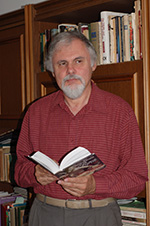
I am a professional physicist and an amateur historian. As it happened, I wrote twelve books on history, specifically the history of the Jewish people, to whom I belong. Eleven books were published—eight in Russian and three in Hebrew—and one book was published in 150 installments over the course of four years in English; 100 biographical essays were published in my books and in Hebrew-language journals. These books were dedicated to the history of the people who shaped history. They were talented scholars, philosophers, writers, poets, composers, artists, and statesmen. They went down in history as great creators. They were active in fields other than history, but became historical figures by necessity, thanks to their talent, for they became very famous. All of them were Jews; that is, according to the view of the British historian and philosopher of history Arnold Toynbee, they belonged to a “fossil,” a historical anomaly.
Toynbee called the Jews a “historical fossil” because, from his perspective, they did not fit into his theory—that is, into the standard life cycle of civilizations and the classical frameworks of nation, race, or religion. In his global theory of human development, the Jewish community appeared as a fragment of the ancient Syrian civilization that had miraculously been preserved in a frozen state, defying universal historical laws. Toynbee described this concept in detail in his monumental work A Study of History. The logic of his reasoning was based on the following key arguments:
All civilizations go through the same stages: birth, growth, crisis, decline, and inevitable collapse. Ancient Jewish society experienced its “break” as early as the era of the Babylonian Exile, and after the destruction of Jerusalem by the Roman Empire, it was supposed to disappear from the historical stage once and for all (as had happened to all their neighbors in the ancient Near East). However, the Jews did not disappear. From Toynbee’s perspective, they ceased to develop as a dynamic society but preserved their institutions in an unchanging, “frozen” form, becoming a “living fossil” amidst other young and developing cultures.
In the 1950s, Toynbee argued that the Jewish people in the Diaspora could not be classified using standard terms:
“It is not a nation in the usual sense, since for two thousand years the Jews have lacked a common territory, a state, and a single spoken language. It is not a race, since over the centuries, Jewish communities have accepted proselytes (new converts) of the most diverse ethnic origins. It is not merely a religion (like Christianity or Islam), since Jewish identity persists even among those who do not believe in God or observe religious rites but still feel themselves to be part of the people.
However, Jewish culture in the Diaspora has never been “dead” or static: over the course of two millennia, Jews have produced a vast body of religious, philosophical, legal, and secular literature (the Talmud, poetry, Kabbalah), developed systems of self-governance, and actively participated in the development of European and Muslim science and economics, demonstrating unprecedented flexibility and adaptability rather than “petrification.”
The first three volumes of Toynbee’s work were published in 1934, when the Nazis came to power and were developing their concept for combating the Jews. They acknowledged the existence of the Jews but believed that they truly needed to be turned to stone—which is precisely what they attempted to do.
While writing my books, I decided that the patterns published by Toynbee were incorrect and that, apparently, it was necessary to look for new ones. As a physicist, I initially instinctively tried to find general laws governing historical events, but I did not find them and realized there was nothing to look for.
In the early 19th century, the founder of positivism, the French sociologist and philosopher Auguste Comte, promised to prove that “there are laws governing the development of society that are just as definite as the laws governing the fall of a stone.” This was the era of the Industrial Revolution, when people, inspired by the achievements of the natural sciences, believed that the laws of history were of the same nature as the laws of physics—and that they were on the verge of being discovered.
However, the laws of history were not discovered, and by the end of the 19th century, doubts arose as to whether they could ever be found. The philosophy of doubt also prevailed in the first half of the 20th century. The German sociologist, philosopher, and historian Max Weber considered attempts to find historical regularities to be meaningless. “History has a profound meaning,” wrote one of the founders of existentialist philosophy, the German philosopher Karl Jaspers—a psychiatrist—in his book The Origin and Goal of History, “but it is beyond human comprehension.” Jaspers argued against those who believed that history could be fully explained rationally (for example, through Marxist theory of socio-economic formations or positivist attempts to find rigid laws governing the development of society).
“History can be considered a science only to the extent that it explains the world,” said the famous French sociologist Émile Durkheim, a Jew who appears in my essays. “History is not yet a science,” said the British mathematician, logician, and philosopher Bertrand Russell, “it can only be made to appear to be a science through falsifications and omissions.”
“Since all history depends on our interests,” emphasized the Austrian and British philosopher and sociologist Karl Popper, who was Jewish, “there can only be ‘histories,’ and never ‘History’, namely a narrative of humanity’s development ‘as it actually happened.’” Historical determinism (for example, Marx’s historical materialism, or the cycle theories of Spengler and Toynbee) assumes that history is governed by objective laws. Historical determinists believed that the development of society is either cyclical or linearly progressive, and that it can be predicted. In his work The Poverty of Historicism (1957), Popper rejected the belief that history moves according to rigid, objective laws toward a predictable conclusion (for example, toward communism according to Marx or the ideal state according to Plato or Hegel). In his view, historians and thinkers do not “discover” a ready-made, objective chronicle of events— “as it really was”—but rather construct interpretations—that is, they tell stories.
I adhere to the ideographic approach introduced in the late 19th century by the German Neo-Kantian philosopher Wilhelm Windelband and further developed by the German Neo-Kantian philosopher Heinrich Rickert, who argued that history studies singular, unique events, in contrast to the natural sciences, which seek general laws. These philosophers focused on specific, individual cases (a person, a historical event, a work of art) rather than on an average group. They used in-depth descriptions and biographical methods instead of mass surveys and statistics. In my view, history consists solely of phenomena that are not predetermined by rigid causal relationships. There could have been other phenomena as well. There are no laws of history, for every event is unique. The historian’s task is not to explain causes through formulas, but to describe events, meanings, texts, the intentions of participants, and how people experienced those events.
This was the task before me as well. Since, according to Popper, there can only be “stories” and not “History,” I wrote many stories about great people, hoping that through these stories one might learn something about the History of the Jewish people.
Among the 150 essays on intellectuals of Jewish descent, 27 are devoted to writers, 21 to philosophers and thinkers, 11 to poets, 3 to artists, 34 to scientists, 11 to composers, 3 to chess players, 35 to statesmen and revolutionaries, and 5 recount phenomena and events in which many Jews were involved.
These biographical essays describe prominent, mostly secular Jews from twelve countries who have different attitudes toward the “Jewish question.” Most of the subjects of these essays sidestep the “Jewish question,” avoid it, and find far more interesting creative pursuits in science, music, literature, art, philosophy, and social and political activism. They brilliantly solve complex and important scientific problems, create masterpieces in literature and music, and attempt to sidestep an issue that affects them deeply and personally as Jews without equal rights—an issue that wounds them and preoccupies them, consciously or subconsciously, at certain periods of their lives.
The “Jewish question” both unites and divides them: it unites them because they all grapple with it, and it divides them because each approach it differently. Some characters pass through or around the “Jewish question,” crushed and disillusioned by its complexity and awkwardness. Among the characters are cosmopolitans and revolutionaries. Some sincerely believe that they belong to the indigenous peoples of Europe or are citizens of the world. Some of them put on the masks of Europeans. Some claim that they are above the “prejudice” of being considered Jewish, and that they belong to the civilized world. They choose a false identity, playing the tragicomic game of the “invisible man” whom everyone sees. Some of these figures were baptized, even though they knew that European society did not accept Jews as equals—perhaps because racial antisemitism had already come to dominate religious antisemitism. The Austrian composer Arnold Schoenberg and the German philosopher Theodor Lessing were baptized but returned to Judaism. They were unable to be chameleons. The most striking evidence of Lessing’s return to Judaism was his book Jewish Self-Hate (1930), which analyzes and condemns Jewish antisemitism.
At the heart of each essay lies a hermeneutic approach—a desire to look inside the researcher, artist, or politician, to empathize with and even experience alongside the essay’s central figure his hopes and disappointments, successes and failures, and to understand the motives behind his actions. The pages of these essays reveal a microcosm of outstanding Jewish intellectuals, illustrating their difficult, sometimes agonizing journey, in which personal drama, the search for truth, and a deep, subconscious connection to their roots—transformed into universal meanings—have become the heritage of all humanity. Perhaps, through the prism of personal fates, meanings, tragedies, defeats, dramas, triumphs, epiphanies, and disappointments—and through an anthropocentric panorama of the presence of Jewish intellectuals in world history—these essays reveal also History itself: “history in ideas and faces.”
*
Alex Gordon is professor emeritus of physics at the University of Haifa and at Oranim, the Academic College of Education, and the author of 12 books.