By David Amos
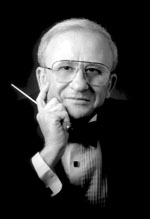 SAN DIEGO — What a magnificent job of portraying Leonard Bernstein at the Old Globe by actor-musician Hershey Felder! I was pleased to see this one-man-show, Maestro, the Art of Leonard Bernstein on Tuesday, July 26.
I have frequently written about Bernstein, and his life, which has been called “the most spectacular musical career in American history”. Many books have been written about him; some, scandalous and gossipy, and others, informative, factual, and very well documented. Soon, I will be reviewing other books about Bernstein, written by Schuyler Chapin, Burton Bernstein, and Humphrey Burton.
But, let’s talk about Hershey Felder. Since I am personally familiar with practically all the details which Felder covered, I was impressed with many of the other aspects of his presentation: His sensitive, wonderful piano playing, his ability to look the part, and his faithful imitation of Bernstein’s voice, inflection, and even mannerisms. His use of grammar and hand movements was also uncannily familiar and genuine.
As he did in his other show of this summer in San Diego, The Great American Songbook, Felder gave ample time to relate to his own Jewish background and Bernstein’s. The latter’s father was an immigrant from the Old World, very observant, an avid reader of the Talmud, and not thrilled at all that his son was contemplating to be a musician. “Do you really want to be a lowly Klezmer player for the rest of your life, playing Bar-Mitzvahs and synagogue socials?”
But, as we all know, Leonard persisted, aggressively pursued his musical studies and contacts with prominent musicians of his time, and emerged as a true American legend, with his conducting, piano playing, composing, lecturing, writing, and teaching, both at the university level, and on television. Above all, he was a communicator, with his unique slant on politics, the evolving morals of his time, and his loyalty to Israel and Judaism. Yes, to all of the above, but always on his own terms and perspectives.
I personally met Bernstein only once, as a teenager and admiring fan after a San Diego concert in which he conducted the New York Philharmonic. Our encounter was brief, pleasant, and uneventful, as we were surrounded by two dozen other autograph seekers.
But, years later, in my own music career, we did not meet again, but I experienced “close encounters, once removed”, which has endeared me to him and his music. Let me share with you some of these experiences.
I personally know dozens and dozens of musicians who have played under his direction, and who have studied with him. All of them describe Bernstein as highly complex, with a monstrously large ego, enormously talented, but always tempered with a sense of fair play and a desire to be liked by others.
- In 1982, I worked for a whole week conducting members of the Israel Philharmonic at Tel-Aviv’s Mann Auditorium. Just a few days before my conducting work began there, Bernstein had been with the same orchestra in concerts and recordings. The musicians could not stop telling how they were brought to the peak of artistry by his dynamic leadership and inspiring musicality.
- I have conducted in concert many of Bernstein’s works, including selections from his Broadway shows. Always a thrill and privilege to be involved in these experiences.
- Bernstein’s meteoric rise to fame happened in 1943, when he was asked at the last minute to substitute for an ailing Bruno Walter in a Carnegie Hall concert with the New York Philharmonic. One of the composers whose music was performed that evening was Míklos Rósza, whom I met years later, and did the premiere recording of his Tripartita for Orchestra with the London Symphony Orchestra.
- In November of 1990, on a Monday morning, just before I started my recording sessions in London for the aforementioned Tripartita, the session was interrupted by the manager of the London Symphony, who announced to the musicians that Bernstein died a few days before. It was the first time that many of them received the news. There was a solemn hush for a few minutes. I stammered a 30 second eulogy-tribute, and we continued our work.
- During those same sessions, I recorded Emek, an Israeli tone poem by Marc Lavry. It was a first-recording. I had heard Emek in live concert, conducted by Zubin Mehta in Israel a few years earlier, was very impressed by it, and later found out that Bernstein had taken this work on tour with the IPO a few years earlier, but never recorded it
You can easily see why I am such a Leonard Bernstein admirer, and watching Hershey Felder’s admirable presentation at the Old Globe, brought out all these pleasant memories.
Music critics and present-day historians are not totally comfortable as to where Bernstein belongs in comparison to many of the greatest musicians of all time. Bernstein himself struggled with this, knowing that he was involved with huge successes, one after another, always in the limelight, but longing to be remembered primarily as a composer of serious music. I firmly believe that history will recognize him as such.
*
Amos is conductor of the Tifereth Israel Community Orchestra in San Diego and has guest conducted orchestras around the world. He may be contacted at david.amos@sdjewishworld.com
Thank you for your Bernstein coverage. I plan to attend the event this weekend with friends, Jewish and non Jewish, and will share your stories. I especially agree with your conclusion as to how the maestro wanted to be remembered as a serious muscian.
I apologize to you personally for having missed your TICO concert last weekend but circumstances made it impossible for my attendance and I had wanted to go since it would have been my first time to see you conduct and hear the orchestra. I will look forward to future events. As for now I settle for our summer Pops.