By David Amos
 SAN DIEGO — When I read a book for the first time, I like to lightly mark with a pencil the important thoughts, concepts, and paragraphs I encounter. This is especially useful if it’s a subject of a personally intense interest, or one which will become a book review.
Interestingly, when reading Musicophilia,Tales of Music and the Brain I found myself highlighting practically all the paragraphs. This is what makes this such a
fascinating book. Written by Dr. Oliver Sacks, it is a compilation of personal case studies from many of his patients, showing the relationships of music and
how the human mind works.
Considering my strong involvement with music, I found some of the stories very interesting and at times engrossing, but there were many case studies and references to people and situations which were directly relevant to me and people I have known in the vast world of music.
Quoting from the introduction to the book (Published by Vintage Books, a division of Random House Inc.) Oliver Sacks is a practicing physician
and the author of ten books, including The Man Who Mistook His Wife For a Hat and Awakenings, (which inspired the Oscar-nominated film). He lives in New
York City, where he is a professor of neurology and psychiatry at Columbia University Medical Center and Columbia’s first Columbia University Artist.
I look forward to reading this book a second time, because there is so much information packed into every page in a clear, caring and direct style which is best absorbed with at least a second round. Obviously, I recommend it very highly.
Possibly the best way to give you an overview and a taste of the subjects is to give you a few selected topics and cases:
The different elements of musical talent, and how a cat-scan can show it. Can you imagine this miracle? A medical test that gives the potential of a certain individual to do great things in music!
The effects of medications on musical abilities, diseases, and injuries. Just this year, I personally experienced this.
Stereoscopic vision and stereoscopic hearing. Why some people can not see 3-D entertainment, and others have no perception in the acoustic depth of music.
Musical savants, such as Gloria Lenhoff. Gloria, who has Williams’ Syndrome, has performed with me and the Tifereth Israel Orchestra. Her case is worth an entire article and more.
People who hear a pitch differently from each ear. Can you see how devastating this can be to a musician or a concert-goer?
Color imaging and sounds. How some musically gifted people relate musical intervals, instrument timbres, and tone combinations to the various colors.
Rimsky-Korsakov wrote something about this also.
Brainworms. Has this ever happen to you, when a melody or a fraction of a tune, will haunt you for days, with incessant repetitions you can not control? It could be two or three notes, a TV jingle, a memorable classic melody, or some horrible tune you hate, but it will not go away!
Tone deafness. A cantor in a synagogue to which Dr, Sacks belonged, loved music, had a pleasant voice, but could not carry a tune! The cantor was unaware when he went off the deep melodic end, which drove the congregation crazy, he ventured into tonalities where no hazzan had gone before.
Absolute pitch, or perfect pitch. The advantages and disadvantages of gifted musicians who can identify tones without need for a frame of reference.
Musical hallucinations. Sometimes caused by anesthesia.
Musical education and overall intelligence. Something that I have mentioned on occasion: Early musical education in young people is somehow directly related to higher IQs, and abilities in problem solving.
The inherent talent in some individuals to communicate the beauty and wonders of music. Could Leonard Bernstein have been one of these supremely gifted people?
The ability to understand all the words, but the inability to make sense out of complete sentences. This is another condition related to people who experience
harmonious, great music, beautifully played, but hearing only a jumble of distorted, chaotic sounds.
How blind people, or people who regain the ability to hear later in life react to music. The results may be quite different than what you may assume.
Phantom limbs, the story of Paul Wittgenstein. The famous pianist who lost his right hand in World War I.
Musicians’ “Dystonia.” Pianists whose names you may recognize, Leon Fleischer, Gary Graffman and others who suffered from motor control disorders,
Musical dreams. How certain composers conceived and totally composed important musical works while sleeping.
Frontal lobe aphasia. I knew a celebrated Hollywood composer who suffered from this condition in the last years of his life.
Dyskinesia. A whole chapter is devoted to “accidental, uncontrollable davening and cantillation.”
Resemblances betweenspeech and music. Dr Sacks refers to the Czech composer Leos Janacek (whose complex music I conducted earlier this year) and his studies of more than thirty years of observing peoples’ melodies and rhythms in their speech and how they mirrored their emotional intent and state of mind.
Add to this, references to a “joking disease,” Parkinson’s Disease and the Tango, the “Grandma Moses Complex,” “Synestesia, a fusion of the senses,” the relationships of intervals and taste, and a myriad of other topics, you can see why I was thoroughly impressed with the author’s research and understanding. I related to many of the stories, and strongly recommend this book to you.
*
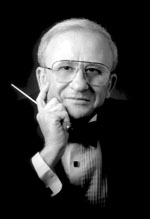
Amos is conductor of the Tifereth Israel Community Orchestra and has guest conducted professional orchestras around the world. He may be contacted at david.amos@sdjewishworld.com