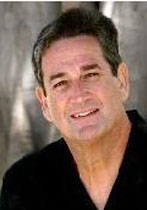
By Rabbi Ben Kamin
SAN DIEGO — There is a lot of anonymous suffering in the world, even when it gets great media play. Yesterday, one could bounce around on television and/or the web and see the clear release of unparalleled tension in a Seattle woman set free in Perugia, Italy; the cri de coeur of a Jew trying to literally break through the walls of anti-Semitism in Tripoli, Libya; and the frightened shrieks of Muslim worshippers coming to terms with the arson of their mosque in Tuba-Zangariya, Israel.
It’s hard to imagine how many dreadful emotional years have accumulated in the mind and heart of Amanda Knox, the exchange student from Seattle who has just completed four calendar years in unwarranted confinement. She was twenty and innocent and blossom-fresh when she arrived in Perugia and, before many of the nearby grapes were even harvested, found herself (and her-then beau) cruelly accused—framed, actually—for the savage murder of her British roommate.
Just as we sensed that the much-less dignified Casey Anthony did kill her child, we have sensed that Amanda Knox was innocent. So this wasn’t a case of American television watchers just knee-jerking in sympathy for an accused fellow citizen caught in a legal labyrinth (although some latent Italian hostility has been detected in the mangled, unprofessional, and scientifically laughable prosecution of Knox). Knox retained her dignity and unvarnished vulnerability through to the last moment—even as she tearfully declared her guiltlessness (and grief for her murdered roommate) in fluent Italian at what was, literally, a moment of truth.
In Tripoli, capital of a still very volatile Libya, a Jew named David Gerbi returned home after 44 years of exile in, ironically, Italy. Gerbi is a psychotherapist who still remembers the day when his family was thrown out of Libya in the aftermath of Israel’s lightning victory against a mounted multi-national Arab invasion during the Six Day War of 1967. He claims to be the first Jew to enter Libya since the (apparent) ouster of the dictator Gaddafi.
Brazenly donning a yarmulke and a prayer shawl, Gerbi walked to the long-empty, faded peach-colored Dar Bishi Synagogue in the old city section. A fit man, he flung a sledgehammer against the retaining walls in order to gain access and then offer a prayer in what is now a house of lost souls. Anti-Semitic chants were heard coming from the so-called “liberators” of the new Libya and Gerbi does travel with hired security men.
The hundreds of thousands of Jewish refugees from Libya, Egypt, Jordan, Iraq, Iran, and Syria will never be an agenda item at the United Nations. Israel and some other truly free nations absorbed some; the rest, like their synagogues, will remain dust.
And yet, there is no reciprocity or justice in the smoke that filled the Galilean air above the Israeli-Arab village of Tuba-Zangariya. Jewish radicals, completely out of touch with the Torah they claim to represent, burned down a mosque and sprayed the holy building with disgraceful graffiti. Revenge for some savage killings by Arabs of Israeli families was in their hearts, but these kinds of acts defile the Jewish people and are politically inane.
As God prepares to write the judgments in the Yom Kippur Book of Life, I pray for all the anonymous sufferers still wrongly incarcerated in prisons, for the men and women who have been cast out of their childhood homes by the absurdity of war, and for all the temples where only ghosts are left to pray.
*
Rabbi Kamin is a freelance writer based in San Diego. He may be contacted at ben.kamin@sdjewishworld.com