By David Amos
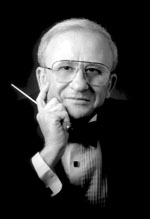
- David Amos
SAN DIEGO — Do you agree or disagree with the following “arguments”?
*Modern music is not modern, and is rarely music. (We are talking about the classical, symphonic and chamber variety, not popular music).
*It represents an attempt to perpetuate a European musical tradition whose technical resources are exhausted, and which no longer has any
cultural validity.
*That it continues to be composed and performed and discussed, represents self-deception by an element of society which refuses to believe that this is true.
*The hopelessness of the situation is technically demonstrable, and contemporary composers are aware of it.
*What makes their own situation hopeless is that they can not break with the tradition without renouncing the special status they enjoy as serious composers.
*That they have this status is the result of a popular superstition that serious music is by definition superior to popular music.
*There is good music, indifferent music, and bad music, and they all exist in all types of composition.
*There is more creative musical talent in the music of Armstrong and Ellington, in the songs of Gershwin, Rodgers, Kern and Berlin, than in all serious music composed since 1920.
*New music which can not excite the enthusiastic participation of the lay listener has no claim to his sympathy and indulgence. Contrary to popular belief, all the music which survives in the standard
repertory has met this condition in its own time.
*The evolution of Western music continues in American popular music, which has found the way back to the basic musical elements of melody and rhythm, exploited in an original manner congenial to the society of which it is the spontaneous musical expression.
*And it has found the way back to the basic musical nature of the ordinary mortal, from whom music derives, by whom and for whom it is produced, and without whom it can not and does not exist.
This bold, controversial position on modern music was written by Henry Pleasants in his book The Agony of Modern Music, published in 1955.
Outrageous? True and on the button? A ridiculous distortion, not worth our thinking time? Has someone finally broken cultural taboos and told it like it is? Or, is reality somewhere in a happy medium?
We have to admit that modern dance, contemporary theatre, and Avant Garde art and sculpture have all been more gracefully accepted by culturally conscious people, and its equivalent, modern music is far behind in being embraced by enthusiasts of traditional classical music.
Some time ago, I was dining with my intellectual and culturally brilliant cousin from Boston. I casually mentioned if he had heard of the book The Agony of Modern Music, to which he answered, “Of course, the book by that fellow, Pleasants”. There is obviously a segment of music lovers which is aware today of the existence of this book, but since it appeared over fifty years ago, we can benefit from a reminder of its precepts.
As you may have guessed by now, this book preaches exactly the opposite of what I have been saying and doing during my professional life in music. I have contended that although there is a vast amount of modern, serious music to which I do not relate, understand or enjoy, there is at the same time a treasury of music being composed these days which is accessible on a first hearing, most enjoyable, and with the ability to communicate emotionally to anyone who will be open minded to listen, setting traditional expectations and prejudices aside.
But, there is some serious food for thought in this book.
Interestingly, many living and recently living composers have gone a step or two toward more traditional styles. Call it “retro”, or what was labeled “neo-classicism”, but it is definitely part of the newer musical styles.
There is still a vast amount of new, wonderful music waiting to be composed. Whether it is pure, absolute, abstract music, or works based on great heritages such as Judaism or Americana,
the field is open for young and established composers to express themselves. For this purpose, I have commissioned new works, and have them performed and recorded them for ourselves and future generations to enjoy.
What is your opinion? Let me know.
More on this subject in future columns.
*
Amos is conductor of the Tifereth Israel Community Orchestra in San Diego, and has guest conducted professional orchestras around the world. He may be contacted at david.amos@sdjewishworld.com