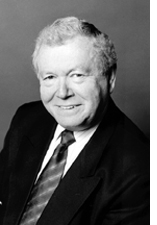
By Rabbi Dow Marmur
JERUSALEM–One simple yet helpful way of describing the public discourse in and about contemporary Israel is to view it as a struggle between security (sometimes coupled with the quest for survival) and values (often equated with morality and prophetic justice).
I heard Steven Cohen, the American-Israeli sociologist, suggest in a talk the other day that it’s also a useful way of distinguishing between Right and Left. Israelis on the Right and their supporters abroad put Israel’s security/survival above all else and react to contemporary events in that light. Those on the Left put values/morality/justice first and often suspect that their opponents use security as an alibi for less than moral behaviour.
The same tension seems to have been in evidence in the recent debate in a Knesset committee about the Armenian genocide. To deny the Armenian genocide isn’t very different from denying the Holocaust. But to accept the facts and condemn the Turks almost a century after the event is to enrage Turkey, which has been denying the genocide all along. France has just found out the extent of Turkish wrath over the issue.
What should be Israel’s position? To deny the Armenian genocide by any state, especially by the Jewish state that arose from the ashes of the Holocaust, would be scandalous. But to affirm and condemn it by the Jewish state that had such high hopes of living well with Turkey, the powerful Islamic state not far from its borders, may endanger its security at a time when the configuration of the Muslim world poses new threats.
As things are at present, the relationship between the two countries is tense; to exacerbate it may turn out to be very bad forIsrael. The representative ofIsrael’s Ministry for Foreign Affairs who was invited to the Knesset committee said as much. While parliamentarians spoke values, the security voice of Realpolitik had to be heard.
It was spoken in the name of Foreign Minister Lieberman who prides himself of saying it as is, whether or not it’s diplomatically correct, and whose sidekick (also known as Deputy Foreign Minister) Danny Ayalon is often accused of having initiated the crisis by seating the Turkish ambassador on a lower chair. Yet, this time even the two hawks in the Foreign Ministry sent a spokesperson to counsel dovish behaviour.
In the end, it was that voice that won the day. The committee concluded its debate without taking a vote. The security side may have sighed a sigh of relief; the values side has reason to be greatly distressed and many Knesset members said so.
Had I been writing this from abroad, I might have been tempted to condemn the cowardice of the committee, but being inIsrael makes me more aware of the burdens of running a state. Certainty and morality are easier at a safe distance.
That doesn’t mean that I’m changing my views or that I’ve anything in common with the salon-hawks who sit in the diaspora and want Israelis to pay the price for their vicarious and shallow patriotism. Nor do I share the unjustly assumed high moral ground of the ideological critics of Israelwho jump at every opportunity to condemn it, even if the alleged Israeli crime is trying to provide security for its population.
I’m suggesting, however, that once Jews formed a state in the hope of never again being the victims of genocide, they find themselves in the uncomfortable situation of having to compromise with their cherished values for the sake of what they believe to be their struggle for survival. It’s a very tough choice; I’m grateful not to have to make it.
*
Rabbi Marmur is spiritual leader emeritus of Holy Blossom Temple in Toronto. He now divides his time between Canada and Israel and may be reached at dow.marmur@sdjewishworld.com