By David Amos
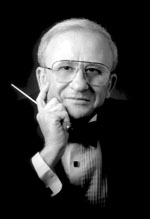
SAN DIEGO– “Mozart”– This word can only mean one thing, and we all know what it is. If you use most proper names, such as Smith, Jones, Kaplan, Finkelstein, or even Richter, Roosevelt, Rubinstein, Horowitz, Clinton, or Bush, you could be talking about a variety of people, and you need to be more specific. But others stand alone; we can only be referring to a single individual, Tchaikovsky, Picasso, Chagall, Dali, Beethoven, Brahms, Herzl, Shakespeare, and so on. We identify the icon with one word.
And so it is with Mozart. Wolfgang Amadeus Mozart. Few composers or even people in general in the history of civilization have captured our imagination as much as Mozart has. Legend, lore, and true facts become intertwined. We are bombarded with new books, films, fictionalized accounts, research papers, lectures, concerts, recitals, and plays about him. And during the 250th anniversary of his birth, a few years ago, we were further inundated with salutes, homages, special programs, festivals, and, of course, his music.
Not that there is anything wrong with that, as a famous comedian’s quip goes, but we have to be careful as to how much all these celebrations are honest tributes, and which ones border, or go over the lines of commercialism and exploitation.
A perfect example of this is the Mozart Festival in Salzburg. I wrote on this only a month ago, but it is worth repeating: The famous music festivals which most of us have always regarded as an expression of artistry in its purest form, need to be seen for what many of them really are. As Norman Lebrecht wrote in his book When the Music Stops, “Pilgrims who visit Lourdes or Amritsar expect to be scalped by locals as the price of faith. Salzburg offers no spiritual compensations. Its Mozart worship is fake and its biggest hit is The Sound of Music , a Hollywood (Broadway) musical which sanitizes recent history. There is little truth in festive Salzburg (the birthplace of Mozart), and scarcely any beauty. Yet,Salzburg, in front of modern festivals was conceived as an artist’s idyll, a refuge from materialism. Its surrender to mammon dealt a mortal blow to musical idealism”.
Personally, I cherish a lot of Mozart’s music. But not all of it. As with any major composer, there are works which are good, very good, heavenly inspired, functional, “OK”, and others which are inevitably hack works. With the case of Mozart, (1756-1792), we have a composer whose creativity flowed with such ease, that the proportion of good works is especially high. Listen to his Sinfonia Concertante for Violin, Viola, and Orchestra. Such balance of beauty, form, and inspiration are hard to describe in words.
Add to this the fact that following the Baroque period, around 1750, music took a turn for the uncomplicated. Johann Sebastian Bach’s sons and a few other composers of the time promoted a simpler musical style, albeit short lived, which we now call the Rococo. This set the stage for the music of the Classical Period, where the two greatest exponents were Mozart and Franz Joseph Haydn. And, as most of us know, the musical baton was handed to Beethoven, who together with Schubert, were the link into the 19th Century and the Romantic Period in the arts.
In Mozart’s case, we have music that has beauty and appeal because of its simplicity, clarity, and directness. It has few surprises, but an overwhelming elegance and ease in its melodic content and transitions to new material. I find that during stressful times in my life, listening to Mozart’s piano music, especially his piano concertos, provides me with an unmistakably calming effect. Yes, I do believe that listening to Mozart and many other works of classical music we know and enjoy can bring our blood pressure to healthier numbers. Call it “Comfort Music”.
But, let’s put aside that ridiculous report of a few years ago that claimed that if we listen to Mozart, our IQ numbers will increase. Parents were buying anything and everything that was available for children with the name “Mozart” in them, in order to expose their infants and toddlers to his music with hopes of pumping more intelligent gray matter into them. There were so many videos, books and toys which hyped the magic benefits of Mozart, that the real beauty and artistic value of what the composer had to offer was mostly lost.
While I find this to be quite absurd, I can say with the same certainty that I firmly believe that children who are raised in a home where classical music is routinely played, listened, respected, discussed, and enjoyed, do grow up to become more balanced individuals, more disciplined students in all subject matters, and become better members of society through their involvement, support, and/or appreciation for the fine arts. All classical music is an indispensable contributor to a better life. I have no doubt about this. But it has to start at home.
If in doubt, read what the ancient Greek philosophers wrote on this subject.
I also suggest that you take time to listen to the lesser known works by Mozart, where you are likely to find some marvelous surprises. His operas, sonatas, ballet music, chamber music, concertos, divertimenti, works for winds, and much more. It never ceases to amaze that all of this was composed in a lifetime of 35 years. I cherish the standard pieces that you and I recognize and adore. But give them to me every hour, forty hours every week, and I’ll be gasping for variety and begging for mercy. The mindless repetition of these sublime masterpieces, admittedly familiar warhorses, again and again, only cheapens them, and takes away the pleasures of enjoying the heavenly sounds of an old friend.
Some of his music is simply utilitarian, that is, composed for a specific purpose as requested by royalty, and was probably performed while everyone in the room was talking and eating. It was not even meant for serious, quiet listening, as we tend to visualize. But many of his works are brimming with that intangible mark of greatness, which inspire and elevate us time after time. And for the ones of you in the periphery of this subject, I can promise you that every time you listen to the same work again, you will accumulate additional insights and pleasure from your listening experience. There are hidden jewels which only become evident after multiple hearings.
But, believe it or not, there are many intelligent informed people who are deeply involved in music and music-making who are devout Mozart haters.
What is indisputable is that Mozart was a genius who transcended music, compositions, and performance. While it is well documented that he was emotionally and socially challenged, his mental abilities, memory, and a sense of artistic balance, made him one of the most remarkable human beings in recorded history.
In general, there is a great deal of respect among musicians to the music of W.A.M. Back in the 1980’s, while I was conducting a series of recordings with the Israel Philharmonic, we committed to tape all the contemporary and Jewish music selections planned for the albums, and with the extra time remaining, decided to record Mozart’s Horn Concerto No. 3, together with the late Meir Rimon as soloist. Although all that we did previously was of the highest musical standards, when we started to record the horn concerto, everyone’s intensity increased, and the concertmaster commented, “Now for Mozart, we have to give it everything that we have!”
And they did.
*
Amos is conductor of the Tifereth Israel Community Orchestra and has guest conducted professsional orchestras around the globe.