By Rabbi Michael Leo Samuel
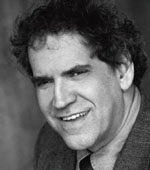
CHULA VISTA, California —As we prepare ourselves for the celebration of Passover and give thought to the meaning of freedom. The Passover Hagadah brings us to an important realization: We are not merely the products of the present. In the words of the Hagadah, “And had the Holy Blessed One not taken us out of Egypt, then we, our children and grandchildren would still be slaves to Pharaoh.”
What do these words mean? Think about it . . . The events of the past impact the events of the future. Imagine how history might have changed, were it not for this seminal event of our people? There are turning points of history that forever alter the course of civilization, which creates the stage for the world we now live in.
The question of “What if?” is one of the ancient rabbi’s tools for enhancing our understanding of human history. This simple question may seem counterfactual, but the process of questioning is the vehicle that takes a past event and makes it come alive.
The question of “What if?” reveals the startling stakes that our ancestors faced in a land that disenfranchised and dehumanized them as people. This question is not the only one that the Passover Seder raises. For example, if the Israelites fail to cross the Sea of Reeds, Pharaoh and his hosts would have brought them back to Egypt where they would live out the rest of their lives serving their masters.
One event changes history. Without the Exodus, there is no revelation at Mt. Sinai. By the same token, there would be no “Promised Land,” no prophets, no Kings of Israel, no Temple, no Second Temple, no Maccabees, no Christianity, and no Islam to speak of.
How would the world look today?
Given that the plenitude of dictatorships we see in the world today, it is probably safe to presume that democracy and freedom would probably be rare. Scholars and rabbis may question the exact historicity of the Exodus, but there can be no question that the entire Torah is predicated upon the memory of the Exodus. For our ancestors, the experience of ill-treatment was real.
If the Israelites choose the security of slavery over the insecurity of freedom, there would never have been an Exodus. Freedom began with a choice.
And so the world changed in the twinkle of an eye . . .
Physicists and meteorologists sometimes speak about a concept known as the “butterfly effect.” According to the meteorologist Ed Lorenz, the earth’s weather systems are perfectly tuned so that even a butterfly’s stirring the air with its wings in the African jungle today will later generate consequences for the storm systems affecting Boston within a few weeks. (By the way, this same kind movement can also be applied with respect to economics, as seen this past year’s gyrations of the stock market.) The effects of the Exodus continue to reverberate over the ages—from ancient times—to the present.
The world is still changing as a result of the Exodus. This wonderful holiday beckons all of us to fight for the freedom of all oppressed peoples.
Indeed, God’s glory becomes manifest whenever people free themselves from tyrants. Our sacred stories teach us another important lesson. God did not act unilaterally to free the Israelites from their misery. For freedom to occur there must be a Moses, an Aaron, a Miriam, a Shifra and Puah—good and brave people must take a stand.
Memory in Judaic tradition is never passive. Memory is active, dynamic, and transforming. The Passover Hagadah makes it a point to get the participants to imagine themselves as if they were personally present at the original Seder. The Torah makes it a point to reiterate:
- If your kinsman, a Hebrew man or woman, sells himself to you, he is to serve you for six years, but in the seventh year you shall dismiss him from your service, a free man. When you do so, you shall not send him away empty-handed,but shall weight him down with gifts from your flock and threshing floor and wine press, in proportion to the blessing the LORD, your God, has bestowed on you.For remember that you too were once slaves in the land of Egypt, and the LORD, your God, ransomed you. That is why I am giving you this command today (Deut. 15:12-15).
- You shall not violate the rights of the alien or of the orphan, nor take the clothing of a widow as a pledge. For, remember, you were once slaves in Egypt, and the LORD, your God, ransomed you from there; that is why I command you to observe this rule (Deut 24:17-18)
This morning on NPR, I heard the news about Egyptian women fighting for their civil rights. After marching in the streets for more freedom (the more you have, the more you want), the military authorities arrested a large number of women. The Egyptian police took these women to a room where they had to strip. These brave young women had to undergo a “virginity test,” in front of their tormentors.
Samira Ibrahim, 25, a victim of a forced virginity test after being detained in Tahrir Square a year ago, decided to take the Egyptian authorities to court. However, a military tribunal cleared the doctor of all charges.
The Muslim Brotherhood is no friend of the Jews; they despise Western values. After listening to other dissidents who complained about being beaten and incarcerated for weeks, I wondered: Why is our government giving 1.3 billion dollars to a government that despises freedom? Our President needs to be more assertive and make it clear to the Muslim Brotherhood: All financial aid is contingent upon democratizing Egypt.
I am certain our ancestors also experienced this type of treatment in Egypt.
For us, we must do our part and fight for the freedom that the Arab peoples deserve—whether they be in Syria, Egypt, or Iran. The mythos of the Exodus has become embedded in the collective unconscious of all peoples. Everyone wants freedom–only tyrants fear it.
The true character of a nation is never measured in terms of its religious or theological platitudes, but by its actions and behavior. Otherwise, the event of the Exodus is lost in bland ceremonialism and the present generation becomes historically dislocated from the past. The Tanakh demonstrates repeatedly that God is always on the side of the oppressed and downtrodden, which in turn explains why the prophets continuously demand social justice. The Kingdom of God must not be relegated to an eschatological dimension. Rather, it needs to become an earthly paradigm that is achieved through human means.
*
Rabbi Samuel is spiritual leader of Temple Beth Shalom in Chula Vista. He may be contacted at michael.samuel@sdjewishworld.com